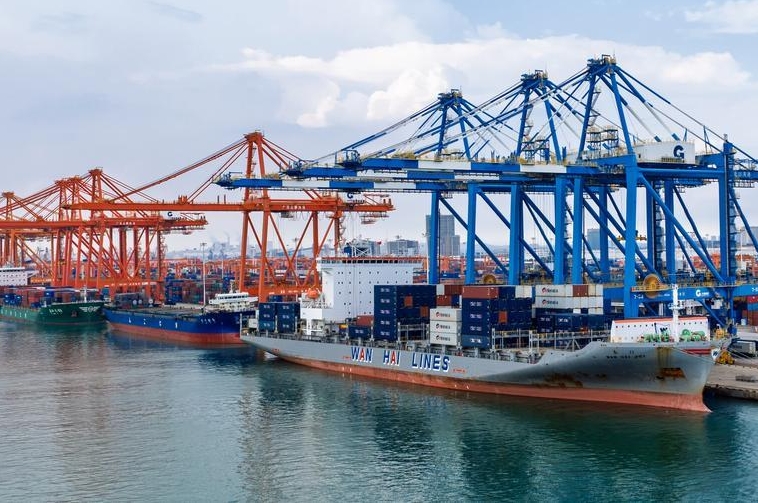
China SCIO | September 30, 2026


China's centrally administered state-owned enterprises (SOEs) are planning to invest about 2 trillion yuan (US$298.4 billion) in six major infrastructure networks this year, an official said at a State Council Information Office press conference on Monday.
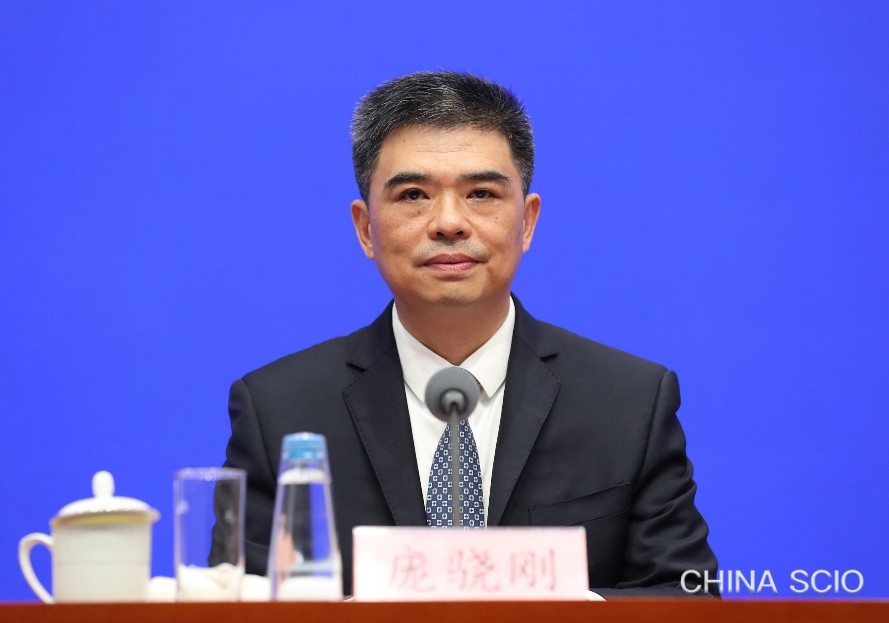
Pang Xiaogang, vice chairman and spokesperson of the State-owned Assets Supervision and Administration Commission of the State Council, attends a press conference in Beijing, Sept. 28, 2026. [Photo by Xu Xiang/China SCIO]
The planned investment spans six key areas: water networks, advanced power grids, computing power networks, next-generation communication networks, urban underground pipeline networks, and logistics networks, said Pang Xiaogang, vice chairman and spokesperson of the State-owned Assets Supervision and Administration Commission of the State Council (SASAC).
Central SOEs have accelerated major projects across these areas, with work progressing smoothly, Pang said. Developing the six networks is a top priority in the opening year of the 15th Five-Year Plan (2026-2030), helping sustain investment, expand domestic demand, and safeguard people's livelihoods.
In water infrastructure, major projects are advancing, including the Guxian water conservancy hub project on the Yellow River and a scheme to divert water from the Yangtze River to the Hanjiang River. Central SOEs are also participating in the construction of 40 major water conveyance and drainage channels.
In the power sector, China has built the world's largest alternating-current and direct-current (AC/DC) hybrid power grid, with the highest voltage levels and the largest installed capacity of grid-connected new energy, Pang said. The average power supply reliability rate has reached 99.95%.
Central SOEs have also put into operation six intelligent computing clusters, each equipped with at least 10,000 domestically produced computing cards, in regions including Beijing-Tianjin-Hebei, Shanghai, and Inner Mongolia. Pilot projects coordinating computing capacity and electricity supply are also underway to provide affordable, easy-to-use, green, and secure computing services to the public, he said.
In telecommunications, 4.83 million 5G base stations have been built, and commercial 5G-Advanced networks now cover more than 330 cities, Pang said. Initial service capabilities for satellite internet have been established.
Central SOEs are also actively involved in building urban underground pipeline networks, with flagship projects such as the utility tunnels in Xiongan New Area completed and put into operation across the country.
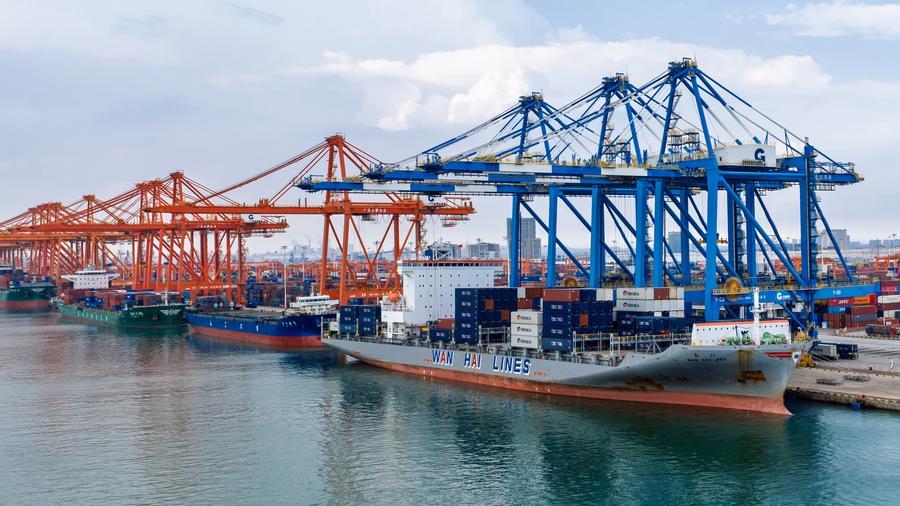
This photo taken on Sept. 4, 2026 shows vessels taking part in a comprehensive navigation drill on the Pinglu Canal in Qinzhou, southern China's Guangxi Zhuang autonomous region. [Photo/Xinhua]
In logistics, central SOEs are leading preparations for a national logistics big data platform and advancing the construction of sea, land and air logistics hubs to strengthen transport connectivity, Pang said.
Construction has begun on a new water transport corridor at the Three Gorges, while the Pinglu Canal opened to navigation on Sept. 16. These projects will help boost China's inland shipping capacity and improve river-sea connectivity, he said.
Looking ahead, central SOEs will expand infrastructure investment and strengthen synergy across the six major networks.
Priorities include deeper integration of computing power networks, new-type power grids and next-generation communication networks. Efforts will also focus on making water networks, urban underground pipeline networks and logistics networks more digitalized and intelligent, Pang said.