China SCIO | September 21, 2026


China will accelerate approvals for innovative drugs and medical devices and provide stronger protection for pharmaceutical research, seeking to spur innovation and upgrade the industry through 2030.
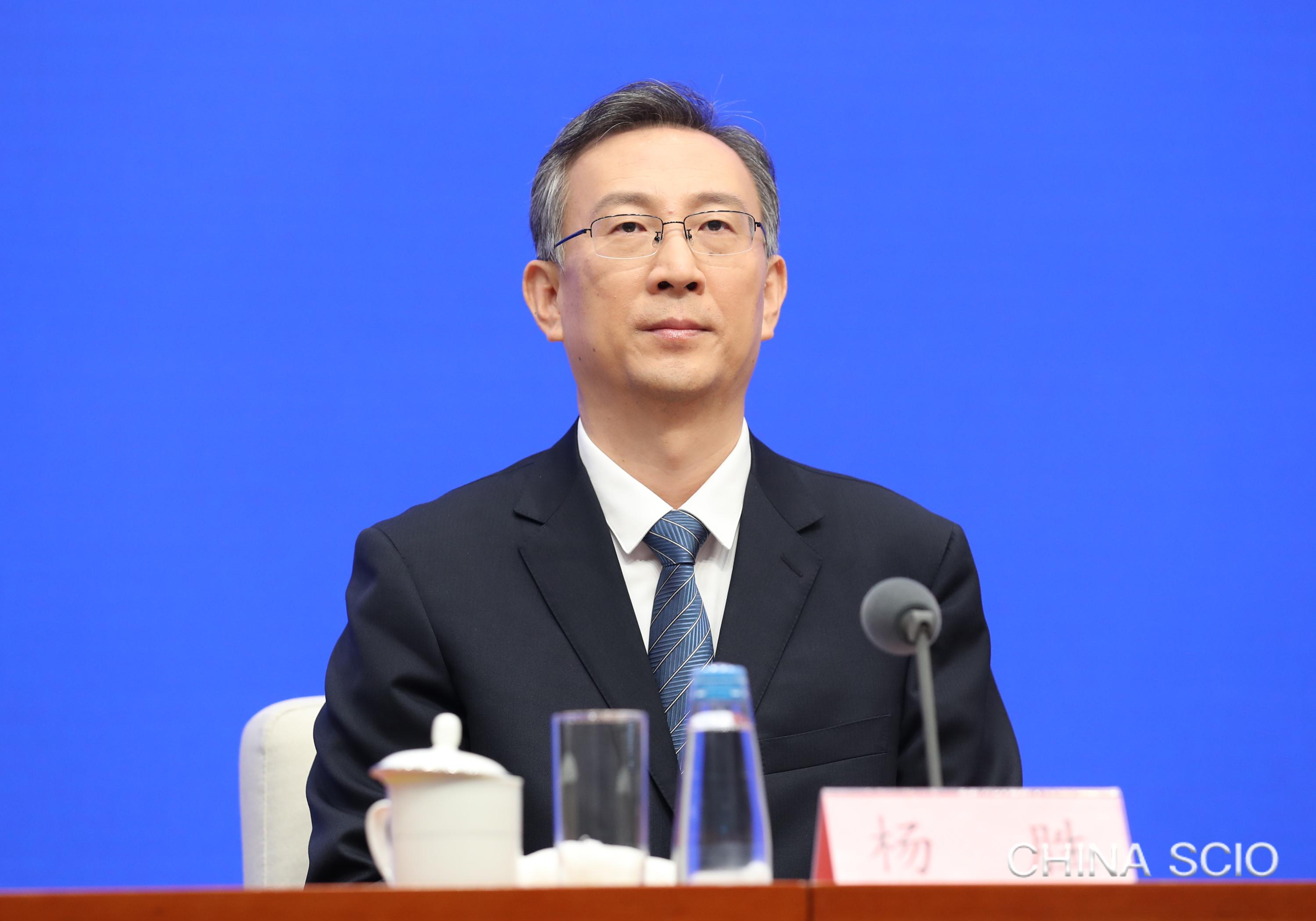
Yang Sheng, deputy commissioner of the National Medical Products Administration, attends a press conference in Beijing, Sept. 20, 2026. [Photo by Xu Xiang/China SCIO]
The country has approved 59 innovative drugs and 51 innovative medical devices for market launch so far this year, Yang Sheng, deputy commissioner of the National Medical Products Administration, said at a Sunday press conference.
Authorities will focus on three aspects: strengthening institutional support for research and development (R&D), upgrading pharmaceutical manufacturing, and expanding access to medicines, Yang said.
China will build out a system to protect clinical-trial data and establish market exclusivity periods for pediatric medicines and rare diseases. The measures are intended to provide greater certainty for companies investing in drug development.
Regulators will also strengthen early-stage consultation with drugmakers, particularly for products involving new targets and mechanisms, to help companies avoid unnecessary setbacks in the R&D process.
For medical devices, China will expand efforts to commercialize clinical innovations and develop trial and review guidelines for emerging technologies including brain-computer interfaces, Yang said.
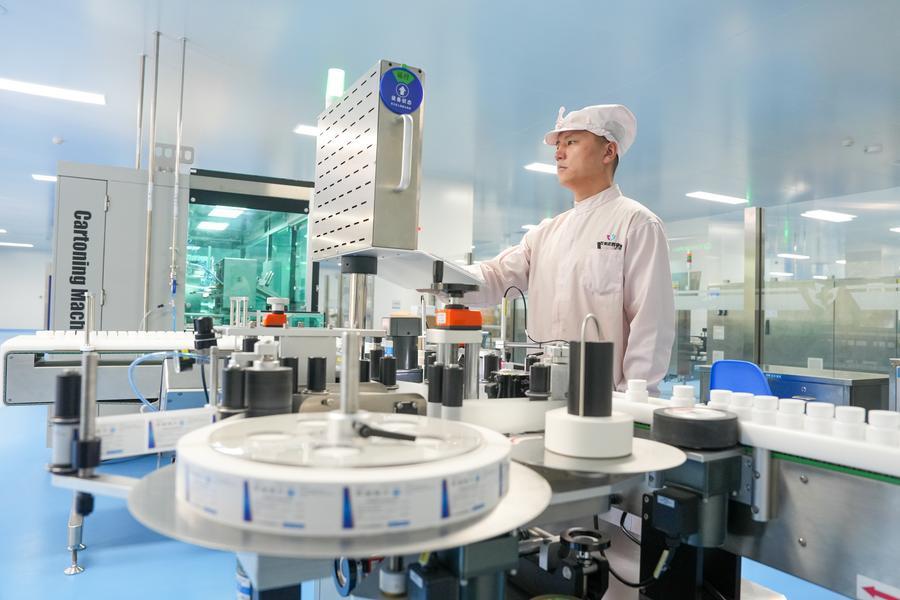
An employee works at a production line of a pharmaceutical company in Shijiazhuang, northern China's Hebei province, Sept. 15, 2026. [Photo/Xinhua]
The government will also support pharmaceutical companies in scaling up and moving up the value chain, while encouraging the development of smart and green factories.
Authorities aim to foster three to five biomedical industry clusters with international competitiveness in regions including the Beijing-Tianjin-Hebei region, the Yangtze River Delta, the Guangdong-Hong Kong-Macao Greater Bay Area, and the Chengdu-Chongqing economic zone.
China will also further open the pharmaceutical sector to foreign investment, encouraging greater investment in the domestic production of originator drugs, while supporting Chinese companies' expansion overseas.
For medicines in urgent clinical demand, regulators will seek to shorten review and approval timelines and expand fast-track testing channels. Authorities will also promote research into pediatric cancer drugs and treatments for rare diseases, Yang noted.
At the same time, China plans to upgrade generic drugs by encouraging the adoption of advanced technologies and manufacturing processes, with the aim of increasing the sector's technological sophistication and added value.
Data shows that in 2025, China approved 76 innovative drugs for market launch, a record high. By the end of last year, the country had 4,751 innovative drugs under development, accounting for one-third of the global total and ranking first worldwide in the number of such drugs in the pipeline.