China SCIO | September 17, 2026


China is strengthening legislation to remove barriers to a unified national market, improve protections for the private sector, and support greater opening-up as part of its efforts to enhance the business environment, an official from the Ministry of Justice said Wednesday.
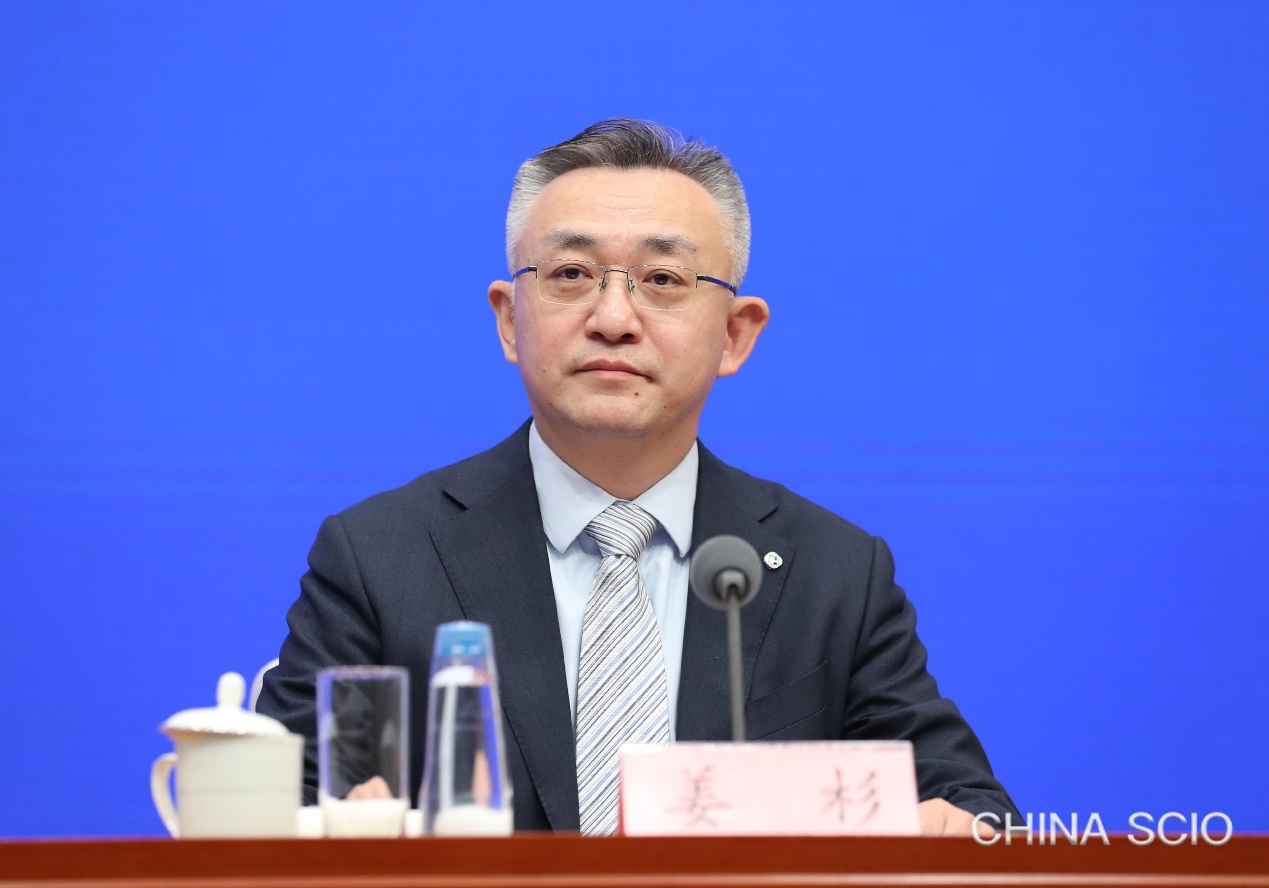
Jiang Shan, director general of the Second Bureau of Legislation of the Ministry of Justice, attends a press conference in Beijing, Sept. 16, 2026. [Photo by Xu Xiang/China SCIO]
Jiang Shan, director general of the Second Bureau of Legislation of the Ministry of Justice, said the ministry has continued to improve legislation across a range of economic sectors in recent years to create a stable, fair, transparent, and predictable business environment.
A key initiative is a planned regulation on building a unified national market, which the Ministry of Justice and the National Development and Reform Commission are jointly drafting.
The regulation will target local protectionism, market fragmentation, and excessive competition, aiming to remove barriers and bottlenecks impeding the development of a unified national market, Jiang said.
More than 150 central government bodies, provincial governments, companies, and industry associations were consulted about market barriers and their legislative priorities. An initial draft has been completed and will be released for public comment, he said.
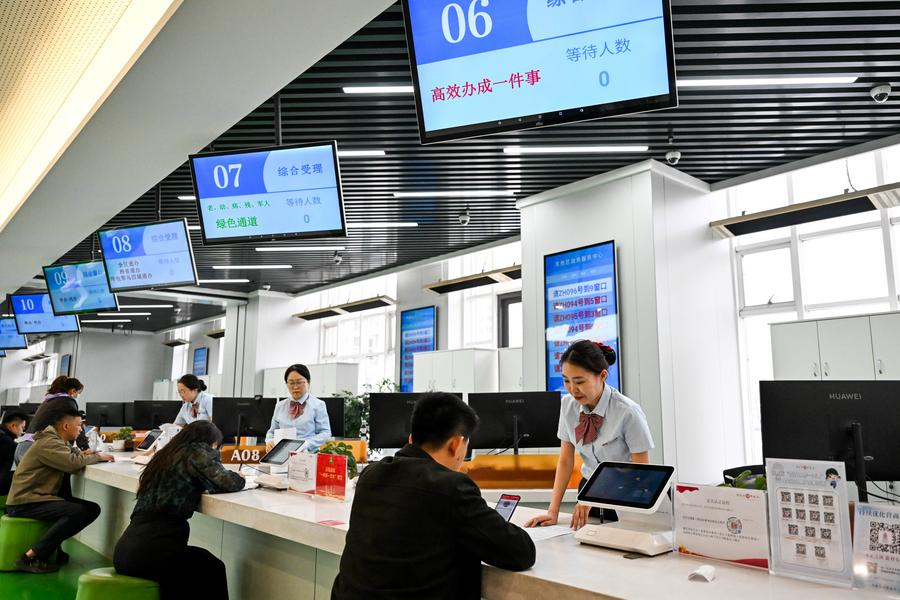
Staff members handle businesses related to private enterprises at a government service center in Ordos, Inner Mongolia autonomous region, April 16, 2025. [Photo/Xinhua]
The government is also introducing supporting measures for the Private Sector Promotion Law, the country's first fundamental law dedicated to the private economy. Since the law took effect last year, local authorities have formulated more than 30 related regulations and rules, while government departments have issued over 100 supporting measures.
Legislative work in the financial sector is also underway. A draft financial law has been submitted to the Standing Committee of the National People's Congress for review, while laws regarding the central bank and banking supervision, along with regulations on securities companies, are being revised.
These measures are intended to strengthen financial oversight, address financial risks, protect investors, and support the sector's development, Jiang said.
The efforts also include revisions to the Bidding Law to promote a fairer market, as well as changes to the Pricing Law aimed at curbing predatory pricing and other practices that disrupt the market.
In legislation related to foreign trade and investment, China has revised its Foreign Trade Law and Maritime Law and is working on amendments to the Customs Law. Jiang said the changes share a common goal of facilitating trade, improving conditions for international cooperation and supporting greater opening-up.
The ministry is also strengthening legal protections for Chinese companies and citizens overseas as their international operations expand. While companies and individuals are expected to comply with local laws, customs, and cultural traditions, China is developing its legal framework to protect their lawful rights and interests, Jiang said.
Meanwhile, the government has introduced administrative regulations covering outbound investment and the security of industrial and supply chains. It also plans to revise regulations on overseas contracted projects and international labor cooperation, while studying dedicated legislation on protecting the country's overseas interests.
Jiang said the ministry will continue to refine laws and regulations during the 15th Five-Year Plan period (2026-2030) to optimize the business environment, stimulate market activity, support continued opening-up, and provide stronger institutional support for long-term economic growth.

