China Daily | July 21, 2026


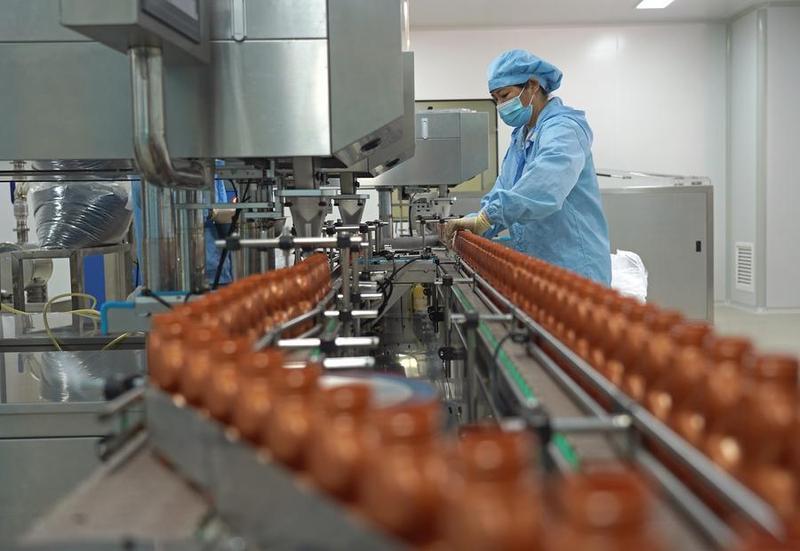
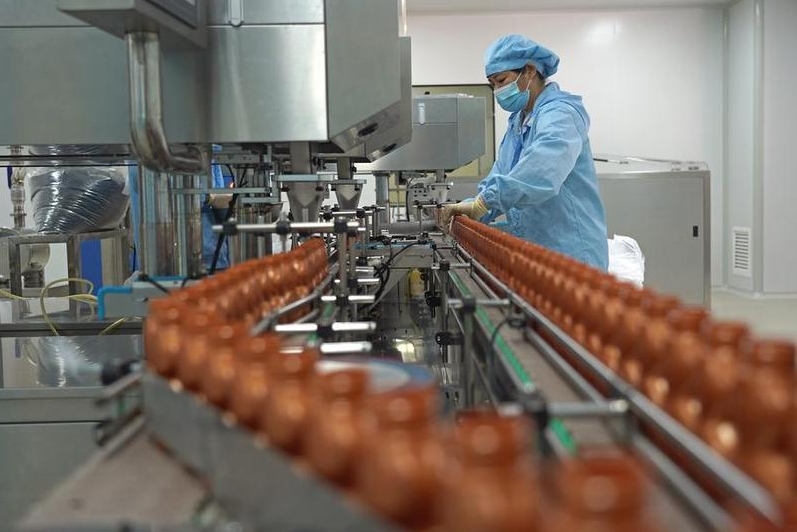
A staff member works at a workshop of a pharmaceutical company in Zhangshu, East China's Jiangxi province, July 8, 2025. [Photo/Xinhua]
The total value of China's innovative drug out-licensing deals exceeded $100 billion in the first half of the year, reaching a record high, the Ministry of Industry and Information Technology said on Monday.
China approved 38 innovative drugs for marketing during the period, including 31 developed by domestic companies, Tao Qing, head of the bureau for operation, monitoring and coordination with the MIIT, told a news conference.
Despite a complex and challenging external environment and mounting pressure from industry transformation, China's pharmaceutical industry remained resilient, Tao said.
From January to June, value-added industrial output of major pharmaceutical enterprises rose 6.4 percent year-on-year, with biopharmaceuticals posting double-digit growth.
The industry's export delivery value exceeded 210 billion yuan ($30.91 billion) in the first six months, up 9 percent from a year earlier.
Higher value-added products, including chemical finished dosage forms and biopharmaceuticals, accounted for nearly one-fifth of total exports, indicating an accelerating shift in the export mix from active pharmaceutical ingredients to finished pharmaceutical products.
China is actively exploring innovative approaches to organizing biomedical research, betting that institutional reforms can help close one of the industry's most persistent gaps — turning laboratory discoveries into marketable medicines.
At the center of such efforts is the Interdisciplinary Research Center on Biology and Chemistry. The center has spent more than a decade building an interdisciplinary research model that links basic science, chemistry, structural biology, clinical medicine and drug development. The model is designed to overcome what scientists call the "valley of death" — the long and uncertain path between fundamental scientific discoveries and clinical applications, where many promising findings fail to become viable therapies.
Founded in 2012, the center deliberately began focusing on neurodegenerative diseases years before they became a strategic research priority globally. While cancer research historically attracted far greater funding and produced far more drug candidates, diseases such as Alzheimer's disease and Parkinson's disease have become increasingly urgent challenges amid aging global populations.