China SCIO | June 30, 2026


China's recently released blueprint for building a new energy system during the 15th Five-Year Plan period (2026-2030) signals a major shift in the country's energy transition strategy, with the focus moving from expanding new energy capacity to building an energy system capable of integrating it, according to Chinese officials and experts.
Unveiled last week, the plan aims to basically establish a clean, low-carbon, secure, and efficient new energy system by 2030.
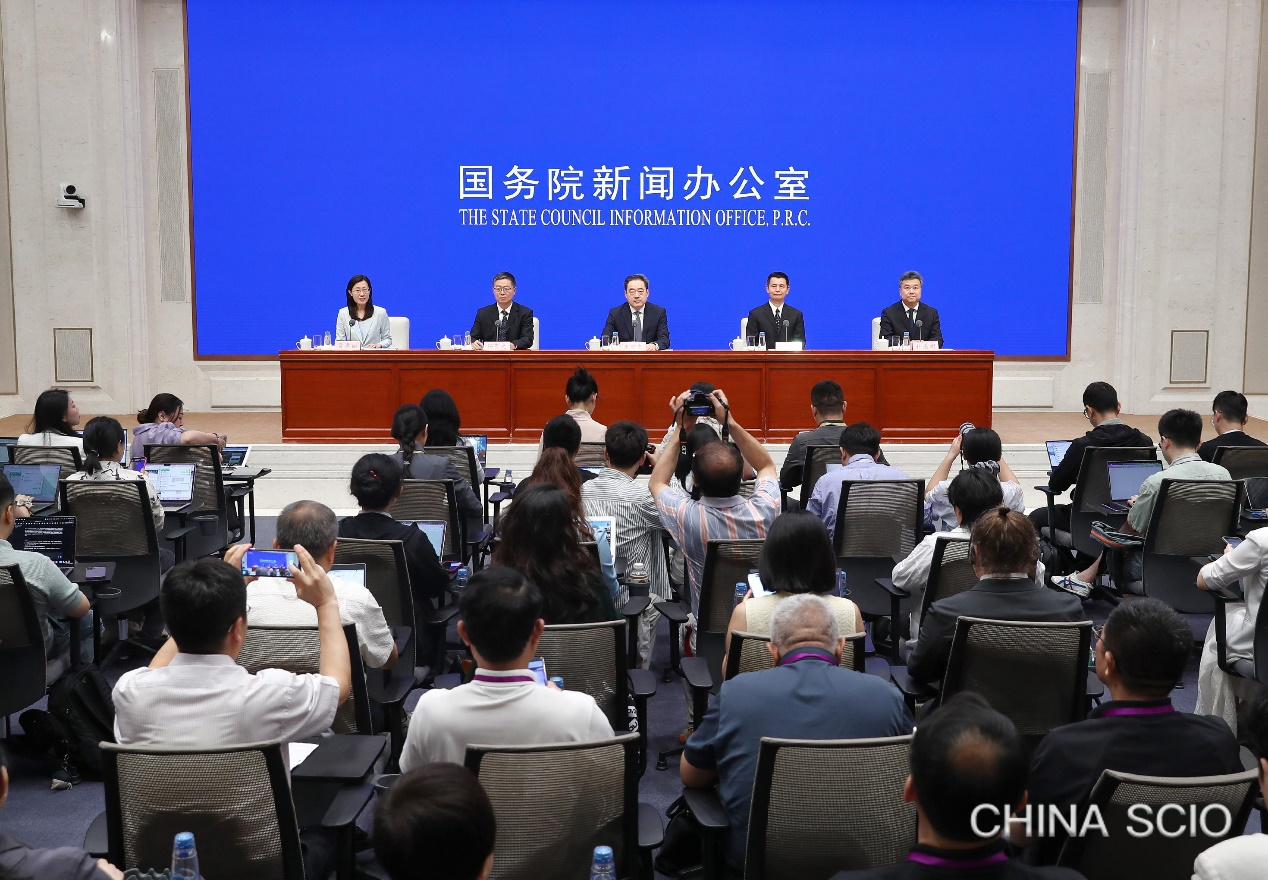
On June 26, 2026, the State Council Information Office (SCIO) holds a press conference in Beijing on accelerating the development of the new energy system during the 15th Five-Year-Plan period (2026-2030). [Photo by Liu Jian/China SCIO]
Speaking at a press conference on Friday, Wang Hongzhi, head of the National Energy Administration, said China's future energy system will be characterized by stronger energy security, a cleaner energy mix, a more advanced energy system, and greater innovation capacity.
By 2030, the country's total installed power capacity is expected to reach 5.4 billion kilowatts, with renewable energy accounting for more than half of total installed capacity. Non-fossil sources are projected to generate half of the country's electricity, while coal and oil consumption are expected to peak.
Experts said the significance of the plan lies not only in its numerical targets, but also in what they reveal about the next stage of China's energy transition.
Lyu Wenbin, head of the Energy Research Institute under the National Development and Reform Commission, said that China is entering a fundamentally different stage of energy development.
"While China accelerated its efforts to build a new energy system during the 14th Five-Year Plan period, the 15th Five-Year Plan period will see a series of structural changes that reshape the energy system," Lyu said.
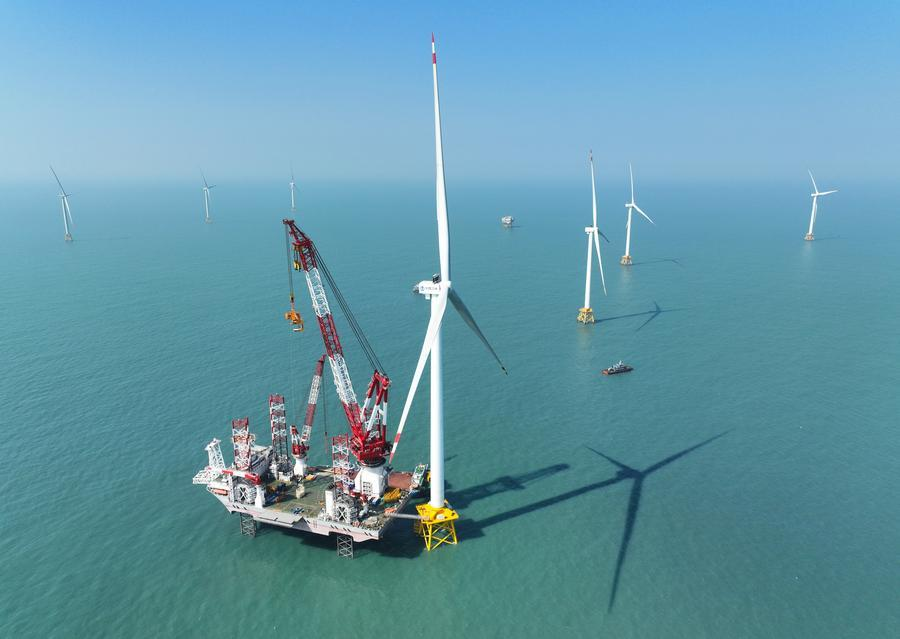
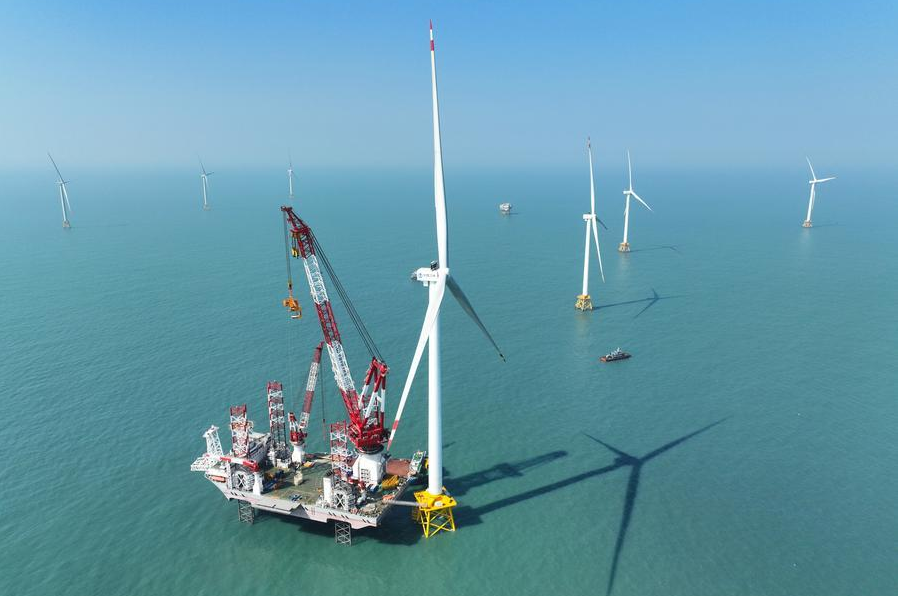
A drone photo taken on Jan. 13, 2026, shows part of an offshore wind turbine unit and a 2,000-metric-ton self-elevating offshore wind power installation platform off the coast of southern Fujian in southeastern China. [Photo/Xinhua]
He cited the peaking of coal and oil consumption and non-fossil electricity becoming the dominant source of power generation as landmark transitions of the energy system through 2030.
Gao Hui, deputy director of the Energy Strategy Research Department at the CNPC Economics & Technology Research Institute, said the biggest change in the new blueprint is that China's energy transition will go beyond individual technologies toward restructuring the energy system itself.
Whereas new energy will increasingly become the dominant energy source, traditional fuels will shift toward providing energy security, system flexibility, and industrial feedstock, Gao said. Power systems, meanwhile, will place greater emphasis on resilience and intelligence.
Yang Lei, deputy dean of the Institute of Energy at Peking University, said one of the highlights of the new plan is its emphasis on energy infrastructure, adding that building a new energy system requires the support of robust infrastructure and a more flexible and intelligent energy system.
Experts also said the blueprint demonstrates that energy security and energy transition should not be viewed as competing objectives.
"There is often an assumption that emphasizing energy security means slowing the energy transition, or that accelerating the transition creates new security risks," Yang said. "In reality, accelerating the energy transition is the fundamental way to improve energy security."
He noted that rising electrification, growing renewable energy use, and the rapid adoption of electric vehicles have increased China's resilience to external energy shocks.
The plan nevertheless reaffirms the role of conventional energy sources — including coal, oil, and natural gas — in maintaining system stability and ensuring reliable supply.
Gao said the new energy system does not imply a simple phase-out of fossil fuels. Instead, China will maintain stable crude oil production and expand natural gas development while accelerating the low-carbon transformation of the oil and gas industry.
For the international community, experts said the plan carries significance beyond China.
Lyu said the blueprint provides policy certainty amid global energy market volatility and demonstrates that low-carbon development can be pursued alongside energy security.
He argued that the plan's emphasis on balancing security and transition offers an alternative to the idea that energy transition simply means eliminating fossil fuels as quickly as possible.
Yang said China is speeding up its energy transition not only to address climate change but also to create economic opportunities.
"If we can make this work, it may provide an example for other countries, especially other developing countries," he said.