China SCIO | June 25, 2026


Claims of so-called "forced labor" are groundless and absurd, a senior ethnic affairs official said Wednesday. China's ethnic solidarity and progress law protects rights of people seeking cross-regional employment and entrepreneurship.
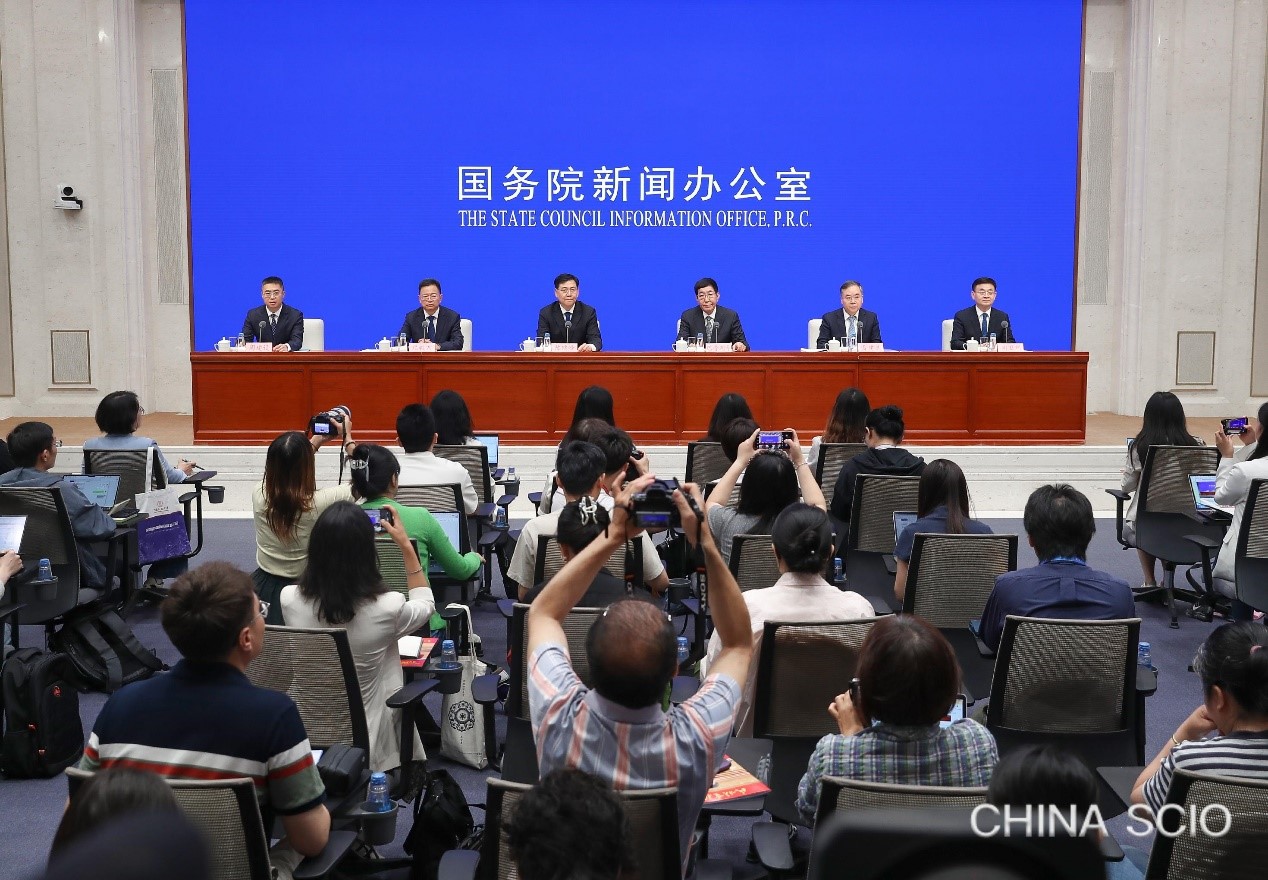
On June 24, 2026, the State Council Information Office holds a press conference in Beijing about the Law of the People's Republic of China on Promoting Ethnic Solidarity and Progress as well as China's work on ethnic affairs. [Photo by Liu Jian/China SCIO]
China's law on promoting ethnic solidarity and progress stipulates that the legitimate rights and interests of people seeking cross-regional employment and entrepreneurship shall be protected, Chen Ruifeng, minister of the National Ethnic Affairs Commission, said at a press conference in Beijing on Wednesday.
Chen made the remarks in response to a question about Western media reports alleging so-called "forced labor" in Xinjiang Uygur autonomous region. Citing Article 25 of the law, he said the provision is designed to protect the equal development rights of people from all ethnic groups, broaden their income-generating channels, and promote exchanges, interactions, and integrations among different ethnic groups.
The process of cross-regional employment and entrepreneurship upholds the core principles of complete voluntariness, mutual agreement, law-based compliance, and freedom of movement, Chen said.
Claims of so-called "forced relocation" and "forced labor" are groundless and absurd, he said. People from Xinjiang who choose to work outside their hometowns do so voluntarily, motivated by their own desire to improve their families' livelihoods and upgrade professional skills.
Chen stressed that China's Constitution, Labor Contract Law, and other laws and regulations prohibit all forms of forced labor, labor discrimination, and restrictions on personal freedom.
The law on promoting ethnic solidarity and progress further sets out measures to protect the rights and interests of workers seeking employment across regions, including rights protection and legal aid, from the perspective of ethnic affairs.
Xinjiang has pursued an employment-first strategy and taken a wide range of measures to promote high-quality and full employment.
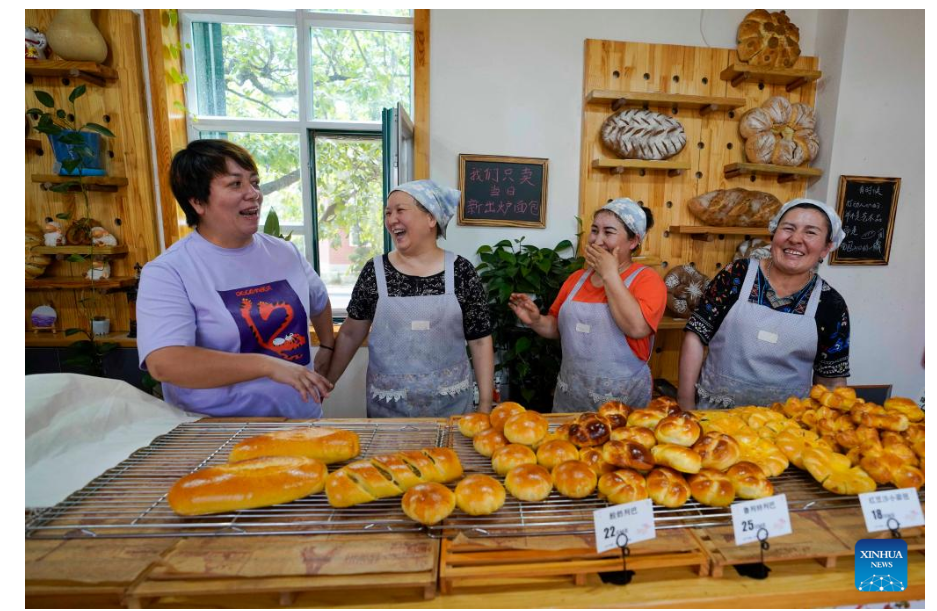
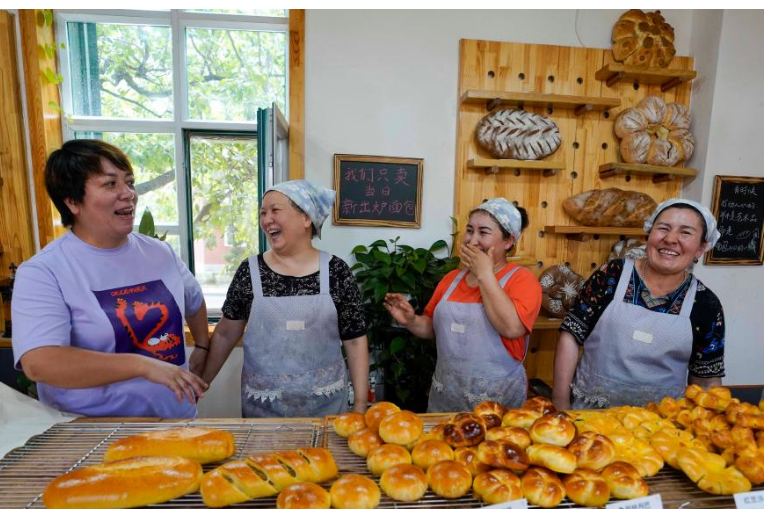
Feng Xiaoli (1st L), owner of the Liuba Bakery, chats with her employees at the bakery in Yining, northwestern China's Xinjiang Uygur autonomous region, June 23, 2022. [Photo/Xinhua]
Over the past five years, the region has created 2.4 million new urban jobs, while agricultural workers made 16.1 million trips for employment outside their home areas.
During the same period, the per capita disposable incomes of urban and rural residents grew by an average of 5.3% and 8.1% annually, respectively.
By improving its fair employment policy system and labor rights protection mechanisms, Xinjiang has safeguarded the legitimate rights and interests of workers, helped people with the ability to work secure employment, and ensured voluntary employment and decent work for people of all ethnic groups to the greatest extent possible, Chen said.