China SCIO | June 24, 2026


In a move to reinforce its appeal as a premier investment destination, China unveiled a 15-point action plan on Monday to stabilize and upgrade support for foreign investment.
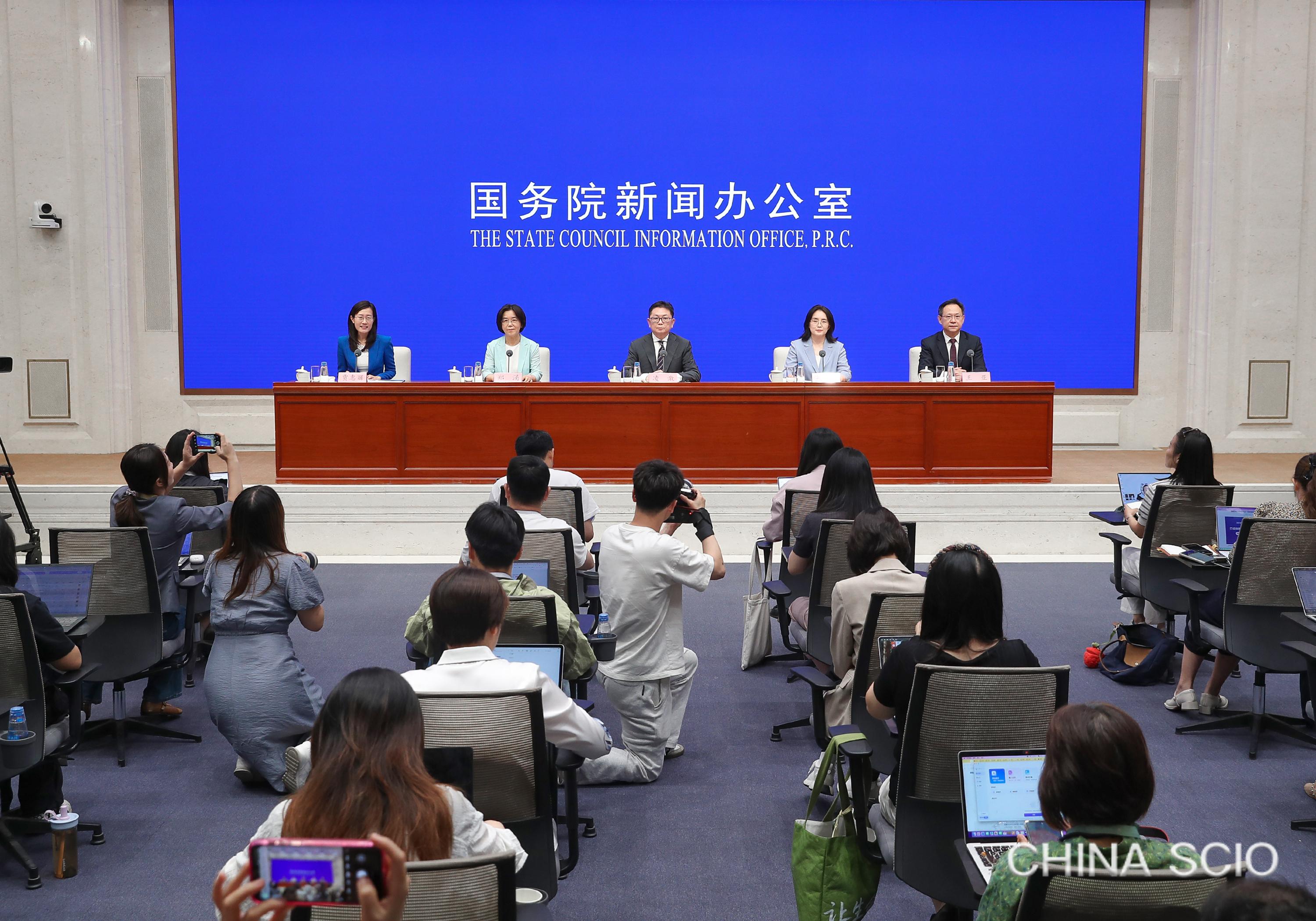
On June 22, 2026, the State Council Information Office holds a press conference in Beijing to introduce policies and measures on stable and optimized utilization of foreign investment. [Photo by Liu Jian/China SCIO]
The plan was jointly issued by the Ministry of Commerce, the National Development and Reform Commission, and the Ministry of Finance. It lays out a blueprint for rolling out measures spanning five areas: expanding market access, smoothing investment procedures, sharpening promotion efforts, strengthening services and guarantees, and refining foreign investment management.
The policy package arrived at a time when global foreign direct investment (FDI) flows are facing headwinds under the weight of geopolitical fractures and economic uncertainty, and could serve as a stabilizer that not only anchors existing investors but also opens new avenues for long-term growth, officials and experts said.
The economics behind investor confidence
Vice Commerce Minister Ling Ji, briefing reporters on Monday afternoon, laid out some figures illustrating the strength of foreign investment in China. As of the end of 2025, the number of foreign-invested enterprises (FIEs) reached 533,000, growing at an average annual rate of 4.5% over the past five years, and aggregate FDI stock approaching US$4 trillion. In the first five months of 2026 alone, nearly 4,000 FIEs increased their investments in China.
"The external adverse factors have mainly affected the fluctuation in incremental foreign investment, but the impact on the existing stock has been marginal," Ling said. He said foreign investment in China has remained stable in scale, operations, economic contribution, and investor confidence.
The underlying economics are what really anchor these numbers. Pan Yuanyuan, deputy director of the International Investment Research Division at the Chinese Academy of Social Sciences' Institute of World Economics and Politics, crunched the data. She found that the return on FDI in China averaged around 10% over the period between 2004 to 2021, three to four times the 3%-5% average for other destinations.
"Foreign investors are motivated by profits, pure and simple," Pan said. "China offers a large domestic market, a vast population, rising consumption power, stable politics, high levels of openness, robust infrastructure, and a competitive workforce. These elements combine to deliver far higher returns than other markets."
Services, finance, pharma: New frontiers
The headline changes from the action plan target services, finance, and pharmaceuticals.
For the service sector, which now accounts for around 70% of actual utilized FDI, the plan adds pilot programs for vocational training institutions, colleges, and top-tier universities in science, engineering, agriculture, and medicine, moving beyond previous pilots in biotechnology, value-added telecom, and wholly foreign-owned hospitals.
Sang Baichuan, dean of the China Institute for Open Economy Studies at the University of International Business and Economics, sees this as a strategic play for talent. "High-tech manufacturing and high-end services demand a robust talent pool," he said. "Opening education services attracts more foreign investment in vocational training and science, engineering, agriculture, and medicine, which cultivates the human resources needed for high-quality FDI."
He called it a virtuous circle: Better global education resources upgrade China's talent base, which in turn pulls in more premium foreign investment.
Sang also noted that the action plan directly addresses what foreign investors have been asking for — from access to procurement, education, medical care, and financial services, to fair competition, policy transparency, and predictability. It also takes on issues that have drawn keen interest in recent years, including cross-border data flows, merger and acquisition rules, the development of research and development centers, and domestic reinvestment.
On the financial front, the plan allows more foreign institutions to use risk-management tools including treasury bond futures, and supports them in offering fund investment advisory services. It also provides cross-border financing facilitation quotas for key foreign companies, and encourages eligible foreign firms to list on domestic exchanges.
For the pharmaceutical sector, the plan carves out new space with "cross-border segmented production" of biologics and chemical drugs, allowing drug production stages to span different countries. It also expands pilot zones for wholly foreign-owned hospitals and encourages insurers to cover more innovative drugs and devices.
"It responds to foreign investors' concerns with concrete measures," Sang said. "The action plan reflects a clear policy orientation: improving regulation, optimizing government services, and promoting the stable development and structural upgrading of FIEs.”
'Invest in China' initiative
Notably, the action plan puts renewed emphasis on the "Invest in China" initiative. A digital integrated service platform is in the works, along with a dedicated "Invest in China" portal that will house information, consultation, and professional support.
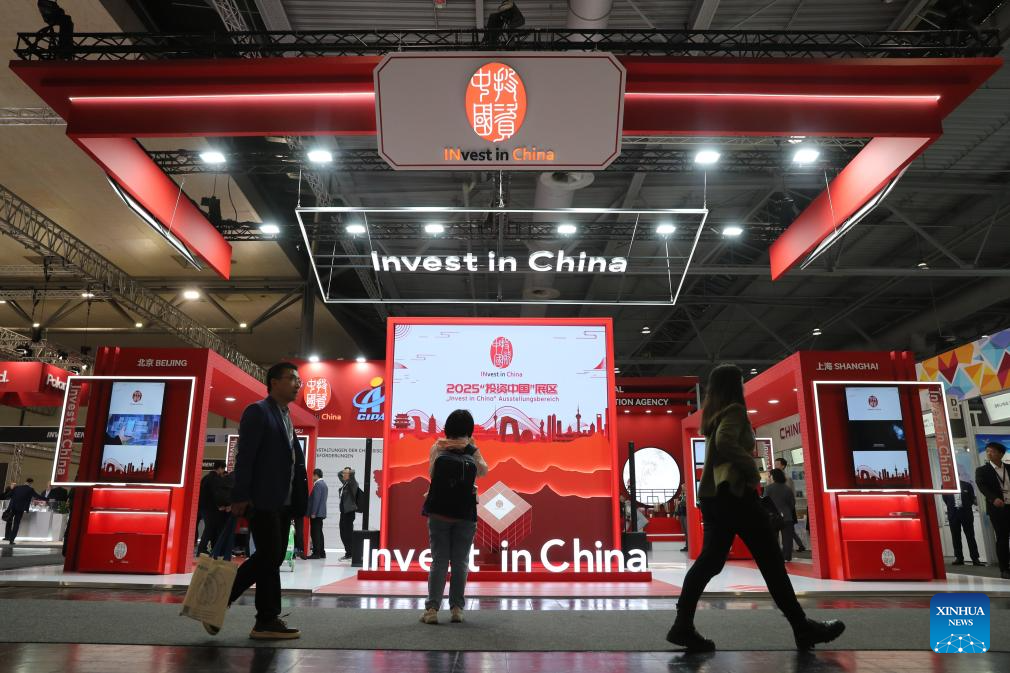
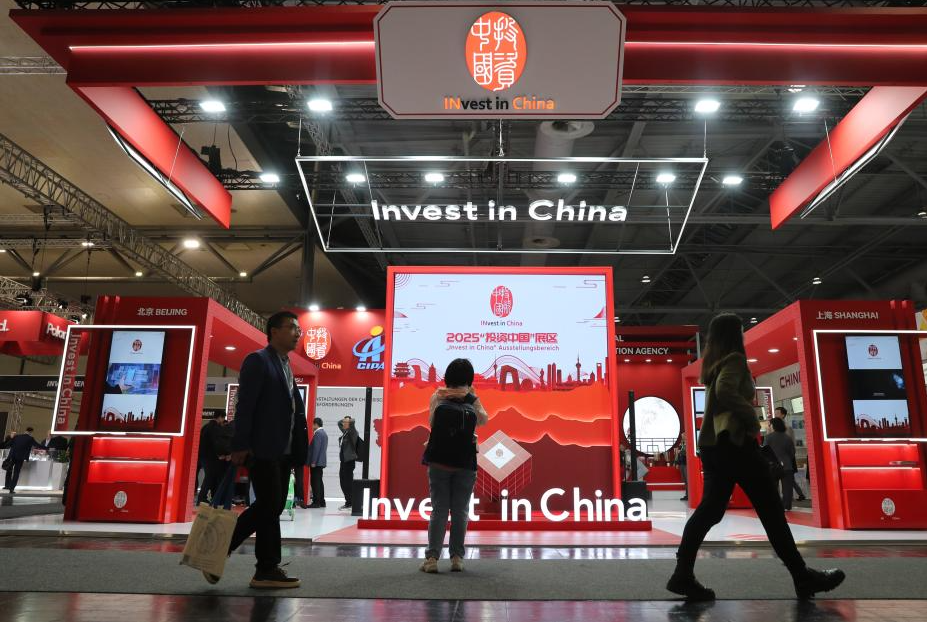
People visit the exhibition booth of "Invest in China" at Hannover Messe 2025 in Hannover, Germany, March 31, 2025. [Photo/Xinhua]
"Now in its fourth year, it has become a key window for foreign investors to understand China's economic policies and explore market opportunities," said Vice Commerce Minister Ling.
Since 2023, the Ministry of Commerce has held 50 roundtables with over 2,000 foreign businesses, channelling practical concerns into policy adjustments. A dedicated task force has resolved nearly 3,000 issues raised by foreign firms.
The initiative also anchors a flagship investment fair in southeastern Chinese city Xiamen. Separately, it has published an annual handbook for foreign business visitors navigating life and work in China, and established 16 bilateral promotion working groups with major source economies.
"The initiative has entered a standardized, systematic, and regularized phase," Ling said.
Building certainty
Yet in the view of experts, the action plan's message may not just be about any single measure, but about commitment and certainty.
Pan sees this as the defining shift. "This is a clear signal of China's commitment to opening up, and a consistent message to the world: China is a place for stable operations, long-term growth, and profitable foreign investment," the researcher said. She argued that what matters just as much as returns on FDI in China is the rising predictability that now accompanies those returns. In her view, in the 1990s, returns were higher, but so was uncertainty; now returns are still solid, and certainty has improved significantly.
"We are moving toward what mature economies offer: not necessarily the highest returns, but stable, predictable ones." That, she added, is the direction of travel.
Sang places the action plan in a broader context. With trade protectionism and populism on the rise, and global FDI under significant strain, China's move sends a clear signal: The country remains open for business.
"It injects certainty into the world economy and helps counter the tide of deglobalization," he said. "It shows that China will continue to pursue open development, share its market opportunities with foreign investors, and work for mutual benefit with the rest of the world."