China SCIO | June 9, 2026


China's State Council has unveiled the country's first national-level specialized plan on urban renewal, outlining a roadmap for building people-centered cities that are innovative, livable, beautiful, resilient, culturally advanced, and smart by 2035.
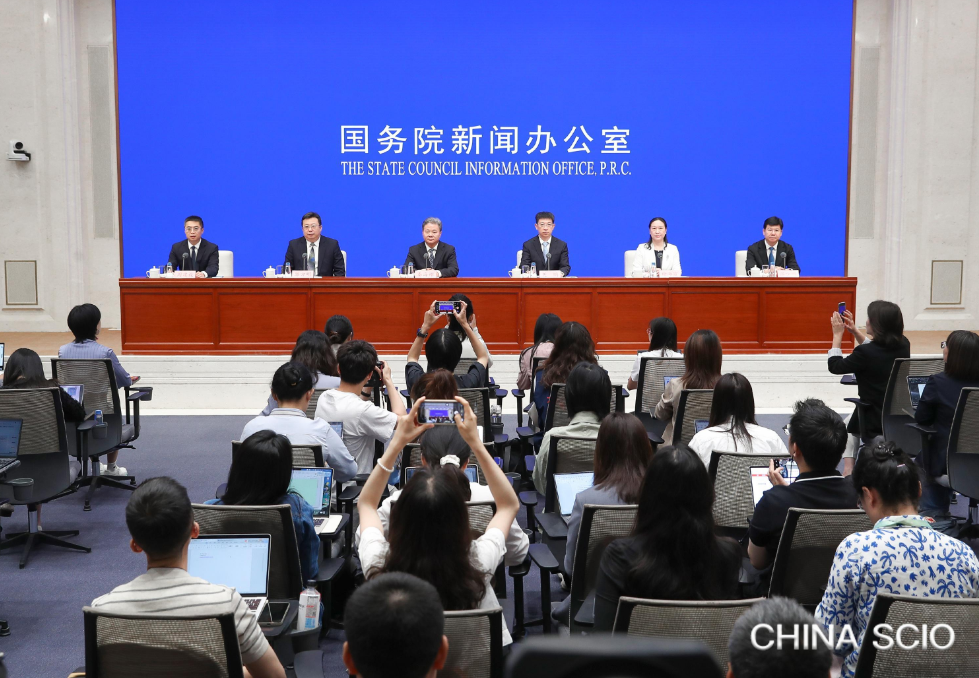
On June 8, 2026, the State Council Information Office holds a policy briefing in Beijing to introduce the 15th Five-Year Plan for Urban Regeneration (2026-2030). [Photo by Liu Jian/China SCIO]
"China's urbanization has shifted from rapid expansion to stable development, and urban construction is moving from large-scale expansion to improving the quality of existing resources," said Qin Haixiang, vice minister of housing and urban-rural development, at a Monday policy briefing.
The document outlines priorities for the 2026-2030 period, setting out a vision of building safer, more livable and service-oriented cities with more distinctive urban landscapes, better protected cultural heritage, and stronger governance capacity.
Urban renewal is not a new concept in China. Previous rounds of urban development largely focused on physical expansion to support economic growth and city image enhancement.
"The urban renewal agenda during the 15th Five-Year Plan period marks a shift from expansion-driven development to quality-oriented growth," said Qin Hong, a senior researcher at the National Academy of Development and Strategy of Renmin University of China.
"The emphasis is now on whether cities provide a better quality of life. Urban renewal is becoming more people-centered, balancing heritage preservation with modernization, promoting multi-stakeholder governance, and pursuing sustainable growth through long-term operation and asset management rather than land value appreciation and property sales."
The plan introduces 10 major indicators covering housing safety, public services, living environment, infrastructure, and digital governance.
It also sets many targets that reflect the transition from expansion-oriented development to quality improvement. This includes increasing the number of dilapidated urban housing units slated for renovation from 250,000 over the previous five-year period to 500,000 by 2030, underscoring the emphasis on safety and risk prevention.
Moreover, the plan places greater emphasis on preserving historical and cultural heritage, upgrading aging neighborhoods and industrial districts, expanding public spaces, and improving community facilities.
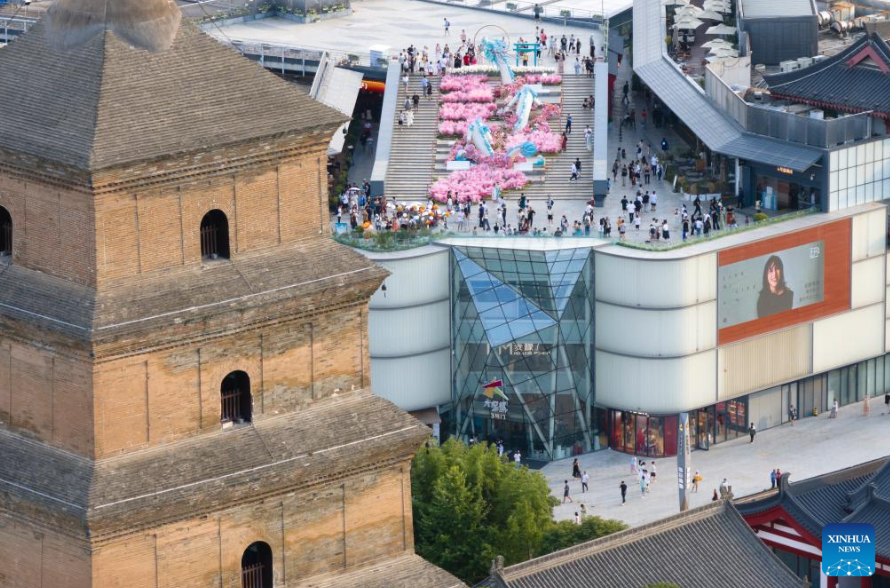
An aerial drone photo shows tourists on a sightseeing platform near the Giant Wild Goose Pagoda in Xi'an, northwestern China's Shaanxi province, July 16, 2025. [Photo/Xinhua]
A notable target is to digitalize basic data on more than 95% of urban housing by 2030. According to Qin Hong, assigning digital identities to houses will support safety management and risk inspection.
Wang Kai, former president of the China Academy of Urban Planning and Design, said the indicators are designed to address residents' most pressing concerns and create a safer urban living environment.
He noted that residents are likely to feel the benefits most directly through improved property management services, smarter urban governance, and better public service facilities.
"The core of a city lies in its people. The fundamental goal of urban renewal is to make people's lives more convenient, comfortable, and fulfilling," Qin Haixiang said.
The plan outlines measures to improve housing, residential compounds, communities, and urban districts. For example, it calls for improving the quality of newly built homes, accelerating the renovation of aging housing stock, encouraging residents to upgrade and refurbish their homes, and promoting prefabricated interior renovation, age-friendly modifications, and barrier-free facilities.
Turning the goals of the plan into reality will require substantial financial support. The plan also proposes establishing a sustainable investment and financing mechanism for urban construction and operation.
Qin Hong said this reflects a shift from simply bridging funding gaps toward proactively creating long-term value through urban renewal.
The envisioned system relies on a diversified financing structure involving central government funding, local government special bonds, financial institutions, private capital, and residents. It will also make greater use of market-based instruments such as urban renewal funds, real estate investment trusts, and asset-backed securities.
Projects with manageable risks and sustainable business models will be encouraged to operate on commercial principles, while long-term operation and returns will be taken into account to ensure sustainability.
Urban renewal is expected to involve trillions of yuan in investment, creating jobs and supporting industries ranging from construction materials and home renovation to smart-home technologies, property services, and commercial operations, said Qin Hong. It is also expected to stimulate new consumption and economic activity by integrating business, tourism, culture, sports, and technology, she added.