China SCIO | April 17, 2026


China's economy beat market forecasts in the first quarter (Q1) of 2026, expanding 5% year on year, amid ongoing geopolitical conflicts and global market volatility.
The world's second-largest economy posted 33.42 trillion yuan (US$4.87 trillion) in GDP during the period, up 1.3% quarter on quarter, securing a strong start to the year and the 15th Five-Year Plan period (2026-2030).
Tech and industry lead the surge
China's industrial output jumped 6.1% year on year in Q1, outpacing the previous quarter by 1.1 percentage points, announced Mao Shengyong, deputy commissioner of the National Bureau of Statistics, at a press conference held by the State Council Information Office on Thursday.
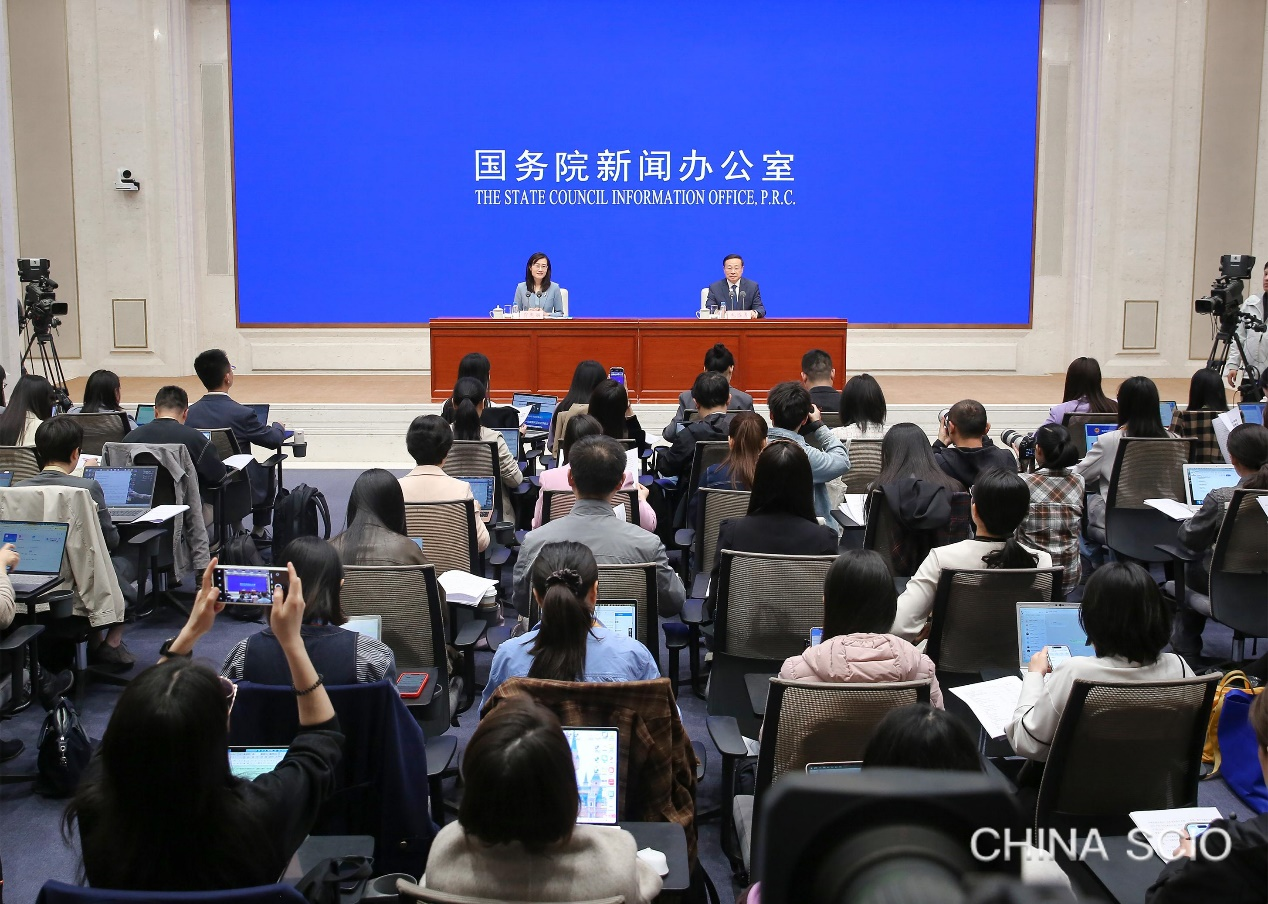
On April 16, 2026, the State Council Information Office holds a press conference in Beijing on China's national economic performance in the first quarter of 2026. [Photo by Zhao Yifan/China SCIO]
The added value of high-tech manufacturing surged 12.5% and equipment manufacturing climbed 8.9%, both outrunning the broader industrial average. Equipment manufacturing contributed to nearly 50% of industrial growth in Q1 and 43.7% of profit growth in January and February. High-tech manufacturing, which accounts for less than 20% of industrial output, drove 32.6% of industrial growth and 51.8% of profits.
Digital and smart industrial transformation is gaining momentum, with digital product manufacturing rising 11.2%, and outputs of electronic material manufacturing and integrated circuit manufacturing up 32.5% and 49.4%, respectively.
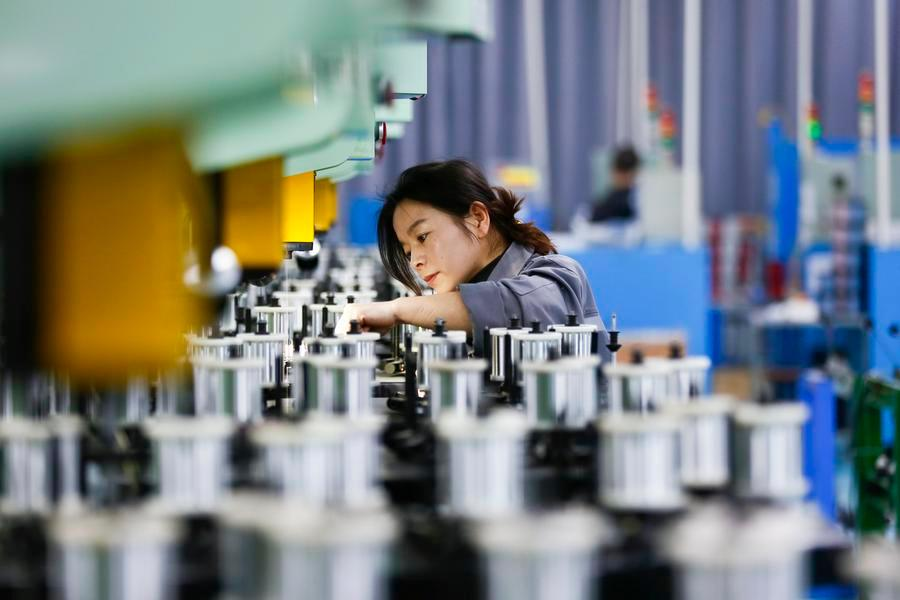
A worker works on a wire harness production line at an electronics technology company in Suixian county of Shangqiu city, central China's Henan province, Jan. 27, 2026. [Photo/Xinhua]
Key tech products posted strong growth as 3D printing equipment production rose 54%, lithium-ion battery output increased 40.8%, and industrial robots manufacturing expanded 33.2%.
Corporate profits rebounded sharply as industrial profits rose 15.2% in January and February, with tech and equipment sectors posting particularly strong growth.
Consumption and investment rise
Consumption picked up steam, with retail sales up 2.4% and service consumption posting robust growth of 5.5%.

Tourists pose for photos at a scenic area in Sanya, southern China's Hainan province, Jan. 1, 2026. [Photo/Xinhua]
Online retail grew 8%, while government-backed consumer goods trade-in programs drove over 430 billion yuan in sales in Q1, benefiting consumers across over 60 million purchases.
Fixed-asset investment reversed last year's decline to rise 1.7%, fueled by an 8.9% jump in infrastructure spending and strong high-tech investment.
Domestic demand now fuels 84.7% of growth, up nearly 30 percentage points year on year, representing a sharp shift toward internal drivers.
Trade surges, production prices turn positive
Foreign trade was a standout performer as total goods trade soared 15% in Q1, with exports up 11.9% and imports soaring 19.6%.
Trade with Belt and Road partners rose 14.2%, and imports and exports by private firms grew 16.2%, accounting for 57.3% of total trade.
Consumer price index rose a mild 0.9%, up 0.4 percentage point from the last quarter.
A significant turning point took place in March as the producer price index flipped positive with a 0.5% year-on-year increase, ending a 41-month decline.
The upturn came from stronger domestic tech and green demand, positive results in curbing cutthroat competition, and modest domestic price gains in contrast to sharp global rises, explained Mao.
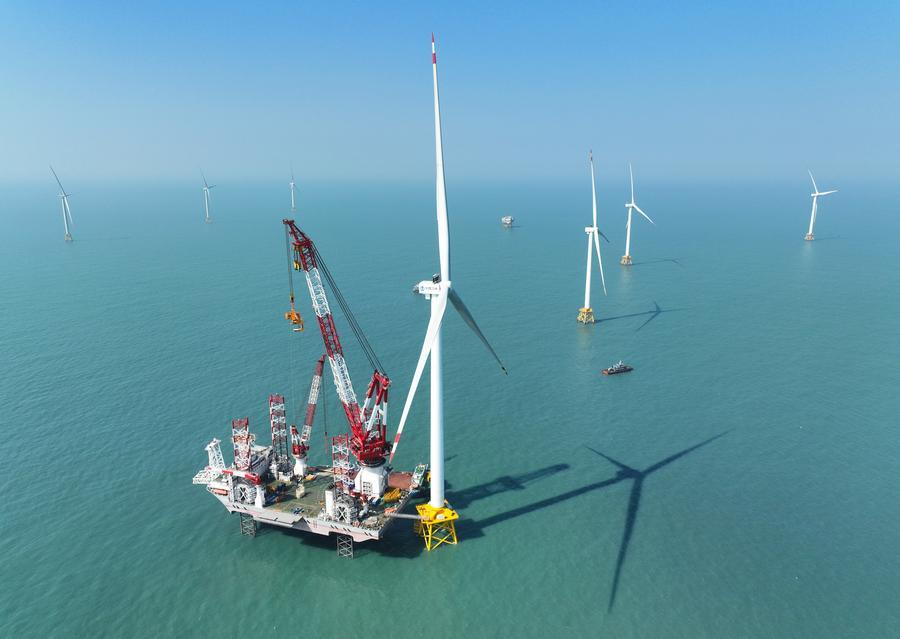
A drone photo taken on Jan. 13, 2026, shows part of an offshore wind turbine unit and a 2,000-metric-ton self-elevating offshore wind power installation platform on the southern waters of Fujian province in southeastern China. [Photo/Xinhua]
In Q1, the share of non-fossil energy in total consumption rose 0.4 percentage point year on year, further optimizing the energy mix.
China's diversified energy supply has helped to maintain stable domestic energy prices and supply amid global market volatility, cushioning its market from external shocks, Mao said.
Mao noted that the impact of the Middle East conflict on China's exports and the broader economy remains limited and controllable. China's diversified trade structure, strong industrial chains, optimized energy mix, and competitive enterprises have boosted economic and trade resilience, helping offset external uncertainties, he said.
Jobs and income stay stable
China's labor market held firm as average surveyed urban unemployment rate remained at 5.3% in Q1.
Real disposable income rose 4%, with rural income growing faster than urban income and narrowing the gap.
The deputy commissioner said the performance of China's economy in Q1 proved its strong economic resilience despite global conflicts and external headwinds, with new quality productive forces becoming a major growth engine. Despite various challenges, China remains on track to hit its full-year growth target thanks to its solid fundamentals, policy support, and powerful new economic drivers, Mao said.