China SCIO | February 13, 2026


China's new plan for its modern capital metropolitan area has clarified priorities for Xiong'an New Area, mapping out its development path as part of the Beijing-Tianjin-Hebei region.
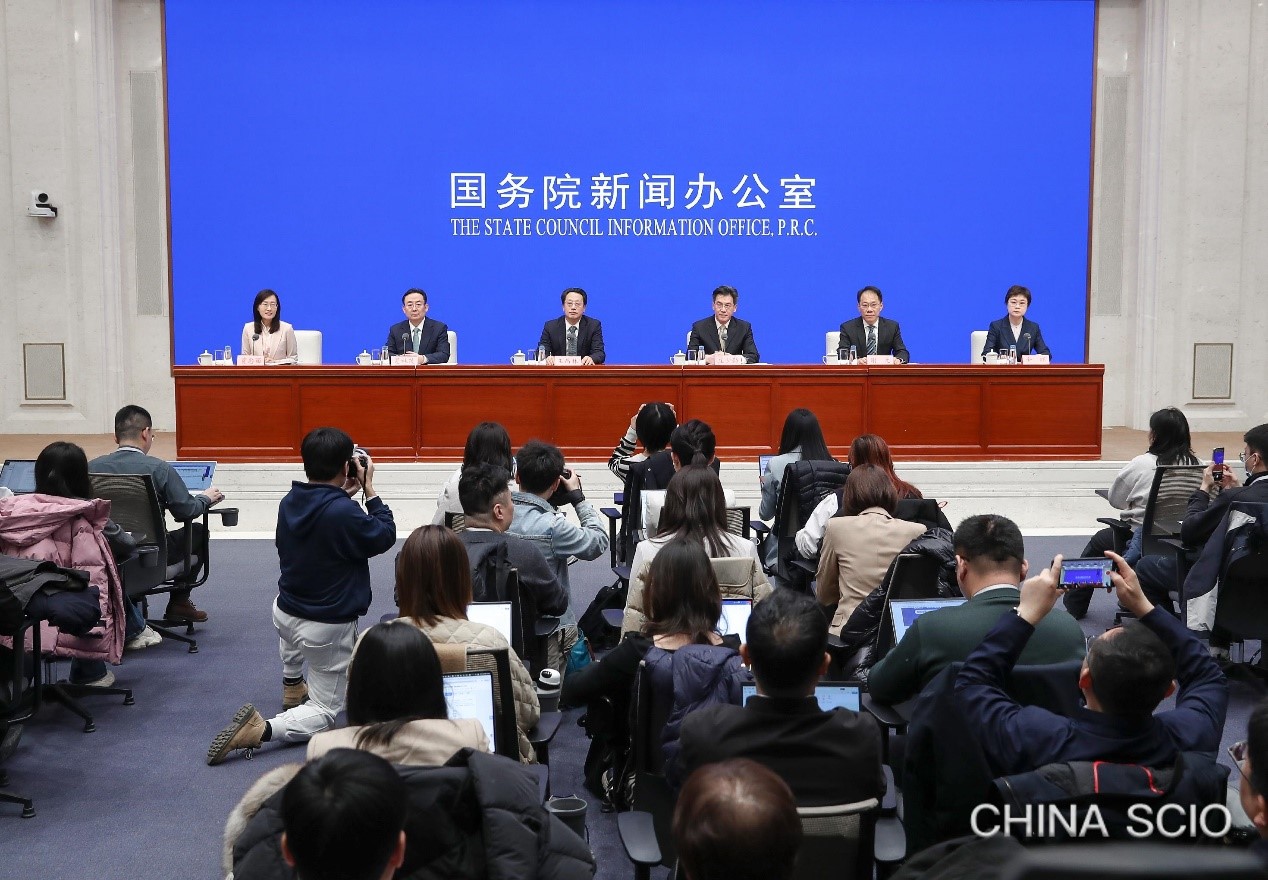
On Feb. 12, 2026, the State Council Information Office holds a press conference in Beijing on the Spatial Coordination Plan for the Modern Capital Metropolitan Area (2023-2035). [Photo by Liu Jian/China SCIO]
The plan marks a major step in implementing the strategy for the coordinated development of the Beijing-Tianjin-Hebei region, said Wang Changlin, vice chairman of the National Development and Reform Commission, at a press conference Thursday.
According to the plan, Hebei's Xiong'an New Area and the Beijing Municipal Administrative Center — designated as the "two wings" of the country's capital — will pursue coordinated yet differentiated development, and enhance their capacity to support and serve the capital's core functions, Wang said.
Jin Hui, vice governor of Hebei province, said the plan clarifies the direction for Xiong'an's long-term development, with the goal of becoming a high-level socialist modern city by 2035 and a high-quality, high-standard socialist modern city by 2050.
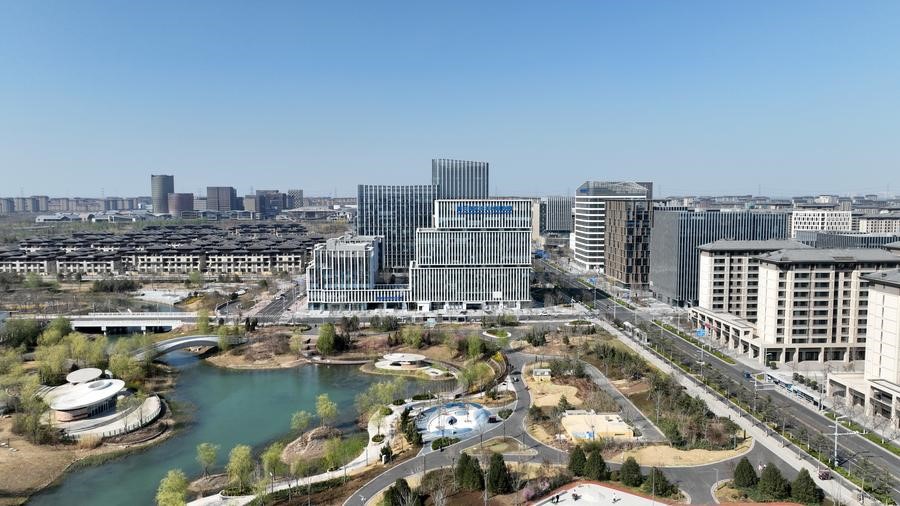
An aerial drone photo taken on March 29, 2025 shows the Xiong'an New Area Zhongguancun Science Park and its surroundings in Xiong'an New Area, northern China's Hebei province. [Photo/Xinhua]
In the next phase, Hebei will step up efforts to make Xiong'an a primary destination for functions relocated from Beijing that are not essential to its role as the capital, Jin said. Industrial and innovation collaboration between Beijing and Xiong'an will be deepened, supported by platforms such as the Xiong'an New Area Zhongguancun Science Park. Supporting policies will be refined to ensure favorable working and living conditions for relocated personnel.
Authorities will also advance the high-standard construction of a modern city. Digital and physical infrastructure will be developed in tandem, while public services and municipal facilities will be upgraded to enhance overall urban functions.
Green and low-carbon development will remain a priority. Efforts will continue to restore the ecology and environment of Baiyangdian Lake and to promote the preservation and revitalization of regional cultural heritage in urban development.
In addition, Xiong'an will further strengthen its role as an innovation hub by deepening collaboration with Beijing and Tianjin in science, technology, and industrial development. The area aims to become a hub for emerging industries and a pilot zone for future industries
Efforts will also be made to attract pilot programs and international science and technology organizations, bolstering the city's capacity for independent and original innovation.
The spatial coordination plan for the modern capital metropolitan area, covering the period from 2023 to 2035, was recently approved by central authorities. According to the document, Xiong'an has been designated as a key zone for optimizing and safeguarding the capital's core functions and as a major engine for building a world-class city cluster.

