China SCIO | January 27, 2026



China will take targeted steps in 2026 to promote higher-quality growth in foreign trade amid rising external uncertainties, the Ministry of Commerce said on Monday.
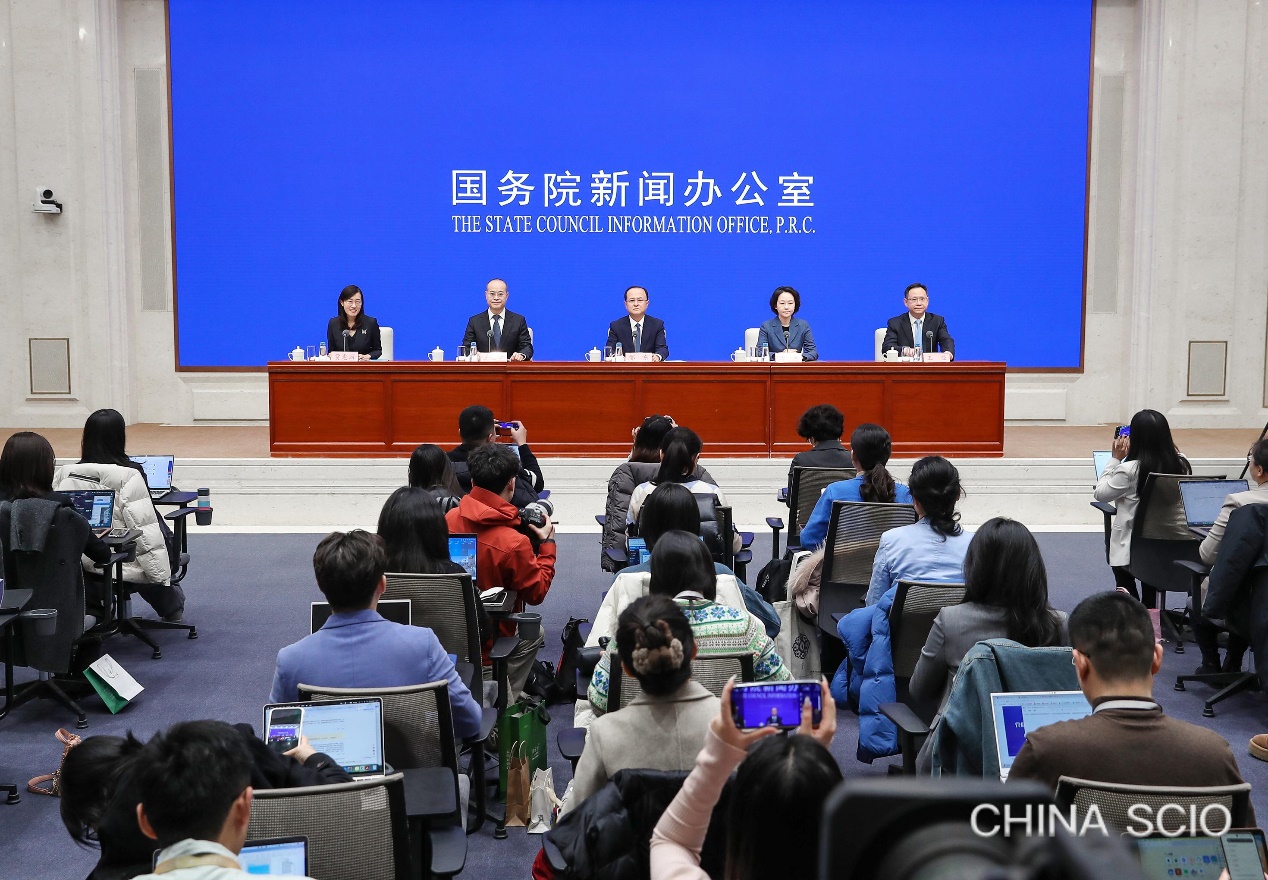
On Jan. 26, 2026, the State Council Information Office holds a press conference in Beijing on China's commerce work and performance in 2025. [Photo by Liu Jian/China SCIO]
Addressing China's foreign trade outlook for 2026, Wang Zhihua, director general of the Department of Foreign Trade of the Ministry of Commerce, said the country faces a more complex global environment, with strategic opportunities existing alongside growing risks and unpredictable factors. Still, he said, its foreign trade remains underpinned by a solid economic foundation, strong resilience, and long-term growth potential.
In 2026, China will focus on improving the quality and efficiency of foreign trade, and work to stabilize its fundamentals, while steadily advancing the opening of the services sector, Wang said. The measures are aimed at securing a solid start to the country's next five-year development.
Key steps include strengthening coordinated policy support for foreign trade firms to help lower costs and boost efficiency, as well as improving communication and policy guidance to stabilize expectations and shore up confidence. Efforts will be made to conduct studies and roll out new support measures, with closer coordination between central and local governments.
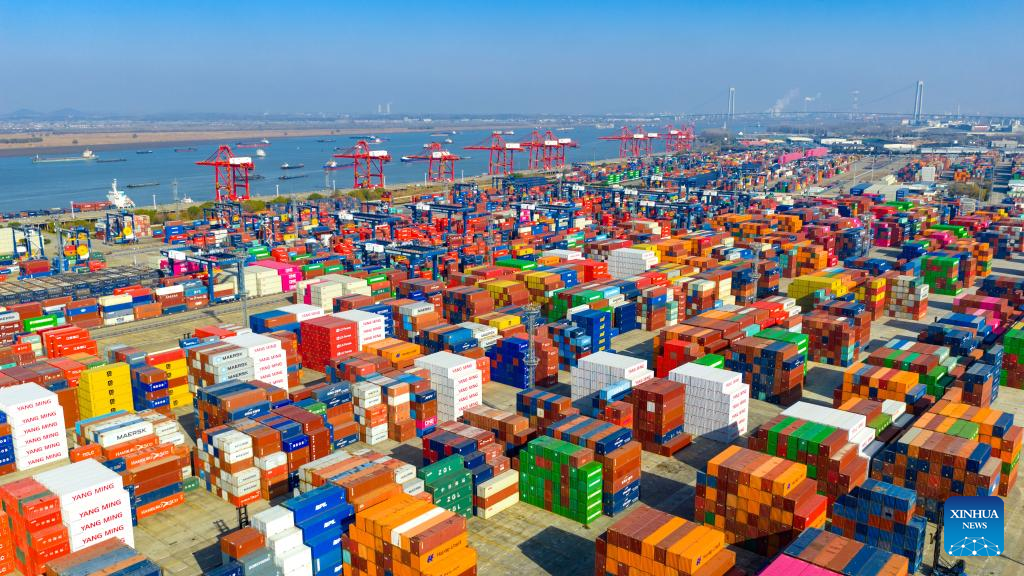
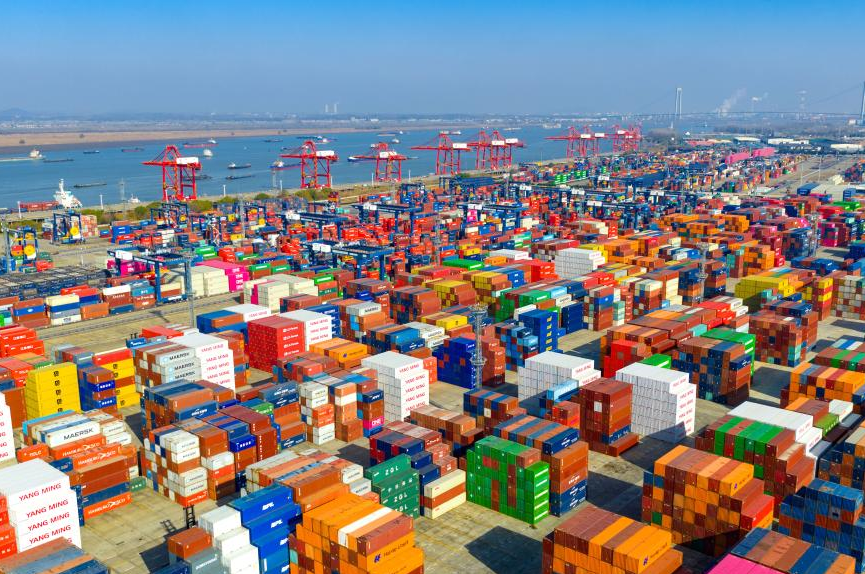
An aerial drone photo taken on Dec. 14, 2025 shows a view of the Longtan Container Terminal at Nanjing Port, eastern China's Jiangsu province. [Photo/Xinhua]
China will expand efforts to diversify overseas markets by supporting companies' participation in international exhibitions and trade promotion events. It will also host major trade fairs, including upcoming sessions of the China Import and Export Fair (Canton Fair), to help exporters better connect with global buyers.
Innovation will play a bigger role in trade growth. China will leverage cross-border e-commerce pilot zones to better integrate e-commerce with industrial clusters and support the smart upgrade of overseas warehouses. The government will also promote green trade, boost the global competitiveness of low-carbon products, and encourage the use of artificial intelligence to improve digitalization in the trade process.
To promote more balance in trade, China will step up efforts to expand imports and organize targeted import promotion activities. Platforms such as the China International Import Expo will be leveraged to help more foreign products and services enter the Chinese market.
The ministry also said China will expand trade in services by improving the negative list for cross-border trade in services, steadily opening up the services sector, and building national demonstration zones. It will support professional service providers to strengthen their international capabilities and introduce policies to boost inbound consumption.
In addition, China plans to advance digital trade by launching national pilot zones, developing relevant standards, and hosting international cooperation events.

