China SCIO | September 19, 2025


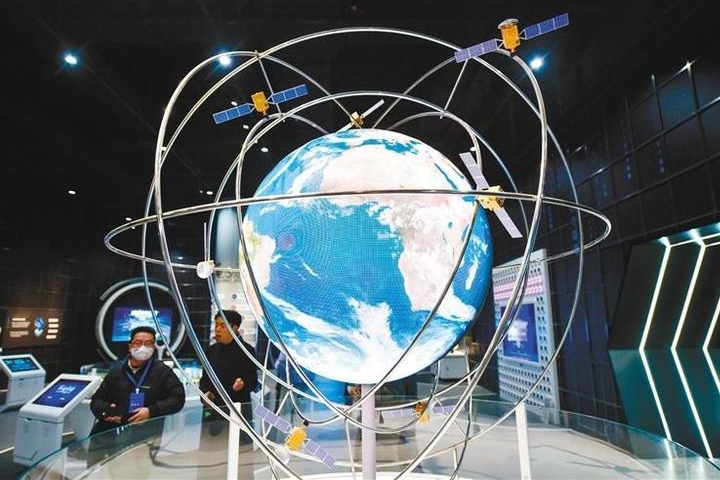

China has deepened scientific and technological cooperation with countries participating in the Belt and Road Initiative (BRI), achieving major progress in joint research, talent training, and platform building, an official said Thursday.
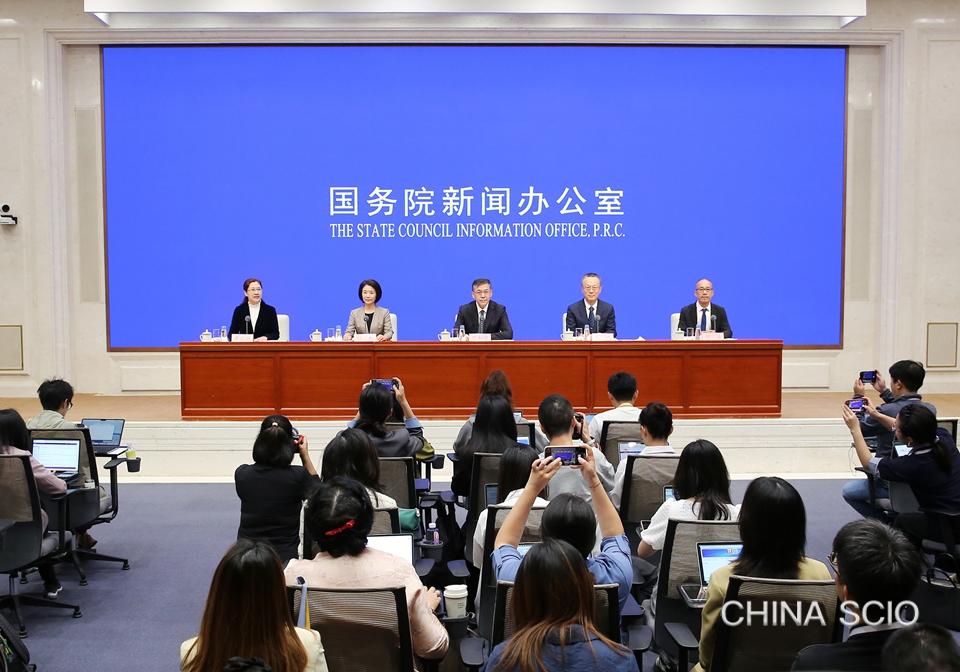
On Sept. 18, 2025, the State Council Information Office holds a press conference in Beijing on science, technology, and innovation achievements in the 14th Five-Year Plan period (2021-2025). [Photo by Zhao Yifan/China SCIO]
At a press conference held by the State Council Information Office on Thursday, Yin Hejun, minister of science and technology, said that China has always upheld open cooperation in science and technology to benefit humanity and is committed to building international sci-tech partnerships for mutual benefit.
During the 14th Five-Year Plan period (2021-2025), China has advanced the Belt and Road Science, Technology and Innovation Cooperation Action Plan, held two BRI conferences on science and technology exchange, and a ministerial meeting on science and technology innovation, according to Yin.
The efforts have established a broad, multi-level cooperation mechanism featuring people-to-people exchanges, joint laboratories, technology transfer, and science park cooperation.
Specific cooperation plans have been launched in key areas including sustainable development technology, space information science and technology, innovation and entrepreneurship, poverty reduction through science and technology, artificial intelligence, and traditional Chinese medicine.
Yin said that China has worked with nearly 50 countries to jointly establish over 70 joint laboratories under the Belt and Road framework, and set up 10 international technology transfer platforms serving regions including the Association of Southeast Asian Nations (ASEAN), Africa and Latin America.
He noted that China and its BRI partners have jointly funded nearly 4,000 research projects, producing innovations that have enhanced the scientific capabilities of partner countries, supported their economic and social development, and improved people’s livelihoods.
China has also contributed to talent cultivation, supporting over 55,000 young scientists from BRI countries for short-term exchanges and provided training for more than 23,000 researchers and administrators.
"China's door to technological collaboration will open even wider," Yin said, reaffirming the country's commitment to expanding international exchanges and contribute its wisdom to global scientific progress.

