China SCIO | September 12, 2025




During the 14th Five-Year Plan period (2021-2025), the Supreme People's Court has formulated judicial interpretations on issues such as facial recognition, online consumption, and internet-related intellectual property infringement, while releasing typical cases of protecting people's legitimate rights and interests amid the rapid development of the digital economy and artificial intelligence.
He Xiaorong, justice and vice president of the Supreme People's Court, made the remarks at a press conference in Beijing on Friday.
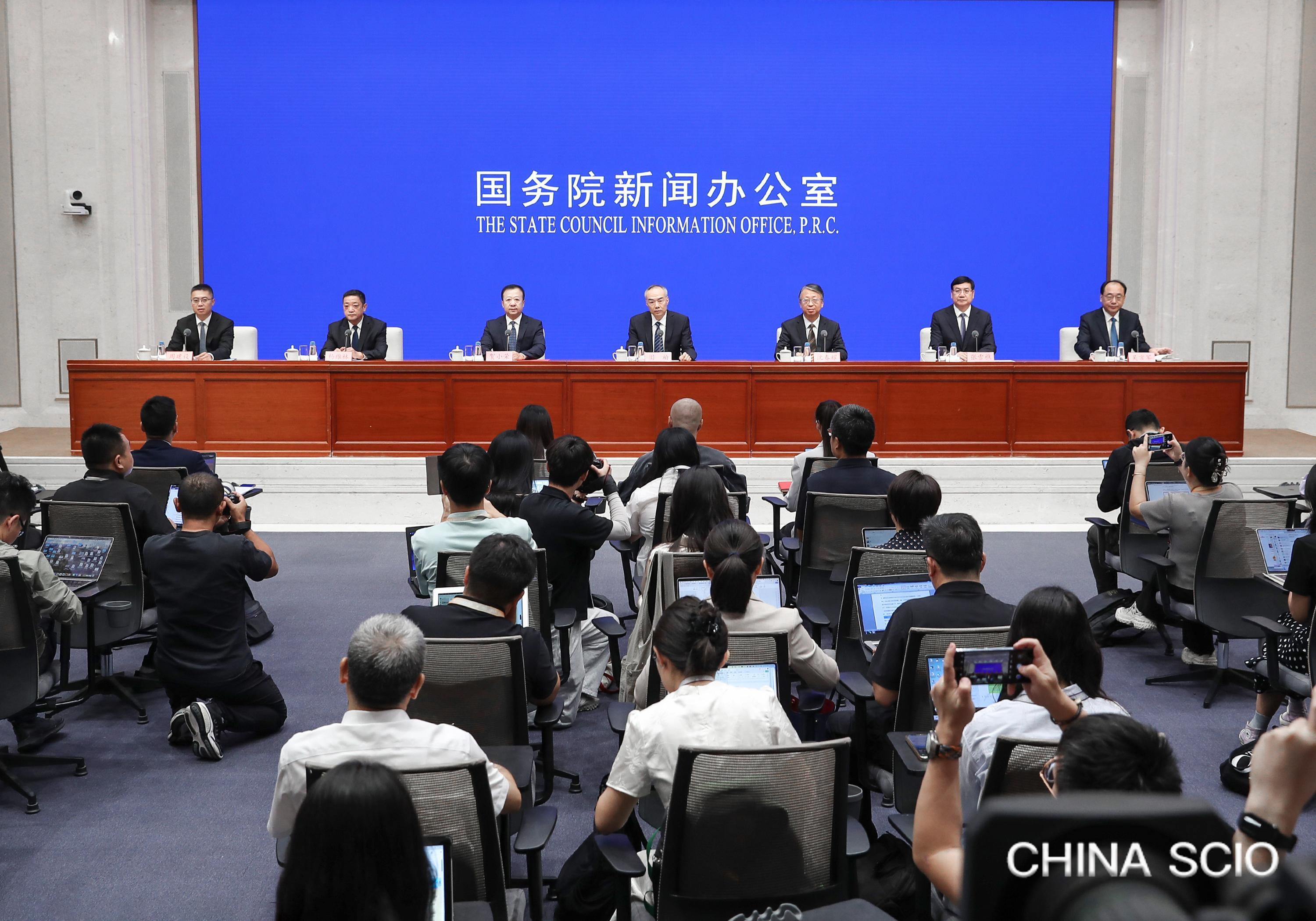
On Sept. 12, 2025, the State Council Information Office holds a press conference in Beijing on unswervingly advancing socialist rule of law with Chinese characteristics during the 14th Five-Year Plan period (2021-2025). [Photo by Liu Jian/China SCIO]
In regards to protecting people's rights to their personal data, he said the Supreme People's Court has advanced judicial regulation in artificial intelligence areas such as algorithm ethics and rules. It guided the trial of China's first case of "AI voice infringement," making clear that using or allowing others to use voices from sound recordings without the rights holder's permission constitutes infringement.
In addition, the court has handled new types of online infringement cases involving personal information protection in accordance with the law, reasonably allocated the burden of proof, and increased compensation for damages arising from personal information leaks.
In protecting the rights and interests of online consumers, the Supreme People's Court has imposed legal sanctions on operators who breach their sales commitments, helping to boost consumer confidence and sense of security, according to He.
Next, the Supreme People's Court will step up efforts to address social ills such as cyberbullying and false accusations, providing strong judicial services and safeguards to protect consumer rights and interests and promote the sound development of the digital economy, he said.

