China SCIO | July 31, 2025


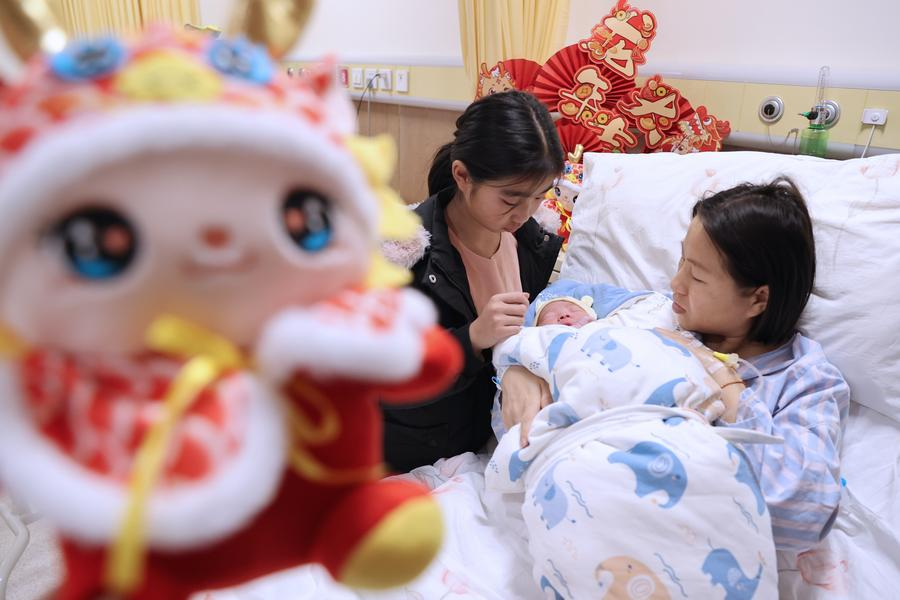

A newborn baby is seen with the mother and sister at a hospital in Wuxi, east China's Jiangsu province, Feb. 10, 2024. [Photo/Xinhua]
Chinese officials elaborated on the country's landmark childcare subsidy program at a press conference Wednesday, noting that the subsidy applies equally to first, second, and third children, regardless of household registration, ethnicity or location.
Earlier this week, China announced the nationwide subsidy program offering cash support to families raising children under the age of three, marking a significant step in the government's efforts to ease the cost of childrearing and encourage higher birth rates.
Starting January 1, 2025, families with children under three will receive an annual subsidy of 3,600 yuan (about US$503) per child until the child turns three. For children born between January 1, 2022, and December 31, 2024, subsidies will be granted on a pro-rated basis according to the number of eligible months.
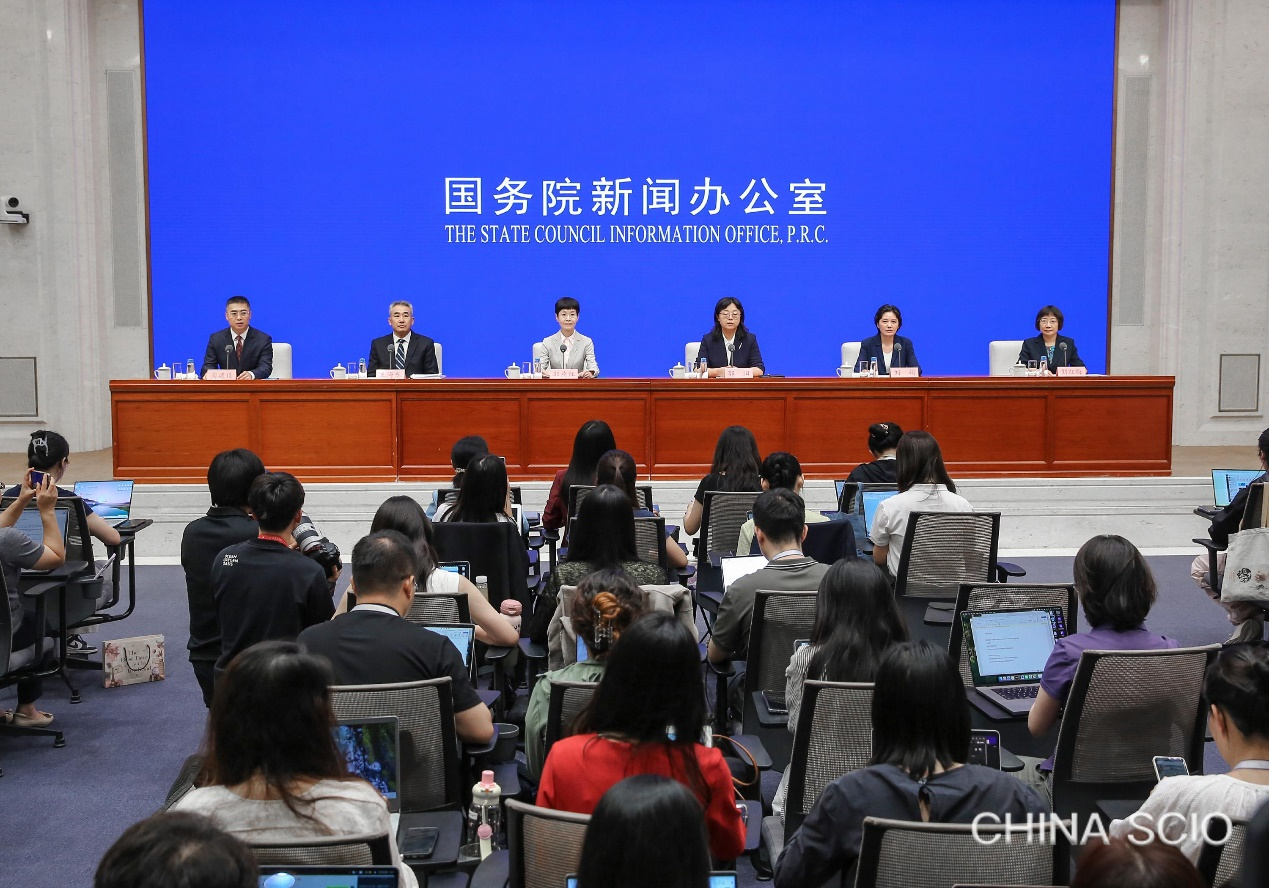
On July 30, 2025, the State Council Information Office holds a press conference in Beijing to introduce China's childcare subsidy system and fertility support measures. [Photo by Liu Jian/China SCIO]
"The childcare subsidy is the first large-scale, universal, and direct cash benefit for social welfare ever issued to the public since the founding of the People's Republic of China, said Guo Yanhong, vice minister of the National Health Commission (NHC). "It is a major initiative aimed at improving people's well-being."
The program provides full-scale support under the country's three-child policy and ensures that all eligible infants and young children can equally enjoy the benefits, she added.
The government has also promised a streamlined and efficient process for accessing the subsidy. Families can apply online through a new national information system, or offline at the children's household registration localities. The process has been simplified through data sharing with police, civil affairs, and social security departments, reducing paperwork for applicants.
Linda Li, a 37-year-old employee at a foreign-invested carmaker in Beijing, said she was thrilled to hear the news of the subsidy. As the mother of a one-month-old, she expects to receive the full three-year benefit but she also noted that raising a child in a city like Beijing remains costly and hopes for more support.
A total of 90 billion yuan from the central budget will be allocated for the program this year, announced Guo Yang, director general of the Social Security Department at the Ministry of Finance, adding that the central government will cover around 90% of all the subsidy costs.
Guo of the NHC noted that local governments are permitted to supplement the national subsidy with higher payments if they choose. Areas that already had pilot programs in place will adjust their policies to align with the national system, while keeping higher local standards where approved.
The launch of the subsidy comes amid growing concerns over China's declining fertility rate and aging population. Officials stressed that the new policy is not a one-off payment, but part of a systemic approach to ease the burden of raising children.
Over recent year, the Chinese government has increased tax deductions for children under three, raised maternity insurance payouts, expanded access to childcare and preschool services, and extended paid parental leave in many provinces, as part of a broader package of pro-birth policies, said Guo of the NHC.
"We will continuously enrich and improve the toolbox of fertility support measures, further reduce the burdens of childbirth, childrearing, and education for families, and promote the development of a family-friendly society," she said.

