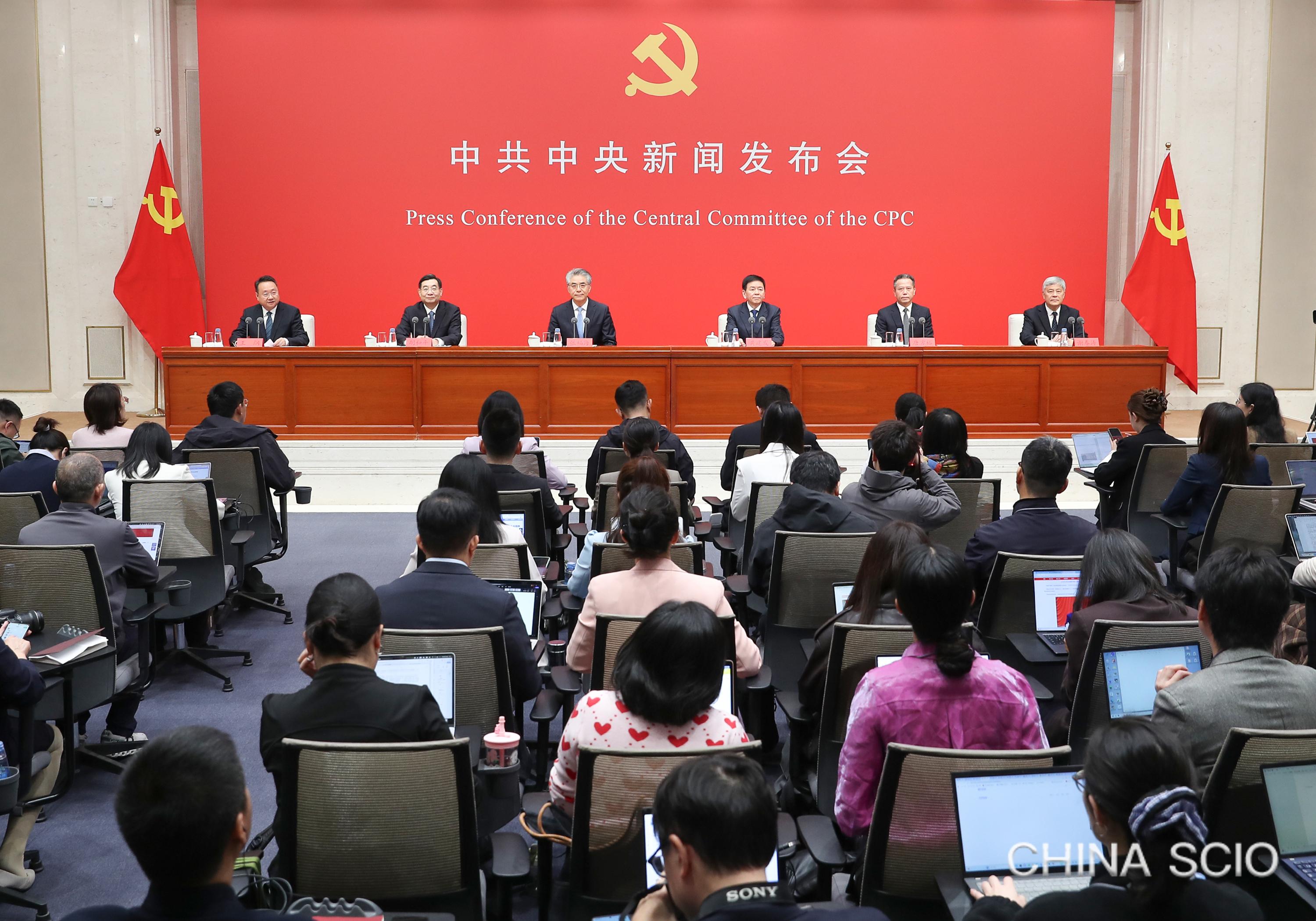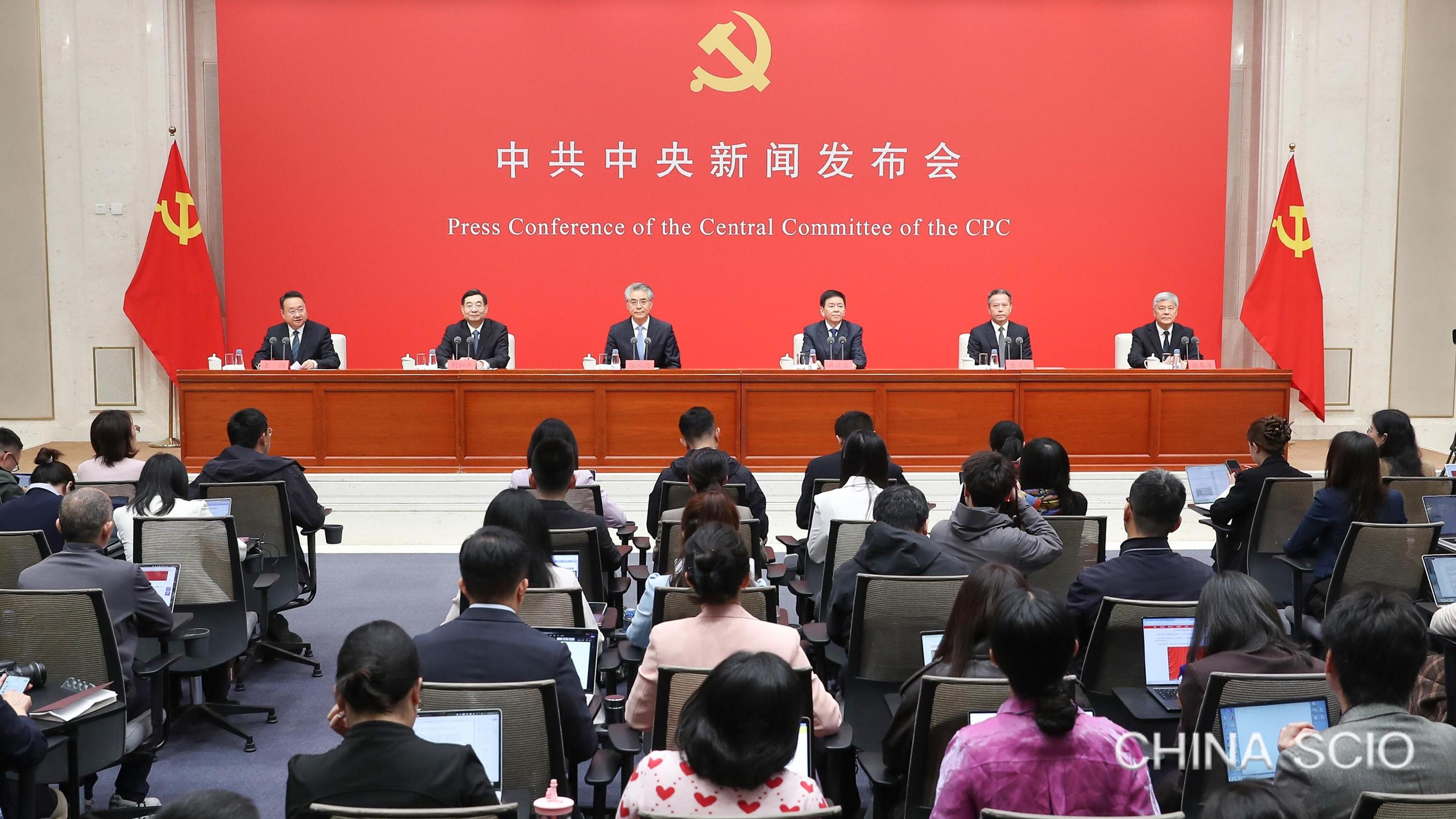

Beijing | 10 a.m. Oct. 30, 2026
Speakers
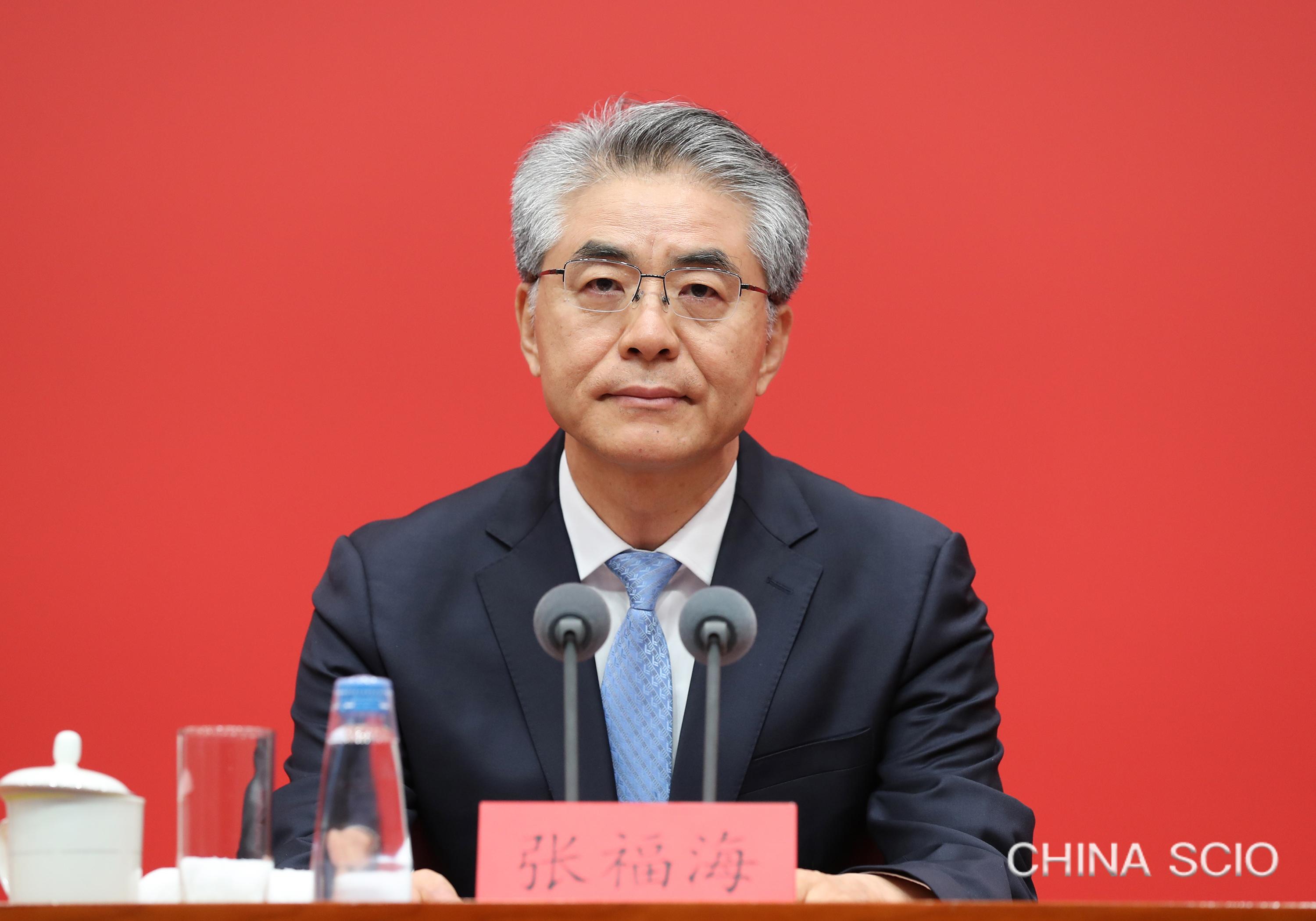
Zhang Fuhai, deputy secretary of the Central Commission for Discipline Inspection of the Communist Party of China (CPC) and deputy director of the National Commission of Supervision
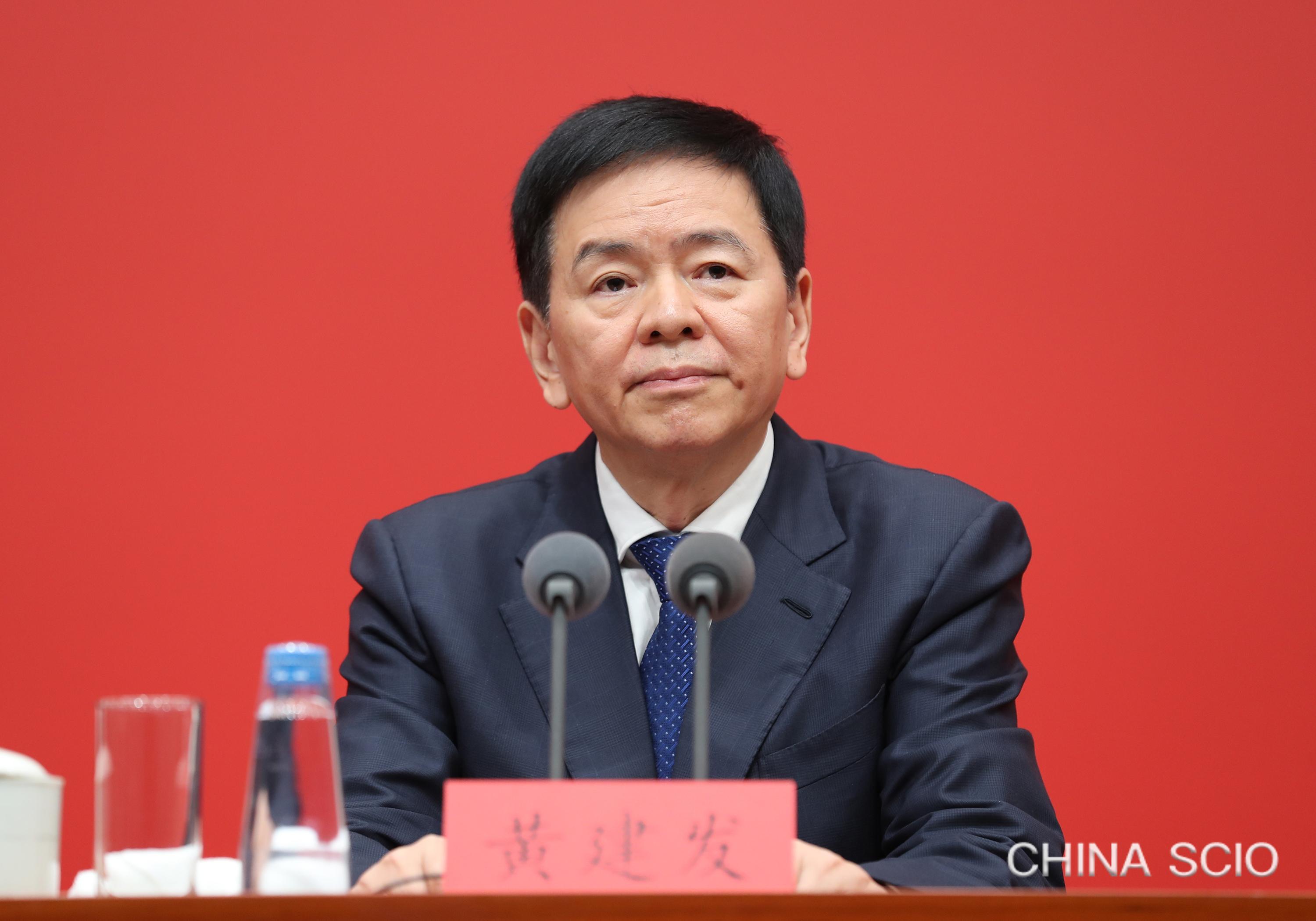
Huang Jianfa, deputy director in charge of routine work of the Organization Department of the CPC Central Committee
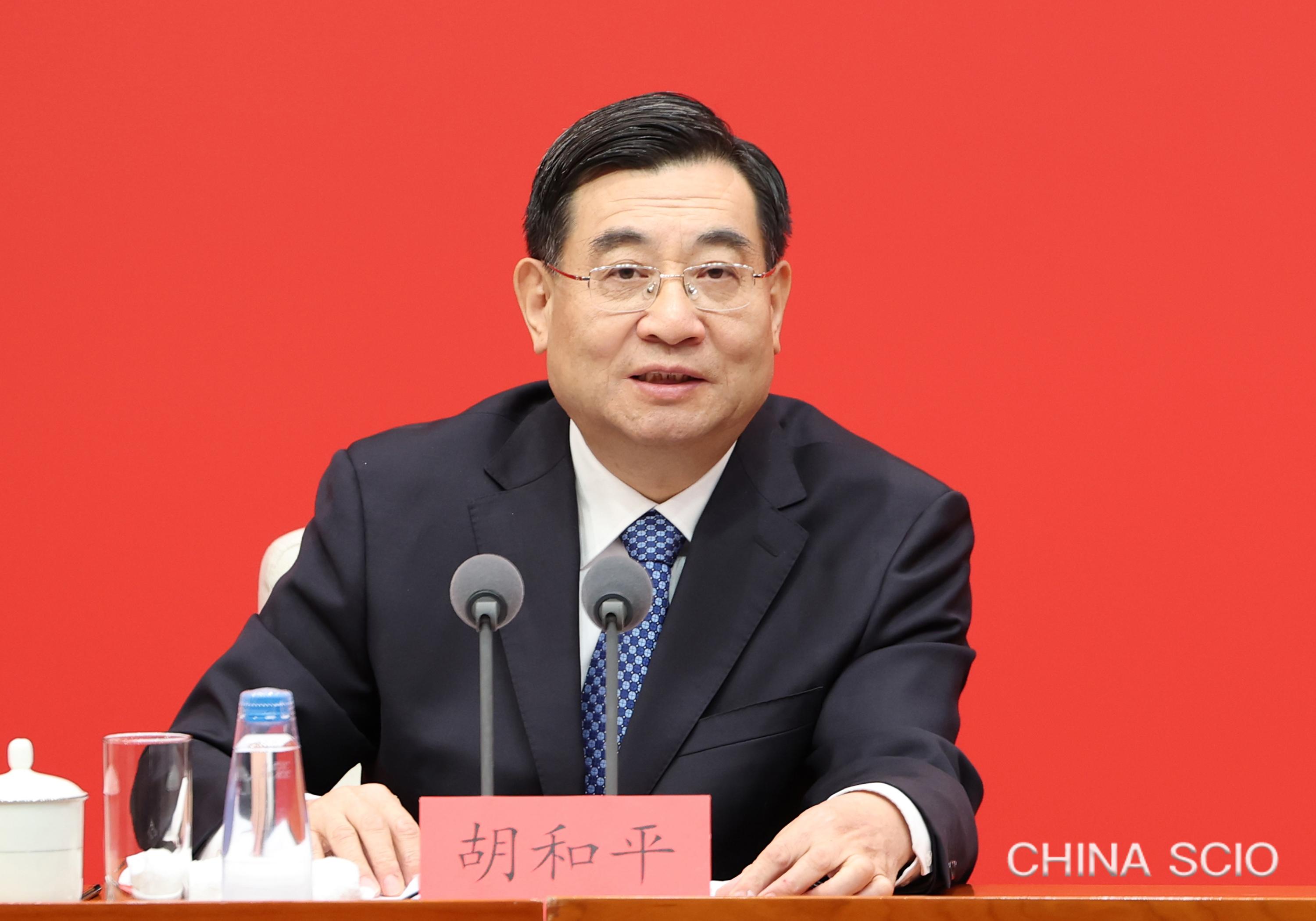
Hu Heping, deputy director in charge of routine work of the Publicity Department of the CPC Central Committee
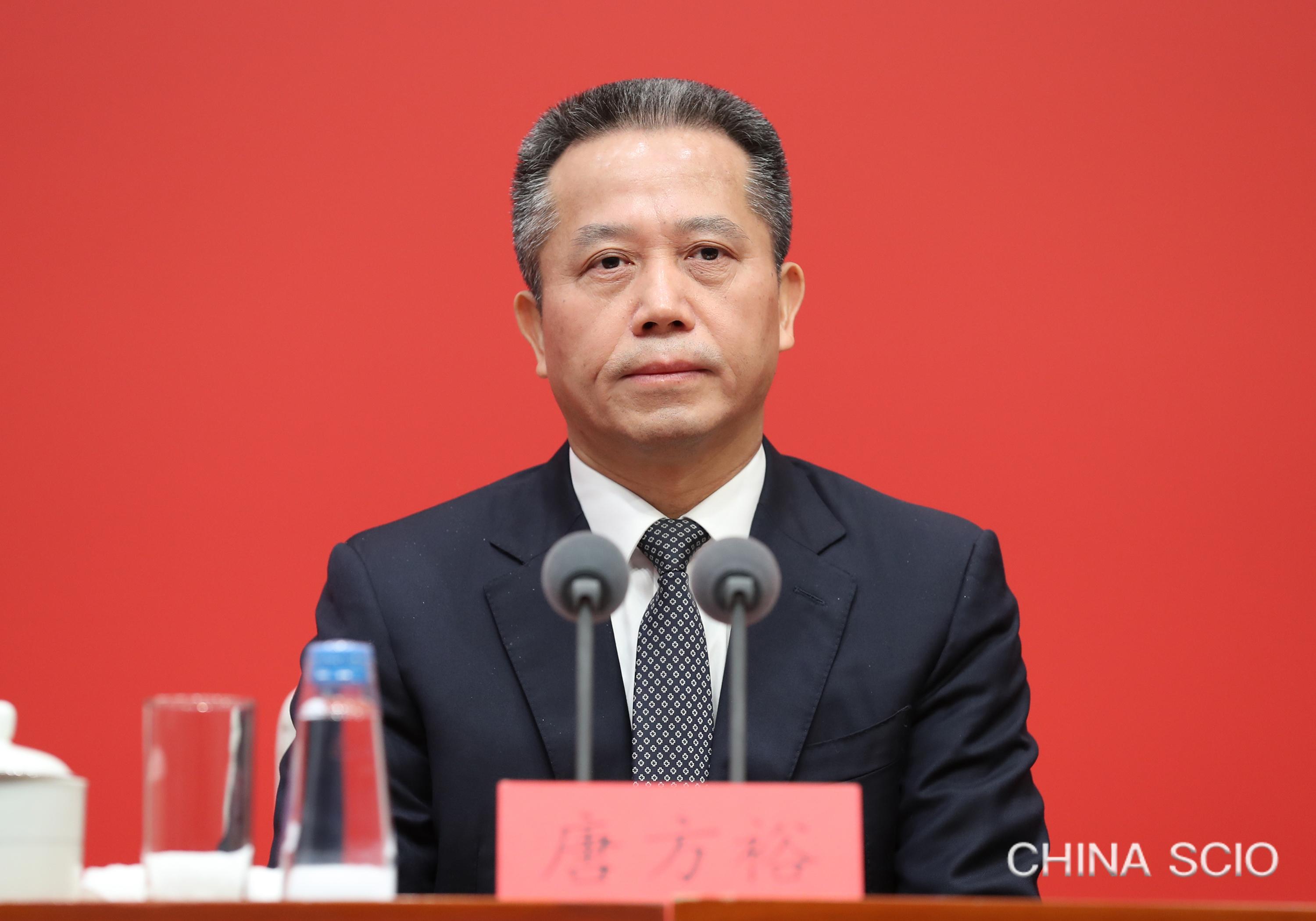
Tang Fangyu, director of the Policy Research Office of the CPC Central Committee
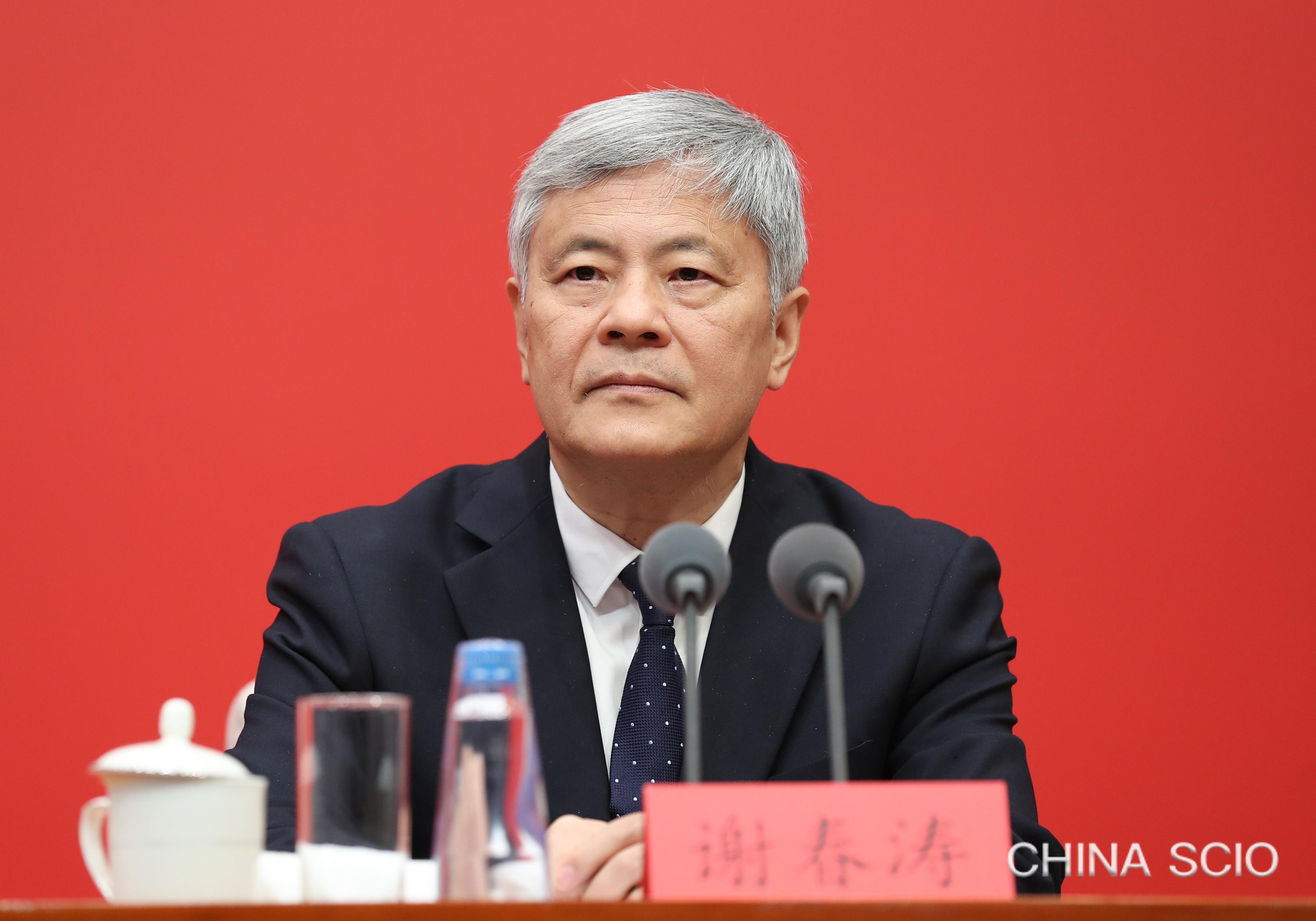
Xie Chuntao, vice president in charge of routine work of the Party School of the CPC Central Committee (National Academy of Governance)
Chairperson
Speakers:
Mr. Zhang Fuhai, deputy secretary of the Central Commission for Discipline Inspection of the Communist Party of China (CPC) and deputy director of the National Commission of Supervision
Mr. Huang Jianfa, deputy director in charge of routine work of the Organization Department of the CPC Central Committee
Mr. Hu Heping, deputy director in charge of routine work of the Publicity Department of the CPC Central Committee
Mr. Tang Fangyu, director of the Policy Research Office of the CPC Central Committee
Mr. Xie Chuntao, vice president in charge of routine work of the Party School of the CPC Central Committee (National Academy of Governance)
Chairperson:
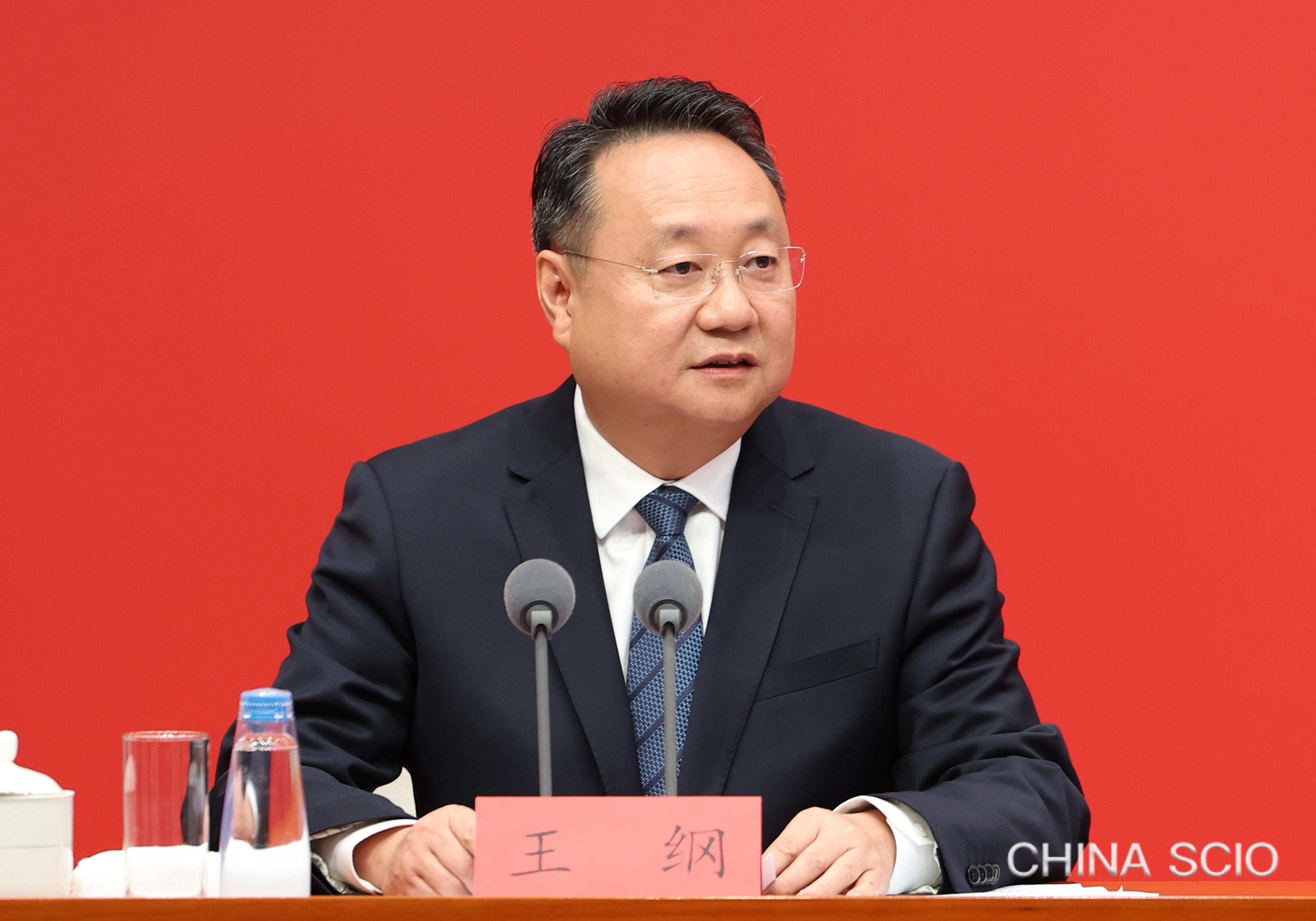
Mr. Wang Gang, deputy director of the Publicity Department of the CPC Central Committee
Date:
Oct. 30, 2026
Wang Gang:
Ladies and gentlemen, friends from the media, good morning. Welcome to this press conference held by the Central Committee of the Communist Party of China (CPC).
The fifth plenary session of the 20th CPC Central Committee was convened in Beijing from Oct. 26 to 29. This plenary session was a highly important meeting held at a critical stage for basically realizing socialist modernization. The session deliberated and adopted the Resolution of the Central Committee of the Communist Party of China on Certain Major Issues concerning Persevering with Full and Rigorous Party Self-Governance, and successfully completed all items on its agenda. Today, we have invited leading officials from relevant departments to brief you on and interpret the session's guiding principles, and to answer your questions.
Present at today's press conference are:
Mr. Zhang Fuhai, deputy secretary of the Central Commission for Discipline Inspection of the CPC and deputy director of the National Commission of Supervision;
Mr. Huang Jianfa, deputy director in charge of routine work of the Organization Department of the CPC Central Committee;
Mr. Hu Heping, deputy director in charge of routine work of the Publicity Department of the CPC Central Committee;
Mr. Tang Fangyu, director of the Policy Research Office of the CPC Central Committee;
and Mr. Xie Chuntao, vice president in charge of routine work of the Party School of the CPC Central Committee (National Academy of Governance).
Now, I'll give the floor to Mr. Tang Fangyu, who will brief you on the plenary session, the document drafting work, and the importance, urgency and overall requirements of persevering with full and rigorous Party self-governance.
Tang Fangyu:
Hello, friends from the media. It's my pleasure to brief you on the fifth plenary session of the 20th CPC Central Committee.
As you know, the fifth plenary session of the 20th CPC Central Committee was held in Beijing from Oct. 26 to 29. The Political Bureau of the Central Committee presided over the meeting. The Central Committee heard and discussed a report on the work of the Political Bureau, presented by General Secretary Xi Jinping on behalf of the Political Bureau. They also deliberated and adopted the Resolution of the Central Committee of the Communist Party of China on Certain Major Issues concerning Persevering with Full and Rigorous Party Self-Governance. General Secretary Xi Jinping delivered explanatory remarks on the resolution and gave an important address at the second plenary meeting of the session. The Central Committee also decided to convene the 21st CPC National Congress and completed matters regarding supplementary elections, filling of empty seats on the Central Committee, and disciplinary actions. Successfully completing all items on its agenda, the plenary session was an important meeting that unified thinking, rallied the support of the people and boosted morale.
At the session, the Central Committee fully affirmed the work of the Political Bureau since the fourth plenary session of the 20th Central Committee. It was unanimously agreed that the Political Bureau has earnestly implemented the guiding principles from the Party's 20th National Congress and the plenary sessions of the 20th CPC Central Committee; adhered to the general principle of pursuing progress while ensuring stability; fully and faithfully applied the new development philosophy on all fronts; implemented the Five-Sphere Integrated Plan and the Four-Pronged Comprehensive Strategy in a coordinated way; balanced domestic and international imperatives; and ensured both development and security. The Political Bureau has made solid progress in all areas of work, and meticulously advanced a series of major undertakings. The 14th Five-Year Plan (2021-2025) has been successfully concluded and the 15th Five-Year Plan period (2026-2030) is off to a good start, with new progress and results achieved in the cause of the Party and the country. The achievements of the past year were hard-won, as they were made amid an acceleration of profound changes unseen in a century and growing uncertainties and unforeseen factors facing China, with the country having withstood tremendous pressure and overcome various risks and challenges. These achievements are fundamentally attributable to the CPC Central Committee with Comrade Xi Jinping at its core, which has been at the helm charting the course, and to Xi Jinping Thought on Socialism with Chinese Characteristics for a New Era, which has provided us with sound guidance.
The most important outcome of the plenary session was the deliberation and adoption of the resolution. Our Party has dedicated itself to achieving lasting greatness for the Chinese nation, and Party building is of vital importance to the Party's future and destiny, as well as to the success of the cause of the Party and the country. At the crucial juncture marked by the 105th anniversary of the founding of the CPC and the start of the 15th Five-Year Plan, it was both highly important and necessary for the plenary session to make systematic plans for persevering with full and rigorous Party self-governance.
The resolution was drafted under the leadership of the CPC Central Committee, with General Secretary Xi Jinping acting as the chief of the document drafting group, personally planning the work, providing guidance throughout the process and setting the overall vision. Xi presided over two symposiums to solicit opinions, three meetings of the Standing Committee of the Political Bureau of the CPC Central Committee, and two meetings of the Political Bureau of the CPC Central Committee, providing guidance on research into major related issues. Xi devoted tremendous effort and played a decisive role in drafting the document. The drafting process followed the principles of fully practicing democracy, forging broad consensus, and pooling the wisdom of the whole Party. On Jan. 31, the CPC Central Committee issued a circular soliciting opinions from various localities and departments on the agenda of the plenary session. At the same time, 16 institutions were commissioned to conduct research on 23 key topics. On Aug. 3, the draft resolution was distributed to all localities, departments and sectors for their feedback, generating a total of 1,173 suggestions for revisions. Of these, 208 were adopted after study. At the session, participants proposed another 100 revisions to the draft in their discussions, of which 13 were adopted after review. It can be said that the resolution fully embodies the common will of the entire Party and the shared aspiration of the Chinese people.
The resolution consists of three main sections. The first section, which is the first part, provides a general overview that explains the importance and urgency of persevering with full and rigorous Party self-governance as well as the overall requirements for doing so. The second section is the discussion section, outlining the strategic tasks for persevering with full and rigorous Party self-governance in seven parts: strengthening the Party spirit of Communists; strictly practicing democratic centralism; cultivating high-caliber officials capable of shouldering the mission of national rejuvenation; building a well-knit organizational system characterized by cross-level alignment and effective implementation; improving conduct and tightening discipline on an ongoing basis; taking firm and coordinated action against corruption; and running the Party with systems and regulations. The third section makes plans on two fronts: refining Party and state oversight systems and fulfilling the political responsibility for full and rigorous Party self-governance.
During the plenary session, participants spoke highly of the resolution. It was widely agreed that the resolution offers a profound analysis of the situation, sound overall planning, clearly defined tasks, and practical measures and requirements, and serves as a programmatic document for advancing the great new project of Party building in the new era.
That concludes the overview of the plenary session and the drafting of the document. I will now briefly introduce the general overview of the resolution, which mainly covers five areas. First, it reviews the glorious 105-year journey during which our Party has consistently strengthened Party building and united and led the people in winning one victory after another, profoundly revealing the key to our Party's success and its unique discoveries in Party building. Second, it summarizes the great achievements made in exercising full and rigorous Party self-governance since the 18th CPC National Congress, explaining the great significance of the formation of Xi Jinping Thought on Party Building and fully demonstrating our Party's confidence in persevering with full and rigorous Party self-governance. Third, it analyzes the new circumstances, tasks and challenges facing full and rigorous Party self-governance, fully inspiring a sense of responsibility and urgency throughout the Party for persevering with this mission. Fourth, it sets forth the guiding philosophy for persevering with full and rigorous Party self-governance, clearly establishing the theoretical guidance, basic approach, and objectives and requirements for this sustained effort. Fifth, it elucidates the seven principles to be followed in persevering with full and rigorous Party self-governance, clearly demonstrating our Party's scientific attitude and pragmatic work style in this endeavor.
That's all from me. Thank you.
Wang Gang:
Thank you, Mr. Tang. Now, Mr. Hu will brief us on strengthening the Party spirit of Communists and strictly practicing democratic centralism.
Hu Heping:
Hello, everyone. I will brief you on strengthening the Party spirit of Communists and strictly practicing democratic centralism.
Firstly, strengthening the Party spirit of Communists. The strong Party spirit of Chinese Communists is an important guarantee for our Party to maintain its advanced nature and integrity and improve its leadership and governance capacity. The resolution places "strengthening the Party spirit of Communists" first among its strategic tasks. It states that strengthening the Party spirit represents a fundamental task of our efforts to ensure full and rigorous Party self-governance, and calls on Party members and officials to maintain a lifelong commitment to cultivating stronger Party spirit and devote efforts to strengthening ideals and convictions, forging strong loyalty to the Party, fostering deep affection for the people, always seeking truth from facts, building moral character, and preserving honesty and integrity. It makes specific arrangements in five areas.
First, we must strengthen education on loyalty to the Party. We must gain a deep understanding of the decisive significance of establishing Comrade Xi Jinping's core position on the CPC Central Committee and in the Party as a whole and of establishing the guiding role of Xi Jinping Thought on Socialism with Chinese Characteristics for a New Era; be more conscious of the need to maintain political integrity, think in big-picture terms, follow the leadership core, and keep in alignment with the central Party leadership; stay confident in the path, theory, system, and culture of socialism with Chinese characteristics; and uphold Comrade Xi Jinping's core position on the CPC Central Committee and in the Party as a whole and uphold the CPC Central Committee's authority and its centralized, unified leadership. We must enforce strict political discipline and rules and improve the Party's political ecosystem. Second, we must build cohesion and inner strength with the Party's latest theories. We must regard studying, understanding and applying the Party's latest theories as the fundamental means of cultivating stronger Party spirit, thoroughly study and implement Xi Jinping Thought on Party Building, enrich the methods of theoretical study and education, and foster a Marxist style of learning. Third, we must nurture the Party spirit with the Party's good traditions and fine traditional Chinese culture. We must carry forward the Party's fine conduct, pass on our revolutionary traditions and heritage, and explore and make good use of the moral concepts in fine traditional Chinese culture. Fourth, we must temper Party spirit through practice. We must temper Party spirit while implementing the decisions and plans of the CPC Central Committee, completing urgent, difficult, dangerous and vital tasks, and withstanding major tests, and while handling relations between right and wrong, public and private interests, and gains and losses. We must give play to the important role of intraparty political activities in this respect. Fifth, we must enhance Party spirit appraisal. We must make Party spirit an important criterion in vetting officials and in the democratic appraisal of Party members, and make good use of Party spirit appraisal results in the selection and appointment of officials and in the evaluation for commendations.
Secondly, strictly practicing democratic centralism. Democratic centralism is the Party's fundamental organizational principle and leadership system, and it serves as an important guarantee for safeguarding the Party's centralized unity, effectively implementing the major decisions and plans of the CPC Central Committee, and regulating leadership teams' and officials' performance of duties and exercise of power. The resolution identifies strictly practicing democratic centralism as an important focus of exercising full and rigorous Party self-governance and sets out specific plans in four areas.
First, we must uphold and strengthen the centralized, unified leadership of the CPC Central Committee. We must improve the systems and mechanisms for the centralized, unified leadership of the CPC Central Committee, refine the mechanisms for implementing its major decisions and plans, strictly enforce the system for requesting instructions from and reporting to the CPC Central Committee, and make political oversight more concrete, targeted and regular. Second, we must improve the efficacy of intraparty democracy. We must uphold and improve the systems for intraparty democracy, refine the systems for briefing and reporting on intraparty matters, and maintain comradely relations based on democracy and equality within the Party. Third, we must strictly implement deliberation rules and decision-making procedures for leadership teams. We must improve the deliberation rules and decision-making procedures of Party committees (leading Party members groups), strengthen the legal compliance review of major decisions, and improve the oversight mechanisms for major decisions, important personnel appointments and removals, major projects, and the use of large sums of money. Fourth, we must regulate leadership team heads' performance of duties and exercise of power. We must implement the systems and provisions for strengthening oversight of leadership teams and their heads, improve the mechanisms for checking the exercise of power by leadership teams, and refine the institutions and mechanisms for oversight at the same level.
That's all from me. Thank you.
Wang Gang:
Thank you, Mr. Hu. I would now like to invite Mr. Huang to speak on cultivating high-caliber officials capable of shouldering the mission of national rejuvenation and building a well-knit organizational system characterized by cross-level alignment and effective implementation.
Huang Jianfa:
Good morning, friends from the media. Party organizations at all levels, as well as Party members and officials, play the principal role in exercising full and rigorous Party self-governance, and serve as key forces in advancing the cause of the Party and the country. Today, the CPC has more than 100 million members and over 5.4 million primary-level Party organizations. This gives us a great strength that no other political party in the world possesses. The resolution makes strategic arrangements for strengthening the Party's organizations. I would like to give an introduction in this regard.
Firstly, cultivating high-caliber officials capable of shouldering the mission of national rejuvenation. Strict management of officials is the key to full and rigorous Party self-governance. The resolution states that we must apply stringent standards to the education, cultivation, selection, appointment, management and oversight of officials. On this basis, we will build up the ranks of high-caliber officials with firm political commitment, outstanding professional competence, excellent work conduct, and strict discipline. The resolution sets out arrangements in six areas. First, we should follow sound guidelines in appointing officials. The resolution emphasizes that we should adhere to the principle of the Party supervising officials, and apply the standards for good officials in the new era. We should select and appoint officials who are loyal to the Party, consistent in word and deed, responsible and conscientious, outstanding in performance, as well as honest and upright. Those who shy away from difficulties and responsibilities, are mediocre, lazy and inactive, or have a superficial work style must not be appointed, while those who are disloyal to the Party, duplicitous, or abuse power for personal gain must be removed. Second, we should take targeted, well-designed measures to select and appoint officials. We will adhere to selecting officials through Party organizations, appointing them fairly and matching candidates to specific posts. We will strictly implement the principles and procedures for selecting and appointing officials, and resolutely rectify misconduct in personnel appointments. Third, we should inspire officials to foster and act on the correct view of performance. We will deepen education on the correct view of performance, improve the assessment of officials' performance in promoting high-quality development, and refine working mechanisms to effectively prevent and correct deviations in the view of performance. By doing so, we will guide officials to deliver for the people through hard work. Fourth, we should enhance officials' competence in fulfilling their duties and breaking new ground. We will strengthen officials' theoretical grounding, political tempering, practical experience and professional competence, so as to enhance their capabilities in promoting high-quality development, serving the people, preventing and defusing risks and applying the rule of law in their work. Fifth, we should improve the training and selection of outstanding young officials. We will place equal emphasis on training and management and guide the healthy growth of young officials. Sixth, we should strengthen the management and oversight of officials. We will start with senior officials to strengthen comprehensive management and regular oversight. The resolution emphasizes the need to balance strict management with genuine support, using incentives and clear boundaries to ensure better mechanisms for encouraging and protecting officials who take responsibility and deliver results. Meanwhile, we will uphold the principle of the Party overseeing talent, deepen the reform of talent development systems and mechanisms, and promote the training, recruitment and utilization of talented people across the board, so as to bring together outstanding talent from all fields for the cause of the Party and the people.
Secondly, building a well-knit organizational system characterized by cross-level alignment and effective implementation. The Party's strength comes from its organizations. The Party's overall leadership and all its work must be realized through its strong organizational system. The resolution states that it is essential to systematically advance the development of Party organizations at all levels and in all sectors to strengthen their political and organizational functions. This will help ensure that the Party's lines, principles and policies, as well as the Party Central Committee's decisions and plans are implemented through well-coordinated, targeted and effective efforts. The resolution sets out measures in six areas: First, we should give play to the exemplary role of the Party organizations of central Party and state organs. We will further strengthen the political building of government organs, and build central Party and state organs into exemplary institutions that are politically committed, disciplined, responsible and efficient. Second, we should bolster the functions of local Party committees. The resolution stresses that local Party committees must fulfill their responsibilities in their respective regions by setting the development direction, managing the overall situation, making decisions and ensuring effective implementation. We will build local Party committees into strong organizations that resolutely follow the command of the Party Central Committee, ensure effective implementation, and are highly disciplined, unified and corruption-free. Third, we should take coordinated steps to improve primary-level Party organizations across all sectors. We will step up efforts to focus on the primary level, using Party building initiatives to propel rural revitalization and intensify Party-building efforts in urban subdistricts and communities. We will better guide efforts to conduct community-level governance and strengthen primary-level governments through Party building. Fourth, we should promote Party building in emerging sectors. We will enhance Party building in new economic and social organizations and among people in new forms of employment, expanding the coverage of Party organizations and Party work to enhance the Party's appeal, cohesion and influence in these emerging fields. Fifth, we should build a strong contingent of Party members. We will take political commitment as the primary criterion. We will improve the quality of Party member recruitment, optimize the structure of the Party membership, and strengthen Party member education and management. We will also refine and implement mechanisms for Party members to play their roles. Sixth, we should refine mechanisms to ensure alignment across different levels of Party organizations. We will ensure that higher-level Party organizations take the lead and guide lower-level ones, ensuring implementation at every level. We will also ensure that Party committee (leading Party members group) secretaries are subject to substantive performance evaluations and reviews on their efforts in primary-level Party building. In this way, we will promote the comprehensive progress and strengthening of Party organizations at all levels. We will follow the decisions and plans of the Party Central Committee, and earnestly implement the Party's organizational line for the new era. We will build strong Party organizations and ensure effective management, thereby providing a strong organizational guarantee for building a great country and advancing national rejuvenation.
That's all from me. Thank you.
Wang Gang:
Thank you, Mr. Huang. Now, I'd like to invite Mr. Zhang to speak on improving conduct and tightening discipline on an ongoing basis; taking firm and coordinated action against corruption; and refining Party and state oversight systems.
Zhang Fuhai:
Friends from the media, good morning. Improving conduct, tightening discipline, combating corruption and strengthening oversight are important aspects of exercising full and rigorous Party self-governance. Now, I will briefly introduce the relevant content of the resolution.
Improving conduct and tightening discipline are effective measures to advance full and rigorous Party self-governance. Since the 18th CPC National Congress, the CPC Central Committee with Comrade Xi Jinping at its core kicked off efforts by formulating and implementing the central Party leadership's eight-point decision on improving work conduct. It has employed discipline enforcement as an essential tool in exercising full and rigorous Party self-governance, and consistently improved conduct and tightened discipline with strict standards. Following the 20th CPC National Congress, it has successively launched education campaigns on increasing awareness of Party discipline and on fully implementing the central Party leadership's eight-point decision on improving work conduct, so as to continuously consolidate and expand the achievements in conduct improvement and discipline enforcement. As a result, the Party's discipline and rules have been further tightened, and the conduct of the Party, the government and society has taken on an entirely new look. Since the 18th CPC National Congress, discipline inspection and supervisory organs across the country have investigated and handled 1.644 million cases involving practices of pointless formalities, bureaucratism, hedonism and extravagance. A total of 2.257 million people have been criticized, educated or disciplined.
In improving conduct and tightening discipline, we must make consistent and sustained efforts to tackle deep-seated and recurrent problems that have plagued the Party for a long time. The resolution calls for working in concert to enhance Party spirit, improve Party conduct and tighten Party discipline, and integrating conduct improvement and discipline enforcement with anti-corruption measures. It sets out plans in five areas. It calls on us to follow the Party's mass line in the new era, steadfastly implement the central Party leadership's eight-point decision on improving work conduct, make consistent and sustained efforts to improve conduct, ensure more rigorous discipline enforcement, and make full use of discipline as a guide, restraint, guarantee and incentive.
Taking integrated steps to ensure that officials do not have the audacity, opportunity or desire to commit corruption is both an important strategy for full and rigorous Party self-governance and a fundamental guideline for our fight against corruption. Since the 18th CPC National Congress, the CPC Central Committee with Comrade Xi Jinping at its core has remained committed to fighting every instance of corruption, punishing every corrupt official and rooting out all such crimes. It has led the entire Party to strengthen deterrence, tighten institutional constraints and raise awareness of discipline among officials so that they do not dare to, are unable to and have no desire to commit corruption. It has resolutely rooted out any viruses that would erode the Party's health, so as to secure an overwhelming victory and fully consolidate its gains in the fight against corruption. Since the 18th CPC National Congress, discipline inspection and supervisory organs across the country have filed a total of 8.105 million cases and punished 7.922 million people, including 963 officials registered at and supervised by the CPC Central Committee.
Meanwhile, we must recognize that the fight against corruption remains grave and complex, and that eradicating breeding grounds and conditions for corruption remains an arduous and formidable task. The resolution emphasizes the importance of steadfastly following a distinctive Chinese path of anti-corruption, and sets out plans in four areas. First, we should maintain a tough stance against corruption. We will intensify efforts to uproot corruption in sectors with a high concentration of power, funds and resources. Specifically, we will investigate and handle cases including corruption that involve both political and economic elements, collusion between government officials and businesspeople, and the infiltration of capital into the political sphere. Meanwhile, we will also thoroughly investigate new and disguised forms of corruption, and address on a regular basis misconduct and corruption close to the people. Second, we should strengthen checks on and oversight over the exercise of power. We will improve institutional mechanisms that integrate the delegation, exercise and check of power in a unified manner, making them clear, transparent and traceable, so as to confine power to an institutional cage with more scientific and effective efforts. Third, we should fortify the cultural-ethical foundations for championing integrity and disdaining corruption. We will strengthen the culture of integrity in the new era, and use the ideals, convictions, values, moral standards, and discipline and law awareness embodied in the Party's latest theories to foster integrity among Party members and officials. Fourth, we should enhance coordinated efforts to prevent corruption by rooting out audacity, opportunity and desire. We will make solid efforts in using real cases to promote rectification and better governance, so as to enhance the penetrating power of anti-corruption efforts.
Further improving the Party and state oversight systems is an inherent requirement for persevering with full and rigorous Party self-governance. The resolution outlines plans in four main areas. First, it calls for ensuring that Party committees (leading Party members groups) exercise general oversight. Second, it calls for strengthening coordination among disciplinary oversight, supervisory oversight, oversight by resident disciplinary inspection teams and inspection oversight. Third, it calls for improving the primary-level oversight system. Fourth, it calls for promoting the deep integration and efficient coordination of intraparty oversight with other avenues of oversight to build synergy.
That's all from me. Thank you.
Wang Gang:
Thank you, Mr. Zhang. Now, Mr. Xie will brief us on running the Party with systems and regulations and fulfilling the political responsibility for full and rigorous Party self-governance.
Xie Chuntao:
Good morning, everyone. I will focus my briefing on two areas: running the Party with systems and regulations, and fulfilling the political responsibility for full and rigorous Party self-governance.
On running the Party with systems and regulations, the resolution states that "strengthening Party regulations and institutions represents a long-term, fundamental strategy for ensuring full and rigorous Party self-governance." Since the 18th CPC National Congress, General Secretary Xi Jinping has creatively proposed running the Party with regulations and made a series of important statements on it, making regulation-based Party self-governance a fundamental approach to Party self-supervision and self-governance. This has brought about major innovations in the philosophy, strategy and practical approaches of Party self-supervision and self-governance, and made them more rationally-conceived, institutionalized and procedure-based. The resolution makes further arrangements in the following three areas:
First, improving the framework of Party regulations and institutions. The focus is on strengthening top-level design, addressing gaps and deficiencies, and improving quality and effectiveness. This includes developing sound plans for formulating Party regulations; coordinating their formulation, revision, repeal and interpretation; promptly addressing institutional shortcomings; and improving the quality of rulemaking.
Second, ensuring the enforcement of institutions. The effectiveness of regulations and institutions depends on their enforcement. At present, rules for Party self-supervision and self-governance are generally in place, but their implementation needs to be further strengthened. In this regard, the resolution sets out measures to make Party regulations more transparent, strengthen education and training on regulations and institutions, and reinforce their implementation and oversight.
Third, eliminating hidden rules. For some time, hidden rules have persisted to varying degrees both within and outside the Party, undermining the authority and implementation of Party rules and disciplinary regulations and prompting strong complaints from officials and the public. The CPC Central Committee has attached great importance to this issue, with General Secretary Xi Jinping repeatedly setting out clear requirements in this regard. The resolution calls for establishing clear rules as a starting point and proposes corresponding measures to increase transparency in Party and government affairs, strengthen education and guidance, address related misconduct, and establish and improve relevant institutions and mechanisms.
As for fulfilling the political responsibility for full and rigorous Party self-governance, who should carry out this task in a party as large as ours? Party organizations at all levels and all Party members and officials must work together to fulfill this responsibility. Therefore, full and rigorous Party self-governance cannot be achieved without clearly defined responsibilities, effective implementation and strict accountability. Since the 18th CPC National Congress, years of effort have established a framework for Party building in which Party committees, their secretaries and relevant departments all take charge, with each level responsible for the level below and effective implementation ensured throughout.
The resolution further clarifies the primary responsibilities of Party committees (leading Party members groups), the oversight responsibilities of commissions for discipline inspection, the responsibilities of secretaries of Party committees (leading Party members groups) as the first persons responsible, the dual responsibilities of other members of leadership teams for both their posts and Party self-governance, and the specific responsibilities of Party members and officials. This improves a coordinated accountability system in which all parties perform their respective duties. It requires Party organizations at all levels to enhance their political commitment, take the initiative in fulfilling their duties, exercise rigorous oversight, refine and clarify lists of responsibilities, and ensure that responsibilities are fulfilled and pressure is transmitted at every level.
The resolution requires Party committees (leading Party members groups) at or above the county level to hear reports at least once a year from members of their leadership teams on how they have fulfilled their responsibilities for Party self-supervision and self-governance. It also requires lower-level commissions for discipline inspection (dispatched discipline inspection and supervision teams) to report at least once every six months to higher-level commissions for discipline inspection (dispatching authorities) on how members of the leadership teams of Party committees (leading Party members groups), especially their principal leaders, have performed their duties and exercised their powers, as well as how they themselves have fulfilled their oversight responsibilities. The resolution reiterates that leading officials, especially senior officials, must lead by example in fulfilling their responsibilities for Party building, avoiding formalism in advancing Party building and making proper and precise use of accountability as a powerful tool, thereby ensuring that responsibilities are fully implemented.
That's all from me. Thank you.
Wang Gang:
Thank you, Mr. Xie. The floor is now open to questions. Please identify the media outlet you represent before raising your questions.
_ueditor_page_break_tag_CCTV:
At this plenary session, the CPC Central Committee decided to study and formulate plans for persevering with full and rigorous Party self-governance. What considerations prompted this decision? In addition, what signal did this plenary session send? Thank you.
Wang Gang:
I'd like to invite Mr. Tang to answer these questions.
Tang Fangyu:
Thank you for your questions. Based on my understanding, in deliberating and making plans for persevering with full and rigorous Party self-governance at the plenary session, the CPC Central Committee has kept three key considerations at the forefront.
First is to meet the needs of advancing our cause and adapt to changing circumstances. Persevering with full and rigorous Party self-governance is determined by our Party's mission and responsibility as a Marxist governing party. It is an inevitable requirement for preserving the Party's advanced nature and integrity, and consolidating the Party's long-term governing position. It is an inevitable requirement for consolidating and developing a sound political situation featuring high unity and solidarity across the Party and strong cohesion among the Party, the military and the people. It is also an inevitable requirement for fulfilling the Party's historic mission and ensuring steady and sustained progress in the cause of the Party and the country. Profound changes in global, national and Party conditions give rise to many new circumstances and new issues. That has made the Party's tasks of uniting and leading the people in safeguarding China's sovereignty, security and development interests, of uniting and leading the people in promoting reform and development and maintaining social harmony and stability, and of maintaining its advanced nature and integrity even more arduous. All this poses formidable challenges to the Party's governance and leadership capacity, the quality of its membership, and its resistance against corruption and moral decline under the new circumstances. The longer the Party governs, the longer peace endures, and the more complex the environment becomes, the more imperative it is for us to act with a strong sense of potential dangers and persevere with full and rigorous Party self-governance. Second is to actively respond to the expectations of the entire Party and the whole nation. Since last year, Party members, officials and the public have widely offered suggestions through various channels such as public complaints and proposals and online messages, calling for summarizing and applying the valuable experience of full and rigorous Party self-governance since the 18th CPC National Congress to build the strength of the Party. The support of Party members and officials and the expectations of the people form the driving force behind our Party's progress. Third is to follow the established practice of major decision-making by the CPC Central Committee. Since the launch of reform and opening up, every Central Committee has dedicated a plenary session to deliberating and making plans for Party building. This has become an effective institutional arrangement.
As for the signals sent by the plenary session, I see three main points. First, it conveys our Party's explicit stance and persistent pursuit as a Marxist governing party in upholding the Party's ideals, nature and purpose. Second, it conveys our Party's lofty aspirations and sense of responsibility in building a great country and advancing national rejuvenation on all fronts through Chinese modernization. Third, it conveys our Party's firm confidence and strong resolve to face contradictions and problems head-on and adopt higher standards and more concrete measures to persevere with full and rigorous Party self-governance.
Judging from the extensive coverage by domestic and international media over the past few days, the delivery of these signals has been widely positive and resounding.
That's all for my answer. Thank you.
_ueditor_page_break_tag_China Discipline Inspection and Supervision News:
Since the 18th CPC National Congress, the CPC Central Committee has made great efforts to improve Party conduct. Could you introduce the main measures and achievements in this regard over the years, and how will this work be further advanced in the future? Thank you.
Wang Gang:
I would like to invite Mr. Zhang to answer your questions.
Zhang Fuhai:
Thank you for your questions. The Party's conduct is vital to the Party's image, to winning or losing the support of the people, and to the survival of the Party. In the new era, the CPC Central Committee with Comrade Xi Jinping at its core started with the issues that drew the strongest public reaction, treating the formulation and implementation of the central Party leadership's eight-point decision on improving work conduct as a move to build credibility. Setting strict rules and imposing stringent constraints, the CPC Central Committee strengthened conduct building with a perseverance that resembles driving nails into wood. General Secretary Xi Jinping set an example and led the entire Party to make resolute and tangible efforts, persevering in curbing the "Four Malfeasances," relentlessly clamping down on hedonism and extravagance, and striking hard against formalism and bureaucratism. Thanks to dedicated continuous efforts, unhealthy tendencies that had long gone unchecked have been curbed, and deep-seated problems that had plagued the Party for years have been remedied. The intensity of rectification, stringency of enforcement and duration of sustained efforts are all unprecedented. The public has witnessed tangible changes, which has fostered stronger public support for the Party's long-term governance.
Improving work conduct is an ongoing endeavor, and there is no end to it. The resolution makes specific arrangements in this regard and puts forward many practical and effective measures. In terms of following the Party's mass line in the new era, it calls for a deeper understanding of the Marxist view of the masses and the Party's mass line. Party members and officials must strengthen their awareness of the Party's mission and serve the people wholeheartedly. We should solicit public opinions on major decisions concerning people's livelihood, implement the practices of going into communities to communicate the Party's lines and policies, carry out research and studies, address people's complaints, conduct field work, and follow the online mass line. In terms of steadfastly implementing the central Party leadership's eight-point decision on improving work conduct, it calls for consolidating and expanding the achievements of the educational campaign, deepening the rectification of persistent problems of formalism and bureaucratism, resolutely preventing hedonism and extravagance from resurfacing, and resolutely rooting out privilege-seeking mindsets and behavior, closely monitoring new trends and manifestations of misconduct, and preventing and rectifying hidden and disguised problems. In terms of making consistent and sustained efforts to improve conduct, it calls for refining mechanisms for routinely identifying and resolving problems related to conduct. We should identify problems specific to certain areas, sectors and periods of time, go to great lengths to tackle prevalent and recurrent problems, and ensure competent industry authorities fulfill their responsibilities for regulating industry conduct. We should intensify integrated investigation and treatment of misconduct and corruption, and oppose formalism, bureaucratism, hedonism and extravagance while cultivating new trends. With fine Party conduct and clean government, we will steer positive social trends toward excellence and integrity.
Going forward, in accordance with the arrangements made at the fifth plenary session, we will thoroughly implement the central Party leadership's eight-point decision on improving work conduct, integrate the improvement of work conduct into everyday routines, make it a regular priority and advance it relentlessly and in greater depth. Thank you.
_ueditor_page_break_tag_Lianhe Zaobao:
While continuing to strengthen discipline and combat corruption, how will the CPC Central Committee prevent officials from being afraid or unwilling to take action out of concern about being held accountable, and further establish mechanisms to encourage them to take responsibility and deliver results? Thank you.
Wang Gang:
I'd like to invite Mr. Huang to answer this question.
Huang Jianfa:
Thank you for your question. This issue has attracted considerable attention. Party officials are the backbone of the Party and the country's cause. Advancing our great cause requires officials to take responsibility and deliver results. Since the 18th CPC National Congress, we have adhered to the standards for competent officials in the new era, strictly managed officials, clarified their duties and powers, and established red lines and bottom lines, guiding them to pursue reform and innovation and perform their duties with initiative while observing rules and discipline. This has strongly contributed to historic achievements and transformations in the cause of the Party and the country. This fully demonstrates that exercising full and rigorous Party self-governance and encouraging officials to take responsibility and act are inherently consistent. Strictness is not to stifle officials; rather, it is meant to create a clean and upright political environment within the Party and foster favorable conditions for taking the initiative and getting things done by clarifying the direction, establishing rules, promoting healthy practices, and strengthening resistance to corruption and moral decline. In our work, we have come to deeply appreciate that strict management is a form of profound care. For officials, strict management is not only a restraint but also a safeguard; it means being genuinely responsible for them. Severely punishing officials who have become corrupt and degenerate also serves to motivate and protect good officials. In reality, some Party members and officials fail to act or act slowly for a complex range of reasons. Some lack drive and are unwilling to act, some fear getting into trouble and dare not act, and others lack the ability to deliver. These problems must be taken very seriously and effectively resolved.
On encouraging officials to take on responsibility and be enterprising in their work, the resolution adopted at the plenary session has made major deployments. First, we must follow sound guidelines in appointing officials, as this is the greatest encouragement for them. In selecting and appointing officials, we must make clear that a sense of responsibility is valued, and ensure that officials who are loyal to the Party, consistent in word and deed, conscientious in fulfilling their responsibilities, outstanding in performance, and honest and upright are selected and appointed. The correct orientation in appointing officials will in turn guide officials to take the initiative and get things done. Second, we must improve the system for assessing the performance of officials. We must improve the assessment of officials' performance in promoting high-quality development, refine working mechanisms for effectively preventing and correcting deviations from the correct view of performance, deepen efforts to rectify inaction and improper conduct, and effectively resolve the problem whereby those who work and those who do not, those who deliver more and those who deliver less, and those who perform well and those who perform poorly are treated alike. We must make full use of the motivating role of exemplary models, enabling officials to identify their shortcomings through comparison and giving them a clear direction for making progress. Third, we must implement all policies on caring for officials, especially those at the primary level, help them resolve practical difficulties and care about their physical and mental well-being, so that officials can work with peace of mind, live with a sense of security, and pursue their careers contentedly. Fourth, we must improve mechanisms for motivating and protecting officials who take on responsibility and take the initiative to act. Officials shoulder responsibility for the cause, and the Party organization stands behind its officials. This is our clear stance and explicit commitment. The resolution stresses the need to seriously investigate and deal with false accusations and framing, and to promptly clarify the facts and restore the reputations of those wrongfully accused. The aim is to truly empower those who shoulder responsibility, back those who fulfill their duties and shield those who get things done, thereby fostering a sound environment in which officials are willing, unafraid and able to take on responsibility. Effectively implementing these deployments will surely encourage officials to shoulder their responsibilities and fulfill their duties through concrete action, forging ahead on the new journey with wholehearted enthusiasm and making contributions in the new era. Thank you.
_ueditor_page_break_tag_Guangming Daily:
Looking back on the CPC's journey of more than a century, one crucial factor has been the Party's consistent emphasis on building itself ideologically and strengthening itself theoretically. Under the new circumstances, how will the Party better use its new theories to unite and guide Party members and the people so that they think and work toward the same goal and perform their duties and get things done more effectively?
Wang Gang:
I'd like to invite Mr. Hu to answer this question.
Hu Heping:
Thank you for your question. As we know, building the Party ideologically and strengthening it theoretically is a proud tradition of the CPC and a defining feature of the Party's efforts to supervise, govern, develop, and strengthen itself in the new era. The most iconic, leading and pioneering achievement in the Party's ideological development in the new era is the formulation of Xi Jinping Thought on Socialism with Chinese Characteristics for a New Era, which represents a new breakthrough in adapting Marxism to the Chinese context and the needs of our times. In recent years, we have held high our ideological banner, comprehensively strengthened theoretical grounding in the Party's new theories, and continuously promoted study and education, publicity and outreach, and research and interpretation, ensuring that the Party's new theories are increasingly embraced by the people. At the same time, we must also recognize that various ideas and values are currently intermingling and colliding, that young Party members and officials make up an increasing proportion of the Party's ranks, and that learning methods and habits have undergone profound changes, presenting new challenges to the Party's ideological development. The resolution sets out key tasks for using the Party's new theories to build cohesion and forge inner strength, covering areas such as study and education, research and interpretation, and practical application. We will earnestly implement the requirements of the resolution and encourage the entire Party to better apply Xi Jinping Thought on Socialism with Chinese Characteristics for a New Era to achieve unity in thinking, will and action.
In our work, first, we must diversify the approaches to theoretical study and education. We must guide Party members and officials to read original works, study original texts and understand underlying principles, so that they can grasp the worldview and methodology of the Party's new theories, as well as the positions, viewpoints and methods that run through them, based on a close study of General Secretary Xi Jinping's original works, and appreciate the vision and commitment they embody. We must highlight the central role of the Party's new theories in the education and training of Party members and officials, tailor and improve study and training approaches to suit different groups and levels, and make learning more targeted and effective, thus enabling those theories to be naturally embraced by Party members and officials. We must innovate and improve learning systems, uphold and improve the top-of-the-agenda system, and enhance the quality of theoretical study within the theoretical study groups of Party committees (leading Party members groups) and within primary-level Party organizations. We must adapt to the new circumstances brought about by the rapid development of internet technology, coordinate online and offline learning, and increase the appeal and cohesion of theoretical study.
Second, we must deepen systematic and academic research and interpretation. We must fully mobilize resources from all sides, conduct collaborative research across disciplines and fields, and focus on academic foundations, practical orientation, international perspectives and historical dimensions to systematically elucidate the rationale, theoretical underpinnings and philosophy of the Party's new theories. We must then transform them into forms of knowledge discourse, academic theories and research paradigms, thereby leading efforts to build an independent knowledge system for China's philosophy and social sciences. We must carry out innovative programs for Marxist theory study and development, give full play to the role of research institutions dedicated to Xi Jinping Thought on Socialism with Chinese Characteristics for a New Era, national key schools of Marxism, national high-level think tanks, the National Social Science Fund of China, and other platforms, and produce more high-standard research outcomes to provide solid academic support for theoretical education.
Third, we must integrate theory with practice. We must guide Party members and officials to closely connect theory with reality, conscientiously deepen their theoretical study, combine study with research, and draw direction, ideas and methods from the Party's new theories, thereby enhancing their ability to apply these theories to analyze and solve practical problems. We must continue to regard arming all Party members and educating the people with the Party's new theories as our foremost political task, improve long-term mechanisms for reinforcing commitment, acquiring knowledge, improving conduct and enhancing performance through learning, steadily enhance all Party members' understanding of Marxism, and continuously consolidate the common intellectual foundation for the whole Party and all Chinese people to strive in unity, thereby pooling powerful intellectual strength for building a great country and advancing the great cause of national rejuvenation. Thank you.
_ueditor_page_break_tag_People's Daily Online:
As we know, this year marks the 105th anniversary of the CPC's founding. The national conference on Party building held shortly before July 1 made arrangements for studying and implementing Xi Jinping Thought on Party Building, giving rise to a nationwide wave of study and implementation. How does the resolution adopted at the fifth plenary session implement and embody Xi Jinping Thought on Party Building? Thank you.
Wang Gang:
I'd like to invite Mr. Tang to answer your question.
Tang Fangyu:
That is a very good question. As the Party endeavors to supervise, govern, develop and strengthen itself in the new era, the Central Committee with Comrade Xi Jinping at its core has put forward a series of new ideas, new thinking and new strategies in response to the major questions of the time: What kind of Marxist party capable of long-term governance should we build, and how should we build it? These ideas have given rise to Xi Jinping Thought on Party Building. This thought has enriched and developed Marxist theory on party building, and represents a major achievement in advancing the Party's theoretical innovation through applying the basic tenets of Marxism to China's realities and drawing on its fine traditional culture (the "two integrations"). It encapsulates the practical experience and collective wisdom of the Party and the Chinese people. As an important component of Xi Jinping Thought on Socialism with Chinese Characteristics for a New Era, it provides fundamental guidance and a road map for further advancing the great new project of Party building in the new era.
The drafting of the resolution adopted at this plenary session was guided by Xi Jinping Thought on Party Building, with its scientific substance, underlying principles and practical requirements incorporated throughout the resolution, from its analysis of the current situation and formulation of the guiding thought and principles to its plans for strategic tasks and major initiatives. Studying and implementing the guiding principles of the plenary session should be coordinated and integrated with the in-depth study and implementation of Xi Jinping Thought on Party Building. Thank you.
_ueditor_page_break_tag_Phoenix TV:
While efforts to run the Party with systems and regulations continue to deepen, we have seen that, in practice, certain institutions are, to some extent, still not effectively enforced or fully implemented. What arrangements has the fifth plenary session made to further strengthen the enforcement and implementation of institutions? Thank you.
Wang Gang:
I would like to invite Mr. Xie to answer your question.
Xie Chuntao:
Thank you for your question. I touched on the arrangements for strengthening the enforcement of institutions in my earlier remarks. Let me add a few points. It should be noted that institution building runs through the overall framework of Party building in the new era. In other words, measures to strengthen institutional enforcement are incorporated throughout the resolution and should be understood in the context of its overall arrangements. This can be viewed from two perspectives.
First, in setting out the tasks of running the Party through institutions and regulations, Part VIII of the resolution specifically calls for "enhancing the implementation of institutions." It stresses the need to reinforce the binding force of institutions and uphold the principles that everyone is equal before institutions, no one enjoys special privileges in complying with them and no exceptions are permitted in their enforcement. It also requires that the implementation of and oversight over institutions be integrated into every stage of how Party organizations and Party members and officials perform their duties, to ensure that institutions remain authoritative and effective at all times and in all circumstances. Any disregard for orders and prohibitions must be resolutely corrected. These requirements are of great significance for the enforcement of institutions.
Second, every part of the resolution contains requirements for institutional enforcement. For example, both the section on guiding principles and Parts II through VIII which set out strategic arrangements for strengthening Party building on all fronts, include explicit requirements for institutional enforcement. In particular, Part III sets out plans for "strictly practicing democratic centralism," the Party's fundamental organizational and leadership system, further demonstrating the emphasis placed on strengthening institutional enforcement.
Moreover, the resolution also sets out plans for improving the Party and state oversight systems and ensuring that responsibilities for Party self-supervision and self-governance are fulfilled. The tasks and measures in these areas also comprise a series of institutions. Implementing these tasks and measures is itself a form of institutional enforcement and will also play an important role in ensuring the enforcement of other intraparty regulations and institutions. All of these can be regarded as important arrangements for strengthening institutional enforcement and implementation.
As long as Party organizations and leading officials at all levels persist in taking concrete action and exercising strict oversight, it will surely become common practice among Party organizations at all levels and the broad ranks of Party members and officials to strictly enforce and conscientiously observe rules and discipline. Thank you.
_ueditor_page_break_tag_Xinhua News:
This year, the Party has conducted a study campaign on establishing and practicing the correct view of performance. What has been the focus of this campaign, and what results has it achieved? In addition, what plans does the resolution set out for further encouraging officials to foster and act on the correct view of performance? Thank you.
Wang Gang:
I would like to invite Mr. Huang to answer your questions.
Huang Jianfa:
Thank you for your questions. Conducting a study campaign on establishing and practicing the correct view of performance within the Party is an important task in Party building this year. Under the strong leadership of the CPC Central Committee with Comrade Xi Jinping at its core, the study campaign has provided the entire Party with an opportunity for profound theoretical refinement, strengthened Party spirit, and practical training. It has effectively addressed a number of prominent problems involving deviations from the correct view of performance, received positive responses from various quarters and won the recognition of Party members, officials and the public. The campaign has achieved its intended objectives and provided strong support for leadership transitions at all local levels and for getting the 15th Five-Year Plan period off to a good start. The campaign has the following notable features:
First, theoretical study was carried through from beginning to end. With a focus on studying the Party's new theories, Party members and officials were organized to read original works, study original texts and grasp the underlying principles, ensuring that what they learned was fully absorbed, internalized and integrated. Positive and negative examples were also put to good use to enhance theoretical understanding, strengthen the Party spirit and deepen their grasp of the correct view of performance.
Second, genuine efforts were made to identify and rectify deviations from the correct view of performance. The campaign has neither downplayed, avoided nor covered up problems stemming from such deviations. Concrete efforts were made to address prominent issues such as newly appointed officials neglecting unresolved matters left by their predecessors, tackle longstanding problems head-on, promptly address emerging issues, and coordinate work at all levels to resolve problems with complex root causes. Some difficult issues were resolved through concerted efforts. For example, relevant local authorities conducted thorough checks and inspections to identify prominent problems in the development of high-standard farmland and completed rectification work on more than 90,000 projects. Relevant departments continued to consolidate the results of efforts to address problems with school meals, with the "internet plus transparent kitchens" initiative basically covering all primary and secondary school cafeterias, among other achievements.
Third, emphasis was placed on developing sound, practical and effective rules and regulations. Immediate problems were addressed with an eye to establishing long-term mechanisms. Major cases and negative examples were examined to identify institutional loopholes, shortcomings and weaknesses, while developments and changes at different stages were closely monitored. Targeted institutional mechanisms were established and improved to effectively prevent and correct deviations from the correct view of performance and further regulate the conduct of leading officials in public office.
Fourth, the work was seen through to the end with a rigorous and pragmatic approach. Guidance and oversight were strengthened, with typical cases and ongoing violations identified and publicly reported, and responsibility continuously transmitted down the chain. Overall coordination was ensured, and targeted measures tailored to local conditions were adopted, while formalism was guarded against throughout the entire process.
At the same time, we must recognize that fostering and acting on the correct view of performance is a long-term task that requires sustained effort to continuously consolidate and expand the progress made in the study campaign. In Part IV, the resolution adopted at the plenary session includes a dedicated provision laying out arrangements for inspiring officials to foster and act on the correct view of performance. First, deepening education on the correct view of performance, and guiding officials to serve the public good, benefit the people, make sound decisions and take solid, down-to-earth actions, so as to deliver achievements that can withstand the test of practice, the people and history. Second, fully and faithfully applying the new development philosophy on all fronts and improving the assessment of officials' performance in promoting high-quality development. Third, dynamically adjusting the list of major problems reflecting deviations from the correct view of performance, and improving working mechanisms for effectively preventing and correcting such deviations. Fourth, intensifying efforts to address problems such as newly appointed officials neglecting unresolved matters left by their predecessors and the pursuit of quick success and instant benefits, and deepening efforts to rectify inaction and improper conduct. We will fully implement these requirements and make sustained efforts to inspire officials to foster and act on the correct view of performance. Thank you.
Wang Gang:
Due to time constraints, we'll take one last question.
_ueditor_page_break_tag_China Daily:
One of the speakers just mentioned that the resolution adopted at this plenary session calls for steadfastly following a distinctive Chinese path of anti-corruption. How should we understand what this path entails? How can we steadfastly follow it? Thank you.
Wang Gang:
I'd like to invite Mr. Zhang to answer your questions.
Zhang Fuhai:
Thank you for your questions. Since the 18th CPC National Congress, the CPC Central Committee with Comrade Xi Jinping at its core, driven by a sense of mission to "offend a few thousand rather than fail 1.4 billion people," has led the entire Party in an unprecedented fight against corruption. With unparalleled intensity and widely recognized results, this fight has safeguarded the Party's advanced nature and integrity, eliminated serious hidden dangers within the Party, the country and the military, and ensured that the Party never changes its nature, its conviction or its character. It has provided strong safeguards for building a great country and advancing the great cause of national rejuvenation. General Secretary Xi Jinping underscored at the fifth plenary session of the 20th CPC Central Commission for Discipline Inspection that our Party has successfully charted a distinctive Chinese path of anti-corruption under the centralized, unified leadership of the CPC Central Committee, addressing both the symptoms and root causes and taking integrated steps to ensure that officials do not have the audacity, opportunity or desire to commit corruption. This statement profoundly explains what the distinctive Chinese path of anti-corruption entails.
First, upholding the centralized, unified leadership of the CPC Central Committee. The fight against corruption is an extremely complex and arduous major struggle that requires strong and effective leadership, thorough and meticulous planning and arrangements, and unified and coordinated action. It would be absolutely impossible without the centralized, unified leadership of the CPC Central Committee. The fundamental reason the fight against corruption in the new era has achieved historic success lies in the strong and effective leadership of the CPC Central Committee with Comrade Xi Jinping at its core. This is the most fundamental guarantee for continuously advancing the fight against corruption in depth.
Second, addressing both the symptoms and root causes. The fight against corruption in the new era has always addressed both the symptoms and root causes through a holistic approach, clearing away the "blue-green algae" and dredging out the "silt." Addressing the symptoms creates conditions for tackling the root causes, while tackling the root causes consolidates the results of addressing the symptoms. The two approaches work in tandem, are organically integrated and complement each other. At the current stage, the two have been interconnected and integrated through coordinated action to ensure that officials do not have the audacity, opportunity or desire to commit corruption.
Third, taking integrated steps to ensure that officials do not have the audacity, opportunity or desire to commit corruption. These three elements form an organic whole, are mutually interwoven and serve as conditions for one another. Only by advancing them in a coordinated manner can both the symptoms and root causes be addressed. Over the years, we have continuously intensified our efforts, maintaining strong deterrence so that officials do not have the audacity to be corrupt, enhancing oversight and checks so that they do not have the opportunity to be corrupt, and deepening integrity education so that they do not have the desire to be corrupt. We have also improved institutions and mechanisms and leveraged technology to promote coordinated action, steadily enhancing the overall effectiveness of anti-corruption efforts.
The distinctive Chinese path of anti-corruption is a profound summary of the experience behind the historic achievements made in the fight against corruption in the new era, as well as a guide to action for waging the tough, protracted and all-out battle against corruption. In accordance with the arrangements made at the fifth plenary session of the 20th CPC Central Committee, we will always uphold the CPC Central Committee's centralized, unified leadership over anti-corruption work, place greater emphasis on taking systematic steps to address both the symptoms and root causes, and adopt a holistic approach that combines severe punishment, targeted remedy and effective prevention. With the tenacity and resolve that a never-ending fight demands, we will continue to eradicate the soil and conditions that breed corruption and resolutely win this major struggle, which we cannot afford to lose and must never lose. Thank you.
Wang Gang:
Thank you to all our speakers and journalists. This concludes today's press conference. Thank you.
Translated and edited by Xu Xiaoxuan, Liu Sitong, Gong Yingchun, Li Xiao, Chen Xinyan, Lin Liyao, Fan Dongni, Wang Yanfang, Cui Can, Zhang Jiaqi, Zhang Junmian, Yuan Fang, Wang Wei, Huang Shan, Zhou Jing, Li Huiru, Liu Qiang, Zhang Lulu, Wang Qian, Guo Xiaohong, David Ball, and Jay Birbeck. In case of any discrepancy between the English and Chinese texts, the Chinese version is deemed to prevail.