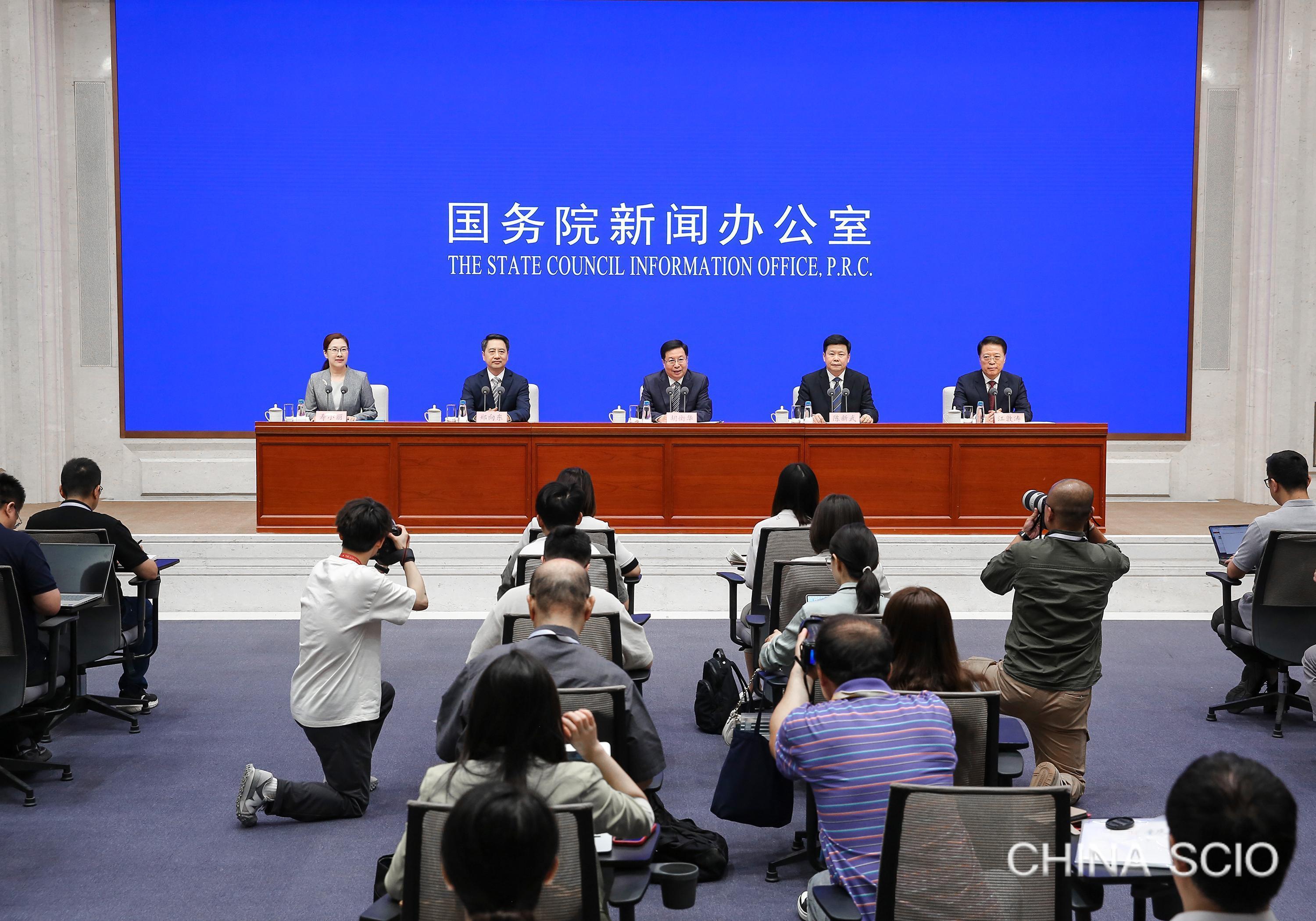
Beijing | 10 a.m. June 5, 2024
Speakers
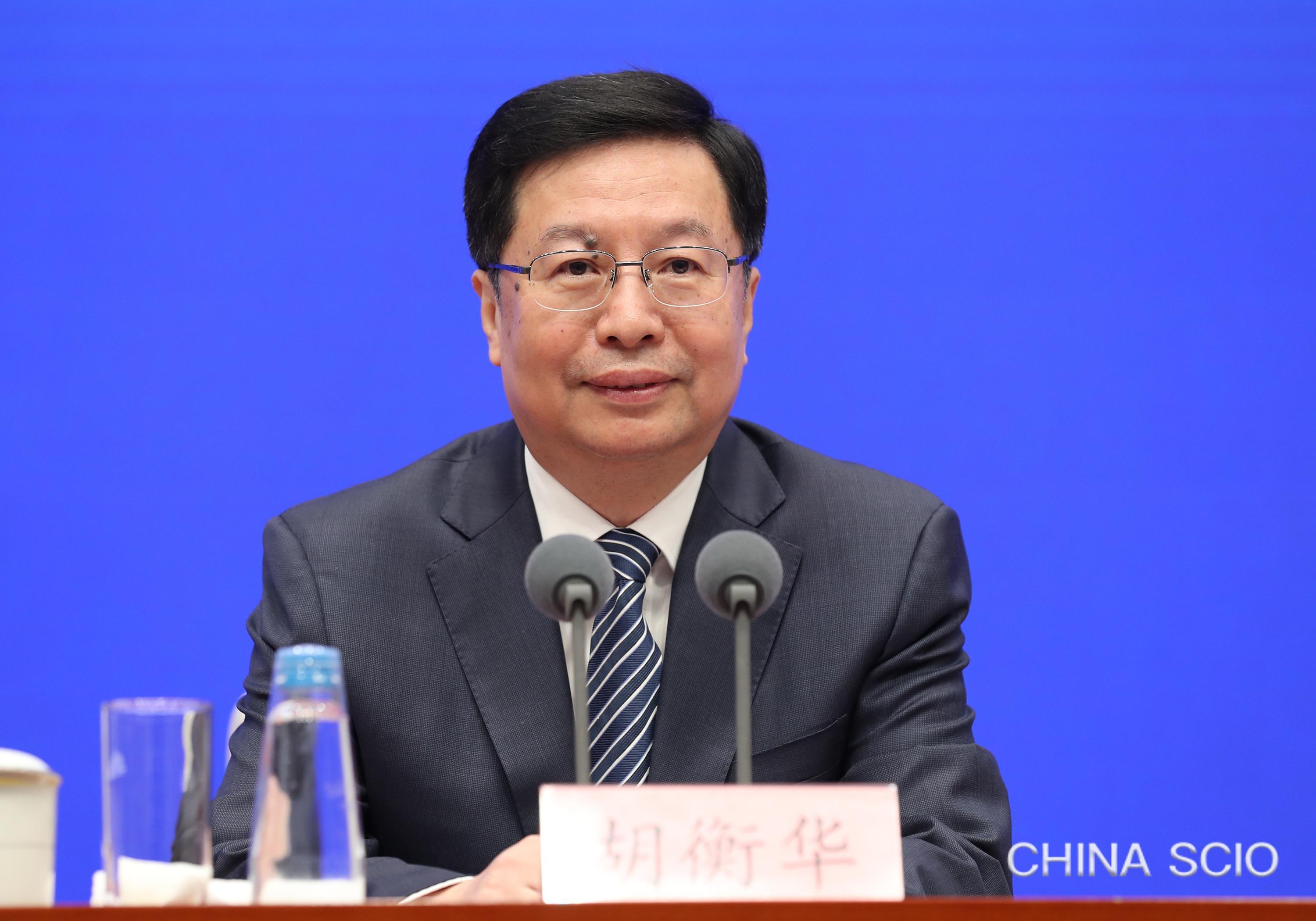
Hu Henghua, deputy secretary of the Communist Party of China (CPC) Chongqing Municipal Committee and mayor of Chongqing
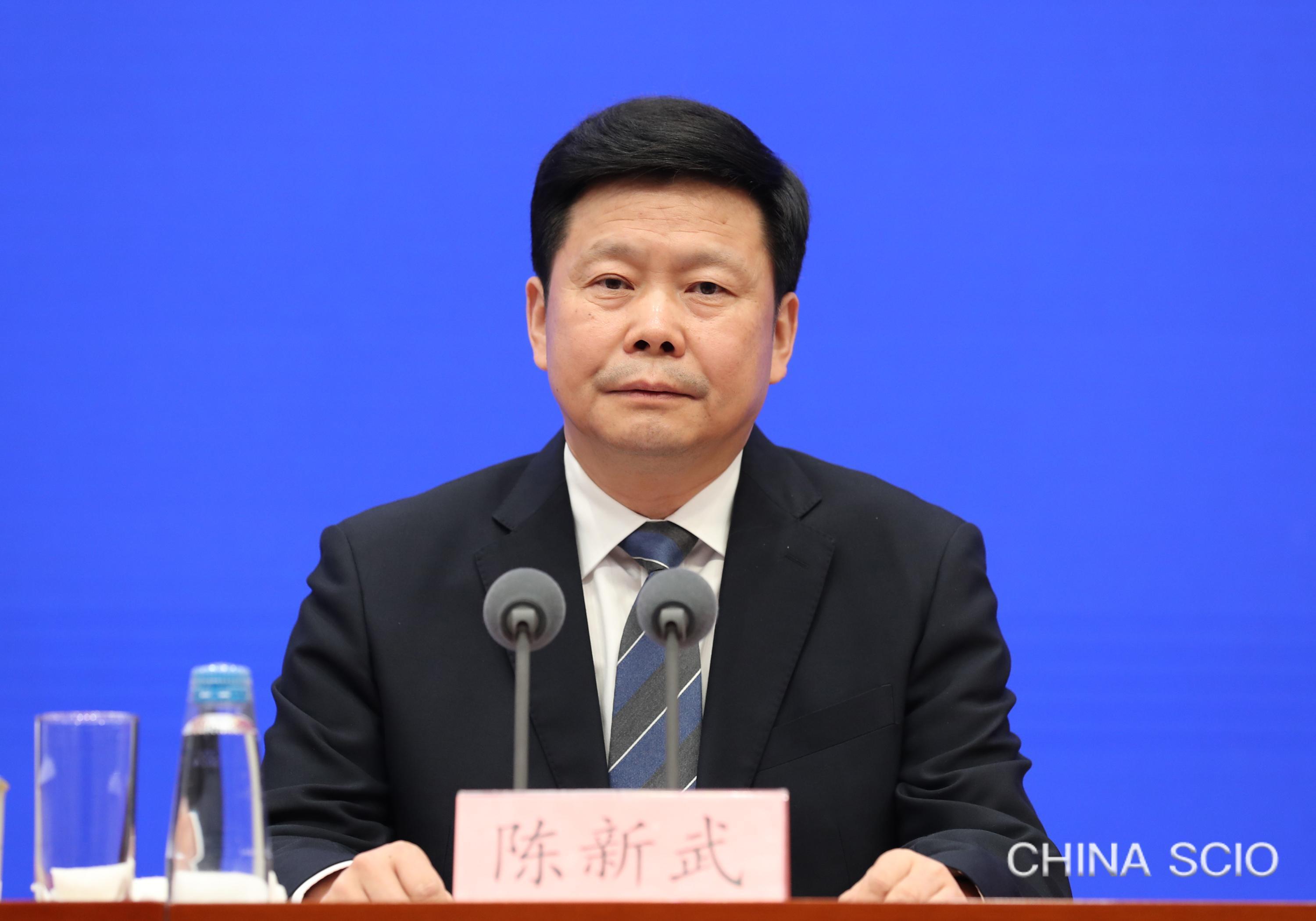
Chen Xinwu, a member of the Standing Committee of the CPC Chongqing Municipal Committee, secretary-general of the CPC Chongqing Municipal Committee, and executive vice mayor of Chongqing
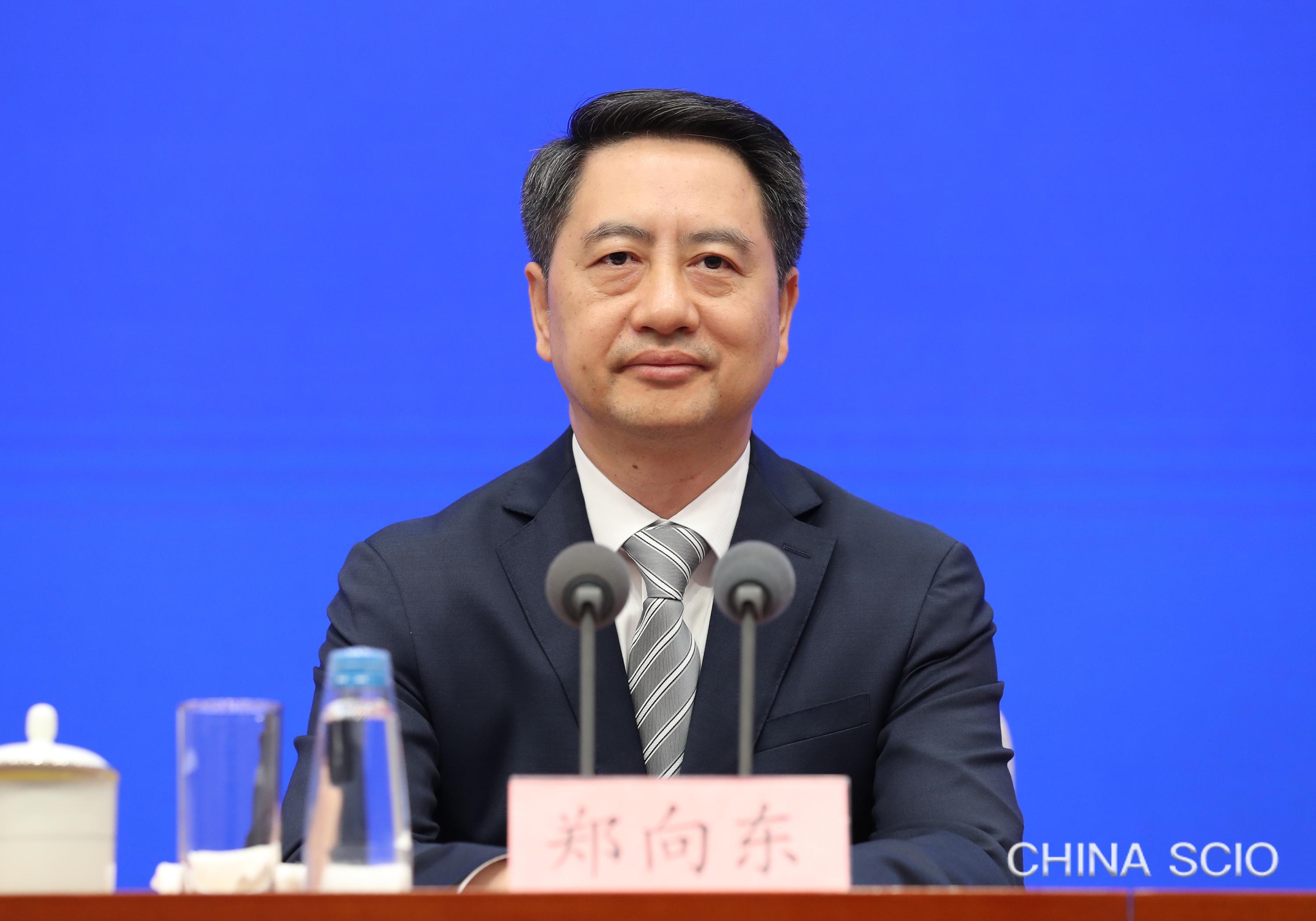
Zheng Xiangdong, vice mayor of Chongqing
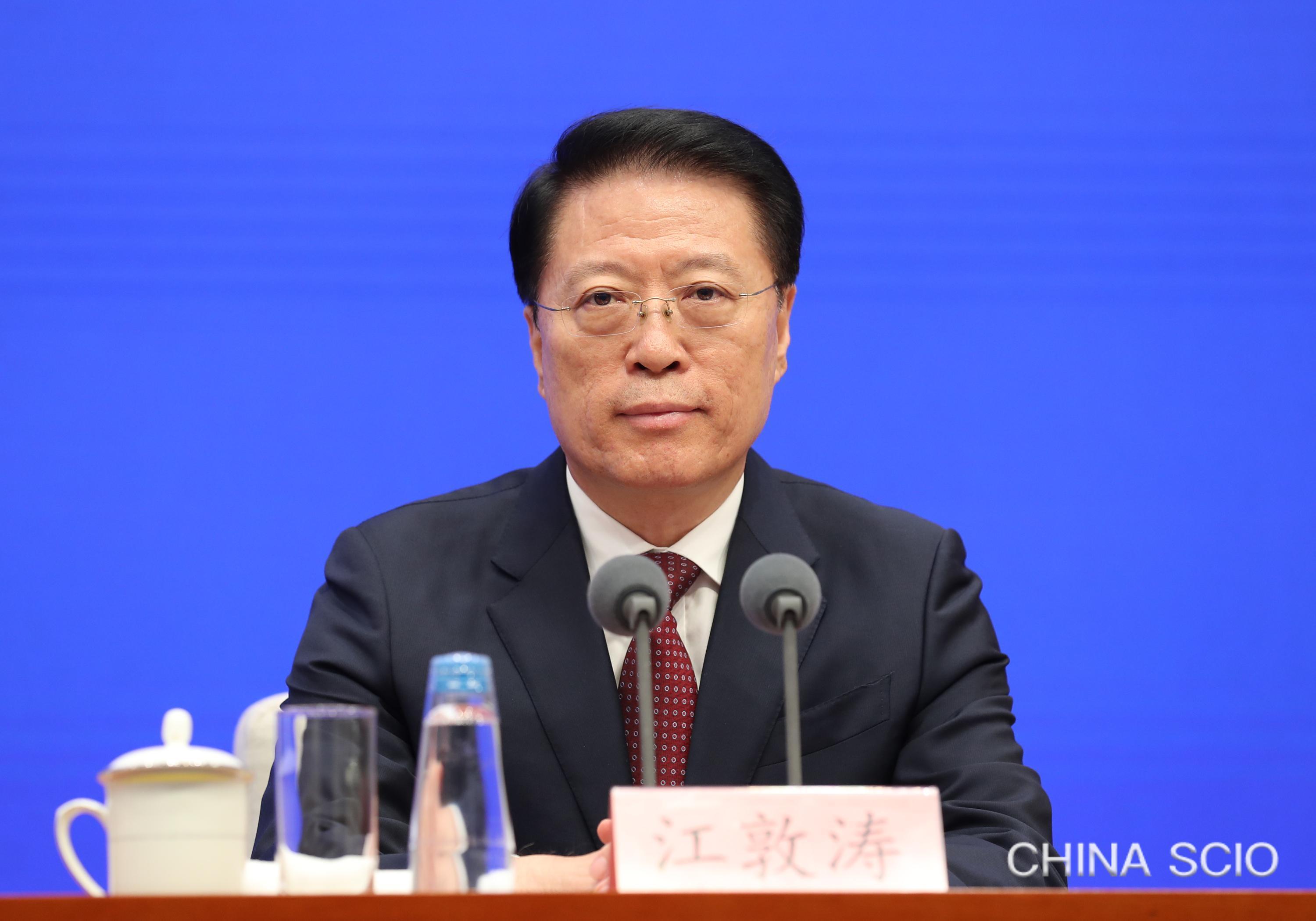
Jiang Duntao, vice mayor of Chongqing
Chairperson

Speakers:
Mr. Hu Henghua, deputy secretary of the Communist Party of China (CPC) Chongqing Municipal Committee and mayor of Chongqing
Mr. Chen Xinwu, a member of the Standing Committee of the CPC Chongqing Municipal Committee, secretary-general of the CPC Chongqing Municipal Committee, and executive vice mayor of Chongqing
Mr. Zheng Xiangdong, vice mayor of Chongqing
Mr. Jiang Duntao, vice mayor of Chongqing
Chairperson:
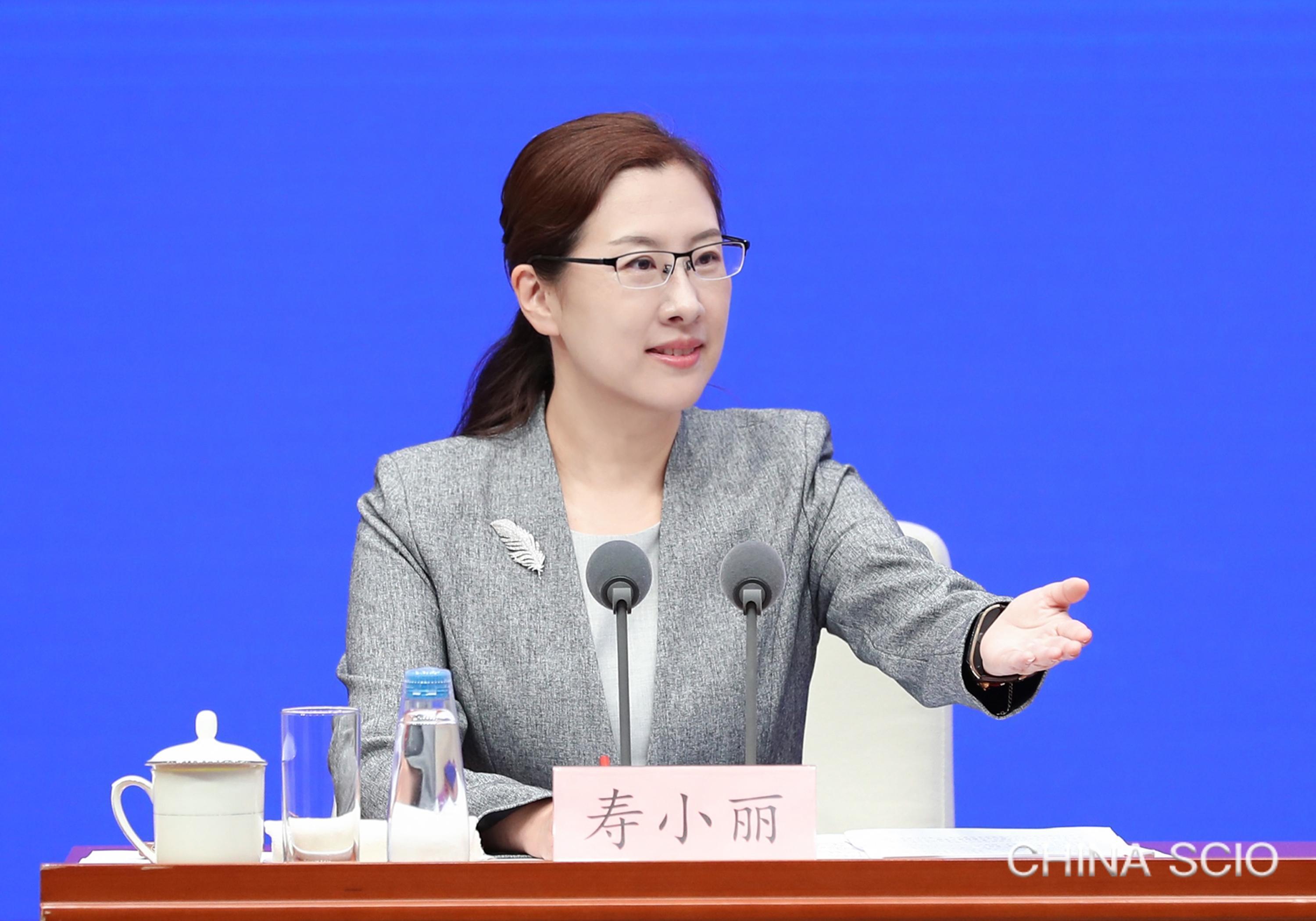
Ms. Shou Xiaoli, director general of the Press Bureau of the State Council Information Office (SCIO) and spokesperson of the SCIO
Date:
June 5, 2024
Shou Xiaoli:
Ladies and gentlemen, good morning. Welcome to this press conference held by the State Council Information Office (SCIO). This is the 26th briefing in the series "Promoting High-Quality Development." Today, we have invited Mr. Hu Henghua, deputy secretary of the Communist Party of China (CPC) Chongqing Municipal committee and mayor of Chongqing, to brief you on building Chongqing into a key strategic fulcrum for the development of China's western region in the new era and a comprehensive hub for inland opening-up, and to take your questions. Also present today are Mr. Chen Xinwu, a member of the Standing Committee of the CPC Chongqing Municipal Committee, secretary-general of the CPC Chongqing Municipal Committee, and executive vice mayor of Chongqing; Mr. Zheng Xiangdong, vice mayor of Chongqing; and Mr. Jiang Duntao, vice mayor of Chongqing.
Now, I'll give the floor to Mr. Hu for his introduction.
Hu Henghua:
Friends from the media, good morning. I would like to express my gratitude to you for your long-term interest in and support for Chongqing. It's a great pleasure for me to brief you on Chongqing's economic and social development here.
Chongqing, a municipality directly under the central government in central and western China, boasts the largest area and population among all cities in the country. It has undertaken multiple strategic missions including development of the Chengdu-Chongqing economic zone, the New International Land-Sea Trade Corridor, and the high-quality development of the Yangtze River Economic Belt. General Secretary Xi Jinping puts great importance on Chongqing's development. He visited the city in 2016 and 2019, and again in April this year to provide further guidance. He urged Chongqing to build itself into a key strategic fulcrum for the development of China's western region in the new era and a comprehensive hub for inland opening-up, thus making Chongqing's contribution to Chinese modernization.
Since the 20th CPC National Congress, we have thoroughly implemented a series of important instructions and requirements made by General Secretary Xi Jinping, striving to advance high-quality development, create a high-standard of living, and facilitate highly efficient governance. Last year, Chongqing's GDP increased by 6.1%, making it the first city in central and western China to exceed 3 trillion yuan. In the first quarter of this year, its GDP grew by 6.2%, marking a good start and recovery momentum in economic and social development, securing solid progress in building a new and modern Chongqing.
We have remained committed to pursuing high-quality development and fostering new quality productive forces according to local conditions. As a major manufacturing hub, Chongqing boasts all 31 major manufacturing categories. Adhering to the principle of building the city's foundation through industry and enhancing its strength through manufacturing, Chongqing is accelerating the construction of a modernized industrial system. As an old industrial base, Chongqing is experiencing a resurgence of new vitality. Intelligent connected new energy vehicles (NEVs), next-generation electronic information manufacturing, and advanced materials are growing into trillion-yuan level industrial clusters. Vehicle production has exceeded 2.3 million, with over 500,000 NEVs produced. One out of every three laptops in the world is made in Chongqing. The modern production service industry has empowered advanced manufacturing. The western financial center in the Chengdu-Chongqing area has gathered more than 1,800 financial institutions. Software and information service industries are thriving, creating a vibrant and expansive landscape. The workforce in these sectors has increased by nearly 150,000 in the past two years, totaling 369,000, with main business revenue exceeding 360 billion yuan. Regional cooperation and open development have expanded new horizons, with the tale of the two cities of Chengdu and Chongqing becoming increasingly captivating. The New International Land-Sea Trade Corridor now connects with 514 ports in 123 countries and regions, transporting more and more Chongqing products to the world, making the inland city a frontier of China's westward and southward opening-up.
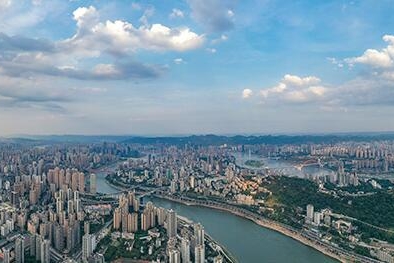
_ueditor_page_break_tag_Orienting toward residents' expectations for a high quality of life, we have constantly made sure that development achievements truly deliver for the people's well-being. By coordinating new urbanization with all-round rural revitalization and balancing high-quality development with high-standard protection, we are shaping a beautiful and harmonious urban-rural landscape while delivering tangible benefits in key sectors to residents. Now, if you stroll through the city, you will notice new improvements along the banks of the Yangtze River and Jialing River. In Chongqing, also known as a "mountain city," over 700 kilometers of footpaths connect the mountains and rivers as well as the city and its residents, while more than 200 pocket parks dot the urban landscape. Each year, over 200,000 college graduates are captivated by this mountain city and choose to stay here. If you go to the countryside in search of nostalgia, you'll find picturesque and harmonious rural areas with a fresh new look. There, the food and agricultural product processing industry has increased the income of rural residents. Local specialties, such as Fuling pickled mustard tubers, Fengjie navel oranges, Tongnan lemons and Wushan crisp plums have become huge hits. As you view Chongqing's scenery, you will witness the result of its efforts to create a beautiful landscape. The water quality of the Chongqing section of the main stream of the Yangtze River has remained excellent for seven consecutive years, and over 325 days of good or excellent air quality have been recorded for four consecutive years. Three years since the 10-year fishing ban was implemented in the Yangtze River Basin, the number of fish species monitored in the river has more than doubled. Chongqing is widely considered as a city with charming scenery, bustling life and warm people. Everyday scenes, including the "spring-bound train" (rail routes passing blooming flowers), the Baijusi Yangtze River Bridge evoking scenes from the movie "Interstellar," and the radiant lights in Hongyadong scenic area, have become must-see attractions for tourists.
We have continuously innovated high-efficiency governance and accelerated our steps toward further modernizing city governance. Digitalization enabled the community to access Chongqing's administration and services. Local people can register for permanent residency for newborn babies, handle social security procedures, and apply for start-ups through online services. In emergencies, such as rockslide-related disasters, information can be sent directly to the city-level command center, and corresponding instructions will be promptly delivered to frontline workers. This has accelerated the building of an all-weather security system, ensuring the city's smooth operation. The local government has also improved its effectiveness and efficiency in governance, continuously enhancing the business environment. Currently, Chongqing hosts over 7,200 foreign-invested business entities and 319 branches of the world's top 500 enterprises, showcasing growing vitality in various business sectors.
Friends from the media, as a Chinese saying goes, "Seeing once is better than hearing a hundred times." We warmly welcome you to visit Chongqing, to experience the unique charm of this beautiful city with its abundant rivers and mountains, as well as its robust vitality in pursuing modernization. You are also welcome to record the city's vibrant efforts in pursuing its new missions, writing a new chapter of development, and telling its stories to spread its voice.
That's my introduction. Next, my colleagues and I would like to answer questions from the journalists.
Shou Xiaoli:
Thank you for your introduction, Mr. Hu. The floor is now open for questions. Please identify the media outlet you represent before asking your question. We can start now.
_ueditor_page_break_tag_CCTV:
During his inspection of Chongqing in April, General Secretary Xi Jinping emphasized that the city should try to build itself into a key strategic fulcrum for the development of China's western region in the new era and a comprehensive hub for inland opening up. Could you please elaborate on what Chongqing will focus on to serve the development of the western region and contribute to the overall development of the country? Thank you.
Hu Henghua:
Thank you for your question. During his inspection, General Secretary Xi Jinping entrusted Chongqing with two defined roles, providing strategic guidance for the city's development. These roles are rooted in the western region and are aimed at serving the country's overall growth. The first role, "a key strategic fulcrum for the development of China's western region in the new era," emphasizes well-coordinated environmental conservation, greater openness and high-quality development. This requires Chongqing to play a strong supporting role and set a good example. The other role, "a comprehensive hub for inland opening-up," highlights Chongqing as both a transportation hub and a distribution center for resources such as people, materials, funds, and information. This aims to lead the opening up and development of inland regions. We will focus on these two roles and prioritize the development of six key zones:
First, we will build a pioneer zone for high-quality development in the western region. Last year, Chongqing's GDP exceeded 3 trillion yuan. Based on this achievement, we will strive to reach 4 trillion yuan by 2027, when the city celebrates its 30th anniversary as a municipality directly under the central government. Achieving this target won't be easy. Therefore, we must promote innovation, manufacturing, and services, with advanced manufacturing as our backbone. We will accelerate the development of a modern, productive service industry and build a modernized industrial system. These efforts will help create new growth drivers of new quality productive forces.
Second, we will establish a leading zone for international cooperation in inland opening-up. We will focus on promoting the development of the New International Land-Sea Trade Corridor in the western region and improving the collection, distribution, and transportation system for international logistic corridors. Currently, we are planning to build a hub port industrial park in the western part of Chongqing, bordering the central downtown area. This park will serve as a base for manufacturing of complete sets of advanced equipment , advanced materials, logistics, and modern supply chain services. If these corridors are seen as lines, the hub port industrial park can be viewed as a key linkage point, connecting the New International Land-Sea Trade Corridor, the China-Europe Railway Express, and the Yangtze River waterway. This will enhance the interplay among corridors, economy and trade, and industries.
Third, we will create a pilot zone for comprehensive and in-depth reform. This involves being pioneers in implementing digitization, reforming state-owned assets and enterprises, transforming industrial parks and development zones, and developing the private economy. Our goal is to achieve a series of reform successes unique to Chongqing. For instance, by reforming industrial parks and development zones, we have reduced the number of industrial parks in Chongqing to 50, achieving a decrease in quantity. Moving forward, we will continue to enhance our functions, providing services for residents in the administrative area and supporting legal entities in the development zone. This will ensure that enterprises can handle relevant affairs without leaving the zone.
Fourth, we will build a demonstration zone for modernized governance of a super-large city. As a municipality directly under the central government, Chongqing enjoys the advantage of direct management. We will improve the comprehensive urban governance system and mechanism, develop a smart hub for city operations and governance, accelerate digital governance, and improve urban security capabilities in all respects, striving to gain new experiences in building a people-centered city.
Fifth, we will establish a zone demonstrating urban-rural integration and rural revitalization. Given Chongqing's vast rural areas, we will strengthen the driving role of the main urban area, comprehensively promote new urbanization using districts, counties, and central towns as key carriers, and advance rural revitalization with targeted measures, continuing to improve people's well-being.
Sixth, we will establish a pilot area for implementing the Beautiful China Initiative. As the largest riverside city in the upper reaches of the Yangtze River, Chongqing will be more aware of its special location and shoulder its corresponding responsibilities. We will promote environmental governance such as water, air, soil, waste and plastic management in a coordinated way, take actions for green and low carbon transformation, and consolidate the vital ecological barrier in the upper reaches of the Yangtze River, safeguarding its green waters and the lush mountains on its both sides.
That's my answer. Thank you.
_ueditor_page_break_tag_China News Service:
Recently, Chongqing's "Basket Line" has gone viral online, making it easier for many suburban farmers to travel to the city to sell their vegetables. We have noticed that Chongqing every year rolls out 15 key welfare matters. Could you explain how these major matters are determined and implemented, and what is their current progress? Thank you.
Hu Henghua:
Thank you for your question and your attention to Chongqing. I will invite Executive Vice Mayor Chen Xinwu to answer this question.
Chen Xinwu:
Thank you for your question. The "Basket Line" is what the locals call Line 4 on our subway system. This line is 48.5 kilometers long, connecting Shichuan town in Yubei district to the city center. Every morning, people in the suburbs can carry their baskets and take Line 4 into the city to sell their vegetables. At the same time, in order to facilitate the people to sell vegetables, we have made arrangements regarding security checks and seating on this line as we ll as market planning. This ensures that residents can easily sell their vegetables while also managing the city's appearance. It can be said that the "Basket Line" is a reflection of Chongqing Municipal Government's annual work for people's welfare.
Over the years, the Chongqing Municipal Government has always regarded welfare matters as the most practical and direct work. Each year, we plan 15 key welfare matters. In planning and advancing these projects, we mainly focus on three aspects:
The first part is collecting issues. Each year, the municipal government publicly collects work suggestions for the next year on the government website. At the same time, we have mobilized grassroots communities, various social organizations, and "Party congress delegates, people's congress deputies and political advisors" to solicit suggestions. We collect over 3,000 opinions every year.
The second part is the decision-making process. In the decision-making part for welfare matters, the government always insists on being close to the people, paying attention to their needs, focusing on practical projects and embodying warmth. We have focused on launching some small-scale and effective people's welfare projects, and aim to accomplish a number of "key matters" and "heartwarming good deeds." For example, we regard urban outdoor workers being able to rest as a matter of people's welfare. So, we have built 1,400 "workers' rest areas" at labor union activity homes, community service centers, banks, supermarkets and sanitation facilities. These areas provide outdoor workers a place to rest, drink water, eat and charge their phones, if needed.
The third part is the implementation stage. Although urban welfare matters may seem small, their implementation can be quite complicated. We have innovated our working methods. For example, in order to solve the problem of building small and micro parking lots, we have been boldly innovative by using idle land, fragmented land and spaces under bridges for public bidding. In less than two years, we have built 1,200 small and micro parking lots, adding 90,000 parking spaces and effectively alleviating the parking difficulties in the urban area.
Next, we will continue to deal with real problems and handle welfare matters well, so as to provide people a greater sense of accomplishment and happiness. Thank you!
_ueditor_page_break_tag_Nikkei:
As the city with the earliest launch of China-Europe freight trains, what achievements has Chongqing made in the last 13 years? The current international situation is becoming increasingly complex, especially with the ongoing Red Sea crisis. With that, the role of the China-Europe freight trains as a major logistics artery is becoming more obvious. Will the number of trips for the Chongqing China-Europe freight trains increase in the future? What are the trends in the types of goods being transported? How does it promote Chongqing's industrial development? Thank you!
Hu Henghua:
Thank you for your concern about the China-Europe freight trains. I will invite Vice Mayor Zheng Xiangdong to answer this question.
Zheng Xiangdong:
Okay, thanks. With the joint efforts of countries and regions along the route, the China-Europe freight trains have explored a path of consensus building, win-win cooperation and vitality. It has now become a widely welcomed international public product. As the first city to launch China-Europe freight trains, Chongqing has dispatched nearly 16,000 trains, shipped 1.3 million TEUs (twenty-foot equivalent unit) of goods and transported goods worth over 530 billion yuan.
We believe that although international trade and logistics are facing much uncertainty, the number of China-Europe freight trains and the volume of goods delivered will certainly continue to increase in the future. This is because continuous efforts have been made in terms of "hard connectivity" to improve the transportation network. At present, China-Europe freight trains travel on a total of 51 routes, reaching 113 cities in Europe and Asia. These routes interconnect with the New International Land-Sea Trade Corridor and the Yangtze River golden waterway, enabling almost full coverage across Asia and Europe. In terms of "soft connectivity," service efficiency related to transportation routes continues to improve. We have thoroughly promoted special services such as streamlined customs clearance, comprehensive insurance and cross-border finance, creatively explored land trade rules and launched a number of pilot programs regarding rail waybill related financial services, improving trade facilitation. On the supply side, we have enhanced logistics security. Recently, international maritime routes have encountered difficulties, while the volume and value of goods delivered by China-Europe freight trains from Chongqing to Europe have increased by 217% and 190%, respectively, showing the resilience and potential of land transportation in international trade. On the demand side, all parties have grown more eager for cooperation regarding the transportation routes. As efficient and stable public goods, China-Europe freight trains offer one of best solutions to international logistics, transforming the pattern of opening-up from mainly focusing on maritime transportation to coordinating between modes of land transportation and sea shipping.
We believe that China-Europe freight trains will continue to play a greater role in Chongqing's industrial development. As China's door is opening ever wider and our circle of friends continues to expand, trade cooperation with countries along the routes will become closer, and more high-quality international commodities will enter the domestic market. The increasingly mature transportation services, more efficient interconnection between European, Central Asian and ASEAN markets, and the accelerated integration of cross-border funds, technologies and talent, mean that Chongqing will become more deeply involved in the global industrial division. The industrial ecosystem is improving, the integration of industrial and supply chains has picked up pace in regions along the routes, and as the result, the business vitality and growth potential will be further invigorated. For instance, the electronic information industry is one of pillars of Chongqing's economy. Since the launch of the China-Europe freight trains, more than 100,000 TEUs of related products worth over 180 billion yuan have been transported.
We have reason to believe that in the future China-Europe freight trains will transport a greater quantity and wider variety of goods, with trade entities and business modes continuing to diversify. Thank you.
_ueditor_page_break_tag_National Business Daily:
We are all aware that today, June 5, is World Environment Day. What efforts has Chongqing made to protect the eco-environment in the upper reaches of the Yangtze River, as the largest riverfront city in the region? And what progress has been made? Thank you.
Hu Henghua:
Thank you for your important questions. I would like to invite Mr. Chen to answer.
Chen Xinwu:
Thank you for your questions. Today is World Environment Day, and China's major thematic event is being hosted in Guangxi. Next year the baton will be passed to Chongqing. Mr. Hu just mentioned that Chongqing is the largest riverfront city in the upper reaches of the Yangtze River, which runs 691 kilometers from west to east through the city. 85% of the Three Gorges Reservoir region is located in Chongqing. It is Chongqing's major political duty to protect the ecological environment and strengthen the ecological shield in the upper reaches of the Yangtze River. We strive to ensure well-coordinated environmental protection, prevent overdevelopment, and advance the integrated management of water, air, soil, waste, plastics, mountains, shores, and urban and rural areas. With all these efforts, the quality of the city's environment has been rising. Today, the landscape of Chongqing features lucid waters and lush mountains, blue skies and green fields.
We have ensured the comprehensive management of water, air and soil, strictly implemented the river chief system, enforced a 10-year fishing ban on the Yangtze River, enhanced management of 4,012 sewage outfalls into rivers, set up a big data application system for the management of the water environment, and enabled smart monitoring of 120 rivers in the city. The efficiency in locating water environment issues, tracing their sources, and handling them has increased by over 80%. We have promoted the green transformation of enterprises, and advanced green and smart upgrading of urban transportation, with no severe air pollution for six consecutive years. We have prevented and controlled soil contamination at the source, realizing safe land utilization in all major construction projects.
We insist on coordinating waste and plastic management. We have carried out a pilot project to construct a "zero-waste city," achieving a comprehensive utilization rate of 76% for general solid waste. Notably, in terms of garbage treatment, we have transitioned from landfill to waste-to-power generation. Last year, Chongqing's waste-generated electricity exceeded 3 billion kilowatt-hours, meeting the annual household electricity needs of more than 3.7 million residents. This is equivalent to over one-third of the electricity needs of the city's central area being met through waste-to-energy power generation. At the same time, we have promoted the reduction of "white pollution," promoted bamboo products to replace plastic ones, reduced secondary packaging for e-commerce express deliveries, and decreased the volume of single-use plastic products by more than half in the past two years, with 99% of agricultural plastic films now recyclable.
We insist on managing ecological conservation of mountains and rivers in a holistic manner. We have launched management programs for mountains such as Jinyun Mountain and Tongluo Mountain, creating green mountains and forest belts along the riversides. We have planted 15.22 million mu (1 million hectares) of forests and restored 92,000 mu of mined land. For example, the Tongluo Mountain mining area, once the largest limestone mining area in the downtown region with 41 abandoned mines, has undergone ecological restoration and has been transformed into a downtown ecological park. It is a new must-see destination in the city. At the same time, we have also strengthened the conservation of the Yangtze River, managing 109 kilometers of riverbanks and creating a 400-kilometer stretch of river with clear waters and green banks.
We insist on coordinating urban and rural governance. Based on Chongqing's unique landscape, where rivers, gorges and mountains intertwine, we are creating an ecological city with a rich mountainous charm. In conjunction with promoting comprehensive rural revitalization, we are building 100 beautiful and harmonious villages. At present, 164 villages have been selected as traditional Chinese villages.
Next, we will make greater efforts to solve several prominent ecological and environmental problems, create landmark achievements recognized by the public, and take concrete actions to build a strong ecological shield in the upper reaches of the Yangtze River in preparation for the national-level World Environment Day event to be held in Chongqing next year. Thank you.
_ueditor_page_break_tag_Chongqing Daily:
Chongqing is a major manufacturing hub in China. In recent years, cars and laptops made in Chongqing have been sold domestically and worldwide. How can Chongqing develop and expand its modern industrial system based on its distinctive and competitive industries? Thank you!
Hu Henghua:
Thank you for your question. Mr. Jiang Duntao, who oversees the industrial sector, will answer this question.
Jiang Duntao:
Okay. Chongqing is an important industrial city in our country, and just like the journalist said, it is a manufacturing powerhouse. It should be noted that Chongqing has a solid manufacturing foundation and abundant scientific and educational talent resources. In building a modern industrial system, we will focus on two key areas: "taking advanced manufacturing as the backbone" and "taking scientific and technological innovation as the guide."
In terms of developing advanced manufacturing, we will accelerate the construction of the "33618" modern manufacturing cluster system. We will focus on building three leading industrial clusters: intelligent connected new energy vehicles, next-generation electronic information manufacturing, and advanced materials. We will upgrade and build three pillar industrial clusters: intelligent equipment and intelligent manufacturing, food and agricultural product processing, and software information services. Additionally, we will innovate and build six distinctive and competitive industrial clusters, including new-type displays, lightweight alloy materials, new energy and the new energy storage industry. Furthermore, we will cultivate and expand 18 "new star" industrial clusters such as satellite internet. Today is the first anniversary of Chongqing's proposal to build the "33618" modern manufacturing cluster system. Over the past year, we have boosted the industry in accordance with this thinking and achieved positive results. For example, Chongqing-made cars have been selling well both domestically and internationally. As Mr. Hu mentioned earlier, in 2023, we manufactured over 2.3 million vehicles, producing more than 500,000 new energy vehicles. I think these achievements epitomize Chongqing's industrial transformation and upgrading.
Next, we will continue to promote the high-quality and clustered development of the manufacturing sector. Specifically, we will support enterprises in industries with comparative advantages, such as automobiles and electronics, to increase the launch of new products and move towards the high-end. For industries with development potential, such as integrated circuits and new-type displays, we will promote technology iteration and upgrades, create an industrial ecosystem, and continuously expand the scale of the industry. Additionally, we will select and cultivate relevant enterprises and R&D institutions with new business forms and models, strengthen industries' generation and cultivation, leverage market support through policy support, and create a group of hard and core technology companies and cutting-edge industries.
To strengthen innovation leadership, we will continue to promote the deep integration of technological and industrial innovation. On the one hand, we will fully integrate advantageous resources such as industrial technology research institutes, industrial funds, and industrial parks to facilitate the transition of more scientific research results from the laboratory to the production line. On the other hand, we will enhance the main role of enterprises in innovation and make more breakthroughs in bottleneck technologies. For example, in recent years, smartphone cover glass made in Chongqing, known for its superior drop resistance, has been used in domestic high-end smartphones, including those made by Huawei. This development has successfully filled a domestic gap in this field and brought broad market opportunities to enterprises. Currently, we are vigorously cultivating various innovative market entities, aiming to double the number of high-tech and technology-based enterprises to 12,000 and 80,000, respectively, by 2027. We will work to continuously stimulate the innovative vitality of the whole society.
Meanwhile, we will make every effort to promote the deep integration of modern productive services and advanced manufacturing, develop new quality productive forces tailored to local conditions, and create a market-oriented, law-based, and international top-tier business environment. We will fully leverage Chongqing's advantages, actively integrate into and serve major national strategies, and strive to attract more significant projects and high-quality enterprises to establish a presence in Chongqing, bringing fresh impetus to high-quality industrial development. Thank you.
_ueditor_page_break_tag_Xinhua News Agency:
Chongqing is unique as the only municipality directly under the central government in China's central and western regions. It is also the largest city in terms of administrative area and population. Could you please tell us what measures Chongqing has taken to explore the modern governance of a megacity and in which areas it will continue to focus its efforts? Thank you!
Hu Henghua:
Thank you for your questions. Some say that Chongqing is "a city with 1,000 faces" and I think that's precisely where its charm lies. Chongqing is a city nestled among mountains and rivers, with the Yangtze and Jialing rivers flowing through it. The Jinyun, Zhongliang, Tongluo, and Mingyue Mountains divide the city into three major valleys, creating a cityscape that blends seamlessly with mountains and rivers. Chongqing is a megacity, spanning 82,400 square kilometers, with a permanent population of 32 million. The population of its central urban area alone exceeds 10 million. Chongqing is also a hub city where multiple functions converge and various resources and elements are distributed, adding to the complexity of urban governance.
The core of a city is its people, encapsulated by these words: "clothing, food, housing, transportation, birth, aging, illness, death, and enjoying peace and contentment in work and life." We adhere to the concept of a people-oriented city, striving to ensure that urban development always considers people and that urban governance serves the people. For example, in urban transportation, we prioritize solving the difficulties people face in commuting. The terrain and topography of Chongqing's central urban area are so complex that residents have to navigate slopes and obstacles. That's quite inconvenient. We vigorously develop public transportation, with priority given to buses and pedestrians. Over the years, we have built 13 urban rail lines totaling 538 kilometers, tailored 592 shuttle bus routes, 58 alley bus routes, and 23 bus routes for older people. Many residents can take the subway or catch a bus at their doorstep. Currently, Chongqing sees over 7 million passenger trips made daily on its public transportation network. Another example is urban renewal, where we have proposed a "four increases, three decreases" management approach. The "four increases" involve expanding public spaces, enhancing transportation facilities, adding municipal facilities, and increasing public green spaces; the "three decreases" involve reducing population density, building height, and development intensity. In recent years, we have renovated over 7,200 old residential communities, improved over 8,900 community service facilities for older people and children, and installed over 5,500 additional elevators. Several old neighborhoods and communities have been revitalized, with renovation projects like Minzhu Village and Beicangli successfully gaining widespread recognition and becoming popular spots for residents and tourists.
Going forward, we will actively explore new approaches to modern governance of a megacity. We will establish and improve a comprehensive and integrated urban governance system and mechanism, breaking down departmental barriers and strengthening coordinated, efficient governance. We will accelerate the construction of a smart city and enhance the practical capabilities of digital urban operation and governance centers. Additionally, we will strengthen the foundational role of subdistricts and communities, fully mobilizing citizens' enthusiasm for participating in urban governance and creating a favorable atmosphere where everyone participates, contributes, and benefits. We aim to build a livable, resilient, and smart international metropolis. Thank you!
_ueditor_page_break_tag_Cover News:
More and more government services in Chongqing, such as employment and social security, can now be processed online. We understand that Chongqing is actively promoting the development of Digital Chongqing and even held a conference on this initiative last April. Could you please provide an update on the current progress of this initiative? What conveniences has it brought to residents? Thank you.
Hu Henghua:
Thank you for your questions. Mr. Jiang will address them.
Jiang Duntao:
Thank you for your interest in the construction of Digital Chongqing. Since the conference last April, the initiative has advanced smoothly and rapidly, with significant progress across various aspects of city governance. For instance, by creating digital applications through our "one-stop service," we have transformed tasks that previously required multiple visits and approvals into processes that can now be completed with "one login, one-time handling." Currently, over 80 thematic service packages are available online, covering more than 90% of high-frequency matters related to public and enterprise services, such as newborn registrations and business startups. This has significantly improved the efficiency of government services.
Behind these achievements is a breakthrough from "zero" to "one" in the construction of Digital Chongqing. I would like to summarize this progress with three key terms.
The first key term is "integration." We have developed an integrated and intelligent public data platform based on "centralized municipal-level construction; graded management at city, district and county levels; and three-level interconnection between city, district, and sub-district." For example, in terms of data, our platform connects with the national government's big data platform at the top level and extends down to the sub-district level, encompassing 126 municipal-level units and departments. This platform has achieved a 90% satisfaction rate for residents' data-sharing demands, effectively addressing the challenges of cross-departmental data collection and sharing. Additionally, on the application side, we have created "Yukuaizheng" and "Yukuaiban," which serve as the main entry points for government personnel and businesses or public users, respectively. These platforms integrate various government applications, effectively preventing redundant systems.
The second key term is "one-stop service." Through digital integration and reform, we have consolidated "individual tasks" from multiple departments into "one-stop service" for enterprises and residents. We have established six major digital application systems: digital Party building, digital government services, digital economy, digital society, digital culture, and digital rule of law. Leveraging digital concepts and methods, we have continually optimized work processes, restructured systems, and enhanced relevant capabilities. The previously mentioned "one-stop service" was specifically developed under our digital government service application system.
The third key term is "unified coordination." In exploring modern governance for a megacity, we have established a digital city operation and governance center that integrates the municipal, district, and sub-district levels. This system is centrally developed at the municipal level, with physical centers at the city, district, and sub-district levels. This enables real-time monitoring of key urban indicators and addresses related issues on a tiered basis. This creates a vertically integrated and horizontally coordinated "unified coordination" work model. For example, in October last year, Wushan county in Chongqing detected a potential landslide. Upon identifying the risk, our three-level governance centers at the municipal, district, and sub-district levels issued early warnings and coordinated responses, successfully evacuating 103 households and 196 people in a timely manner. This effectively managed an 8.5 million cubic meters landslide without any casualties.
The construction of Digital Chongqing is an ongoing and iterative process. Moving forward, we will systematically enhance the practical capabilities of the digital city operation and governance center, as well as the collaborative performance of various departments at all levels. Simultaneously, we will plan and develop more practical and user-friendly digital applications, continually exploring new approaches to modern governance for megacities.
Thank you!
_ueditor_page_break_tag_Zhinews of Shenzhen Satellite TV:
It's well known that the New International Land-Sea Trade Corridor in the western region is a new international land and sea trade route jointly developed by western Chinese provinces and ASEAN countries. As the operational center, what progress has Chongqing made in constructing the corridor, and how will the city further enhance its capacity for opening-up to the rest of the world in the next phase? Thank you.
Hu Henghua:
Thank you for your questions. Mr. Zheng will answer them.
Zheng Xiangdong:
Thank you for your attention to the New International Land-Sea Trade Corridor. As its initiator, contributor, and builder, the Chongqing government has actively played its role as the logistics and operations center. We have proactively collaborated with relevant ministries and departments, the "13+2" domestic provinces, autonomous regions, and cities along the route, and ASEAN countries to promote the high-quality development of the corridor. We have made the following progress:
We have promoted infrastructure construction, accelerating the formation of a transportation network for the corridor, crossing both mountains and sea. We regularly operate rail-sea freight trains, international railway trains, and trans-border highway shuttle buses, while expanding new routes for China-Laos-Thailand international trains and China-Myanmar road-rail combined transportaion. The transportation network currently links 514 ports in 123 countries and regions.
We have advanced industrial and trade cooperation to promote high-quality economic development in the corridor. With the idea of "the corridor creating logistics, logistics serving economy and trade, economy and trade driving industries, and industries aggregating elements," we have planned and constructed the Chongqing International Logistics Hub Park from a high starting point, focusing on developing industries such as complete sets of mechanized equipment, advanced materials, modern logistics. As of April this year, the first batch of major projects, with a total investment of 40 billion yuan, has been signed and construction has started.
We have reduced logistics costs while improving efficiency to make operations in the corridor more convenient. We have worked holistically on reform, innovation, and digital empowerment. In 2023, the comprehensive logistics costs in the corridor decreased by 3.5% year on year. Connectivity and data sharing between customs and railway systems have been greatly promoted through digital corridor construction, providing highly efficient services for market entities.
We have boosted international communication and cooperation to expand the corridor's network of partners. We have synergized the construction of the corridor with the China-Singapore bilateral cooperation mechanism and the Lancang-Mekong River cooperation platform. We have also regularly held international cooperation forums and established a tourism promotion alliance to encourage regions along the corridor to open up.
Looking forward, we will focus on the following three aspects to improve the level of opening-up. First, we will continuously optimize the transportation network, accelerate infrastructure construction, upgrade the collection and distribution systems for international logistics, and maintain the daily shipping route between Qinzhou and Singapore. Second, we will constantly improve cooperation platforms, deepen cross-border cooperation in supply and industrial chains, and establish a west- and south-oriented international trade center. Third, we will consistently emphasize reform and innovation, explore new land-sea trade rules, expand the application scale of "one bill of lading" services for the multimodal transportation, and iteratively upgrade the digital corridor construction. By doing so, we expect to achieve more remarkable outcomes for the corridor. Thank you.
_ueditor_page_break_tag_ThePaper.cn:
As one of the country's first six pilot cities for business environment innovation, what measures has Chongqing taken to promote both an efficient market and a well-functioning government to better serve local companies' investment, entrepreneurship, and development? Thank you.
Hu Henghua:
Thanks for your question. Mr. Chen will answer it.
Chen Xinwu:
Thank you. As one of the first pilot cities for business environment innovation, Chongqing prioritizes enterprises' satisfaction. It adheres to creating a market-oriented, law-based, and international business environment.
We have continued to improve government services. As Mr. Jiang mentioned earlier, during the construction of Digital Chongqing, we set up a digital government service platform to provide various online services for all market entities in the city. Currently, over 80% of the more than 2,800 government service items can be handled online. Additionally, more than 8,000 government specialists can provide personalized, one-on-one services to help thousands of enterprises solve their difficulties. To ease market access, we abolished 82 types of certificates related to business operation items, including the road transport operating license and the important industrial products production permit. Enterprises are now allowed to submit written commitments for such applications.
We have adhered to using the law to protect enterprises' development. Law enforcement and judicial supervision have been strengthened to protect companies' rights and interests. We set up the first bankruptcy court in western China to handle corporate bankruptcy and compulsory liquidation cases involving inferior enterprises. So far, idle assets with a total value of 118.7 billion yuan have been efficiently utilized. We also established the Chengdu-Chongqing financial court, the first court in China for cross-provincial jurisdiction. Since its establishment, more than 12,000 cases with a target value of over 40.2 billion yuan have been handled by the court.
In addition, we have aligned with international standards to enhance our services. As Mr. Hu mentioned earlier, Chongqing is a mega-city and has been open to foreign trade since early times. Currently, Chongqing ranks fourth nationwide in terms of the number of foreign consulates and institutions in the city. Chongqing has established sister city relationships with 56 cities and hosts 23 international schools. We are actively working to build the Center for International Exchanges in Central and Western China. Every year, we organize a number of market-based and professional international fairs, such as the Smart China Expo and the Western China International Fair for Investment and Trade, which are highly popular among enterprises at home and abroad. We have established the China-ASEAN Research Center at the Southwest University of Political Science and Law, providing services for business activities between ASEAN countries and domestic enterprises. We are now constructing four laboratories in Jinfeng, Jialingjiang, Guanyuehu, and Guangyanghu, which will support collaborative innovation among enterprises. Chongqing has opened 112 international air routes, including the new western land-sea corridor mentioned earlier by Mr. Zheng. As the hub for the logistics corridor and operational management, Chongqing has pioneered the "single document" system for rail-sea intermodal transport, allowing enterprises to handle shipments with a single contract and one-time payment, thereby streamlining processes and reducing costs. This innovation has made it more convenient for goods to be transported from Chongqing to Southeast Asia and Europe.
In summary, we will remain committed to market-oriented and law-based international standards, providing sincere and excellent services to enterprises in order to ensure they can invest, start businesses, and develop with confidence in Chongqing.
Thank you.
_ueditor_page_break_tag_Shou Xiaoli:
Last question, please.
21st Century Business Herald:
We have noticed that the annual "first meeting of the year" in Chongqing over the past two years has consistently prioritized the advancement of the Chengdu-Chongqing economic circle. Could you please elaborate on the accomplishments Chongqing has made in pushing forward the construction of the Chengdu-Chongqing economic circle over the years? What are the future steps? Thank you.
Hu Henghua:
Thank you for your interest in Chongqing. For two consecutive years, Chongqing's "first meeting of the year" has focused on the construction of the Chengdu-Chongqing economic circle. The goal is to mobilize the entire city to advance this strategic initiative effectively. Over the years, with an emphasis on "unified and high-quality development," we have carried out 10 major actions, including the planning and construction of a modern infrastructure network and initiatives to benefit people and increase the quality of life for our citizens. We aim to foster more significant growth poles and new engines that drive high-quality development nationwide. Over the past four years, the combined GDP of Sichuan and Chongqing has increased by 2 trillion yuan, reaching 9 trillion yuan last year. We have made remarkable progress in the construction of the Chengdu-Chongqing economic circle. Let me share a few examples with you.
Industrial collaboration has intensified in recent years. There is strong complementarity and industrial linkage between Sichuan and Chongqing in the automobile manufacturing sector. For example, Volvos made in Chengdu are equipped with auto parts and components from Chongqing, while Changan Deepal cars produced in Chongqing rely on batteries from Yibin, Sichuan. This cooperative pattern extends beyond the automobile industry. Currently, Sichuan is Chongqing's largest market and second-largest supply source. Last year, trade volume between the two regions exceeded 870 billion yuan.
Transportation infrastructure has steadily improved over the years. A "one-hour transportation circle" now exists in the Chengdu-Chongqing region. It takes only 62 minutes to travel from Chongqing's Shapingba Station to Chengdu East Station by high-speed Fuxing bullet train. This allows residents to watch pandas in Chengdu in the afternoon and enjoy hotpot in Chongqing that evening. When the Chengdu–Chongqing Central Line high-speed railway opens in 2027, commuting time will be reduced to 50 minutes. In addition to high-speed rail, 22 inter-provincial bus routes between the cities and 20 inter-provincial highways are under construction or completed. Currently, over 1 million trips occur daily between Chengdu and Chongqing.
Inter-provincial government services have become increasingly convenient for residents in Chongqing and Sichuan. The two regions have launched three batches of 311 cross-provincial government services, with over 18 million cases processed to date. Now, transferring pension insurance relations between the two regions no longer requires multiple trips. Residents can apply with one click on their mobile phones and handle everything online. The results of 112 types of medical examinations and tests from 413 hospitals in both areas are mutually recognized. Business entities can apply for business licenses under the same standards, with the respective authorities recognizing and issuing licenses accordingly, all completed within one day. Thanks to these efforts, we have provided greater convenience for businesses and the public in the two regions.
Sichuan and Chongqing are like family, and the construction of the Chengdu-Chongqing economic circle brings them even closer. We will work together with Sichuan, adhering to an integrated approach and unified planning. We will focus on promoting coordinated development between Chengdu and Chongqing, in order to create a powerful economic engine that drives regional prosperity. We will move faster to build an important economic center and a nationally influential sci-tech innovation center, jointly establish a financial center in the western region, and develop the Bashu cultural and tourism corridor. We strive to showcase the remarkable achievements of Chengdu and Chongqing in western China in the new era. Thank you.
Shou Xiaoli:
Thank you, Mr. Hu, and thank you to all the speakers and journalists for your participation. Today's press conference is hereby concluded. Goodbye.
Translated and edited by Xu Xiaoxuan, Zhou Jing, Yan Xiaoqing, Wang Yanfang, Yan Bin, Zhang Rui, Qin Qi, Lin Liyao, Cui Can, Huang Shan, Ma Yujia, Yuan Fang, Liu Sitong, Zhang Junmian, Wang Wei, Li Huiru, Rochelle Beiersdorfer, David Ball, and Jay Birbeck. In case of any discrepancy between the English and Chinese texts, the Chinese version is deemed to prevail.