China.org.cn | September 1, 2026


A decade after the launch of the Lancang-Mekong Cooperation (LMC) mechanism, the six member countries are seeking to deepen industrial cooperation as the mechanism enters its 2.0 era.
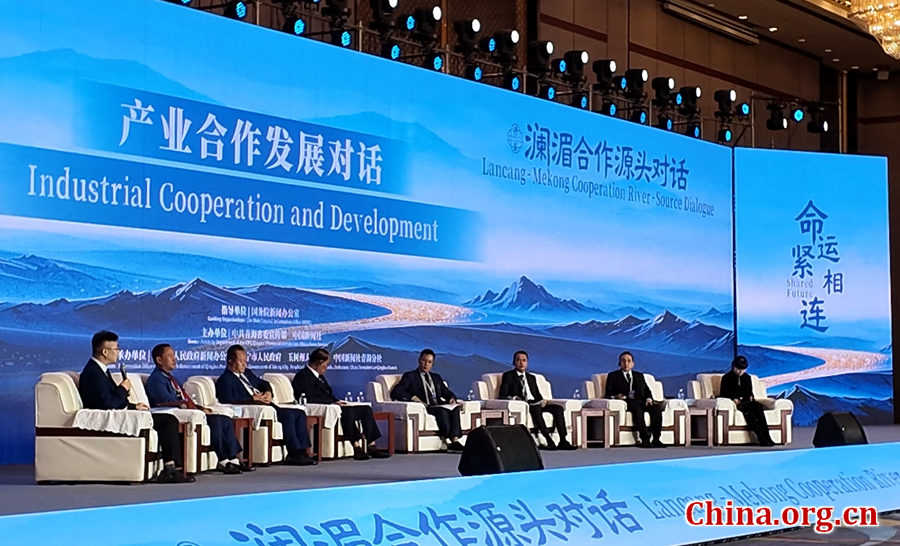
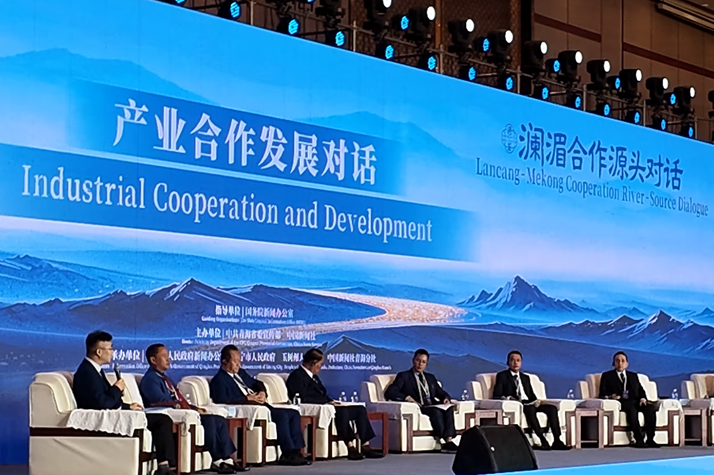
Guests take part in the Industrial Cooperation and Development Dialogue event during the Lancang-Mekong Cooperation River-Source Dialogue held in Xining, Qinghai province, Aug.29, 2026. [Photo by Xu Xiaoxuan/China.org.cn]
At the Lancang-Mekong Cooperation River-Source Dialogue held in Xining, northwest China's Qinghai province, on Aug. 28-29, representatives from China, Myanmar, Laos, Thailand, Cambodia and Vietnam discussed ways to expand cooperation in trade, agriculture and tourism.
The Mekong River, known as the Lancang River in China, originates in Yushu Tibetan Autonomous Prefecture of Qinghai and flows through the six countries, linking their economies and creating opportunities for regional cooperation.
Songrit Ratanadilok Na Bhuket, chairman of the Thai-Chinese Economy Association, called for efforts to translate Lancang-Mekong relations into broader trade, increased investment, stronger business partnerships and more effective trade facilitation.
"The Mekong River countries possess important resources, markets, young populations and strategic geographical positions," he said. "If we combine these strengths, we can build a more competitive Lancang-Mekong economic ecosystem."
Agriculture is one area where such complementarities are already generating tangible results.
Zhao Shulan, director of the Institute of Southeast Asian Studies under the China (Kunming) Academy of South and Southeast Asian Studies, said that agricultural cooperation among the six countries has evolved over the past decade from sharing technology toward digital and intelligent coordination across the entire industrial chain.
In 2025, trade in agricultural products between China and the five Mekong countries reached $34.56 billion, with imports from these countries rising by 222% from the 2016 level, she said.
Vei Samnang, governor of Takeo province in Cambodia, said Cambodia has actively participated in the Belt and Road Initiative and aligned itself with the 21st Century Maritime Silk Road to facilitate trade.
He highlighted the Funan Techo Integrated Water Resources Management project jointly built by China and Cambodia, saying it would help reduce logistics costs and improve the efficiency of regional circulation.
The project will also help unlock new opportunities in tourism by linking waterways with tourism resources.
"Based on the Mekong waterway network and the Funan Techo project, we can work together to connect historical waterways, heritage sites, traditional villages and ecotourism areas across the LMC region, creating an integrated tourism corridor," he said.
For Laos, cross-border tourism is also emerging as an important area of industrial cooperation.
Phanichanh Somchay, deputy secretary of the Khammouane Provincial Party Committee of Laos, proposed jointly developing tourism destination products and creating a "Six Countries, One Destination" tourism route.
The proposal included water-based and rail tourism routes linking multiple countries, while common visa arrangements or streamlined cross-border procedures could make travel more convenient, faster and safer, he said.
Somchay added that a shared digital platform could provide tourism information and one-stop booking services, helping integrate tourism resources and expand the regional tourism market.
Myanmar also sees potential in turning its rich cultural resources into new economic opportunities and strengthening tourism cooperation.
Myat Thu, deputy permanent secretary of the Ministry of Hotels, Tourism and Culture in Myanmar, said Myanmar's traditional cultural resources, including traditional textiles and lacquerware, could generate sustainable economic opportunities through cultural and creative industries and cultural tourism.
Such efforts would also help deepen tourism cooperation among the Lancang-Mekong countries, he said.
Beyond traditional trade, industrial cooperation is expanding into manufacturing and new energy.
According to Zhao Shulan, Chinese new-energy companies, including BYD and CATL, have also invested in production facilities in countries such as Thailand and Vietnam, contributing to the development of green transportation industries in the region.