China.org.cn | September 25, 2025


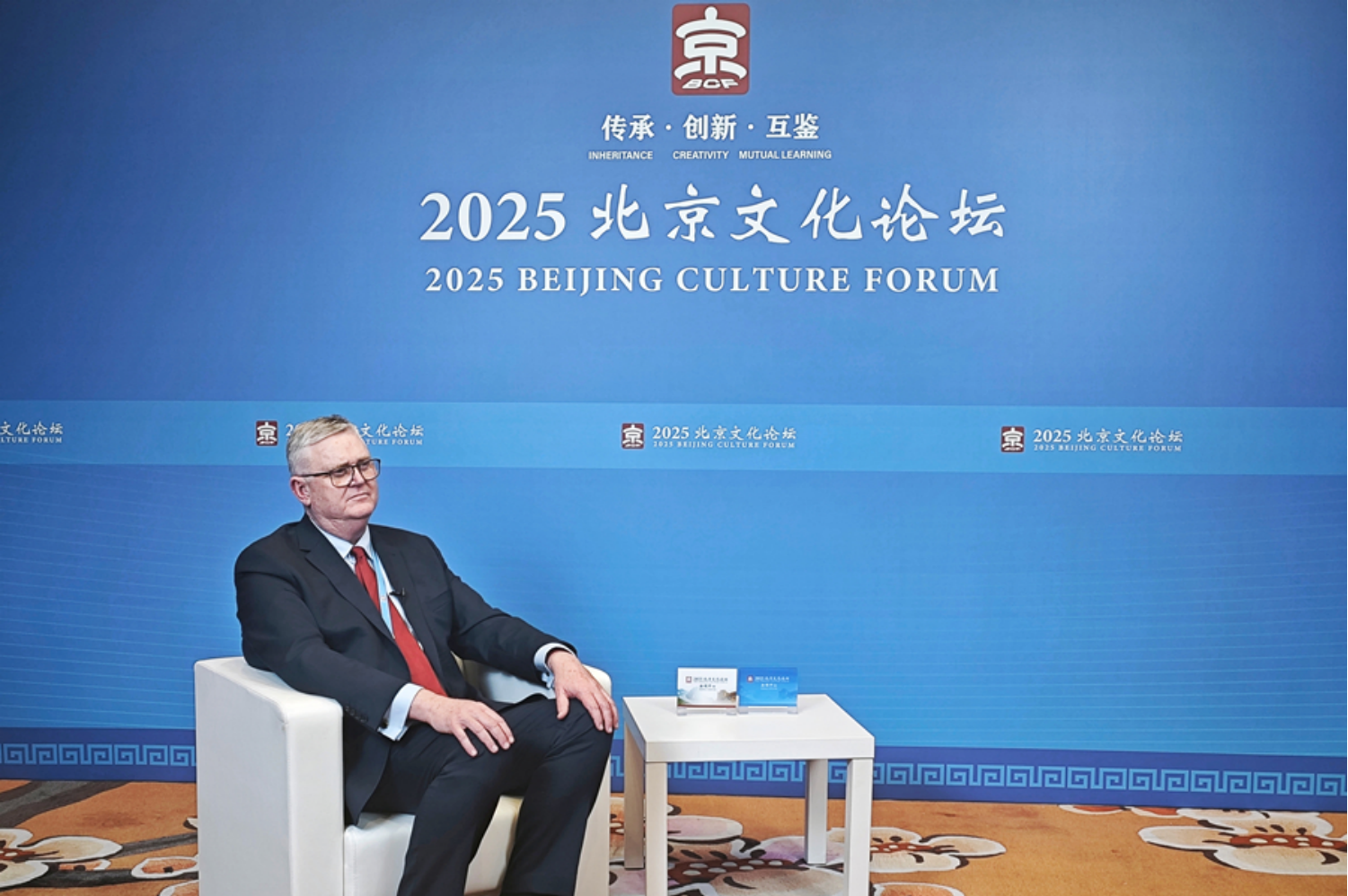

At the 2025 Beijing Culture Forum, Australian sinologist Harold Weldon emphasized how China is connecting with global audiences through short-form web dramas.
He pointed to popular films like "Kung Fu Panda" and innovative creative industries such as the video game "Black Myth: Wukong" as examples. Weldon also highlighted the promise of immersive digital technologies and underscored cross-cultural collaboration as essential for effectively sharing Chinese culture.
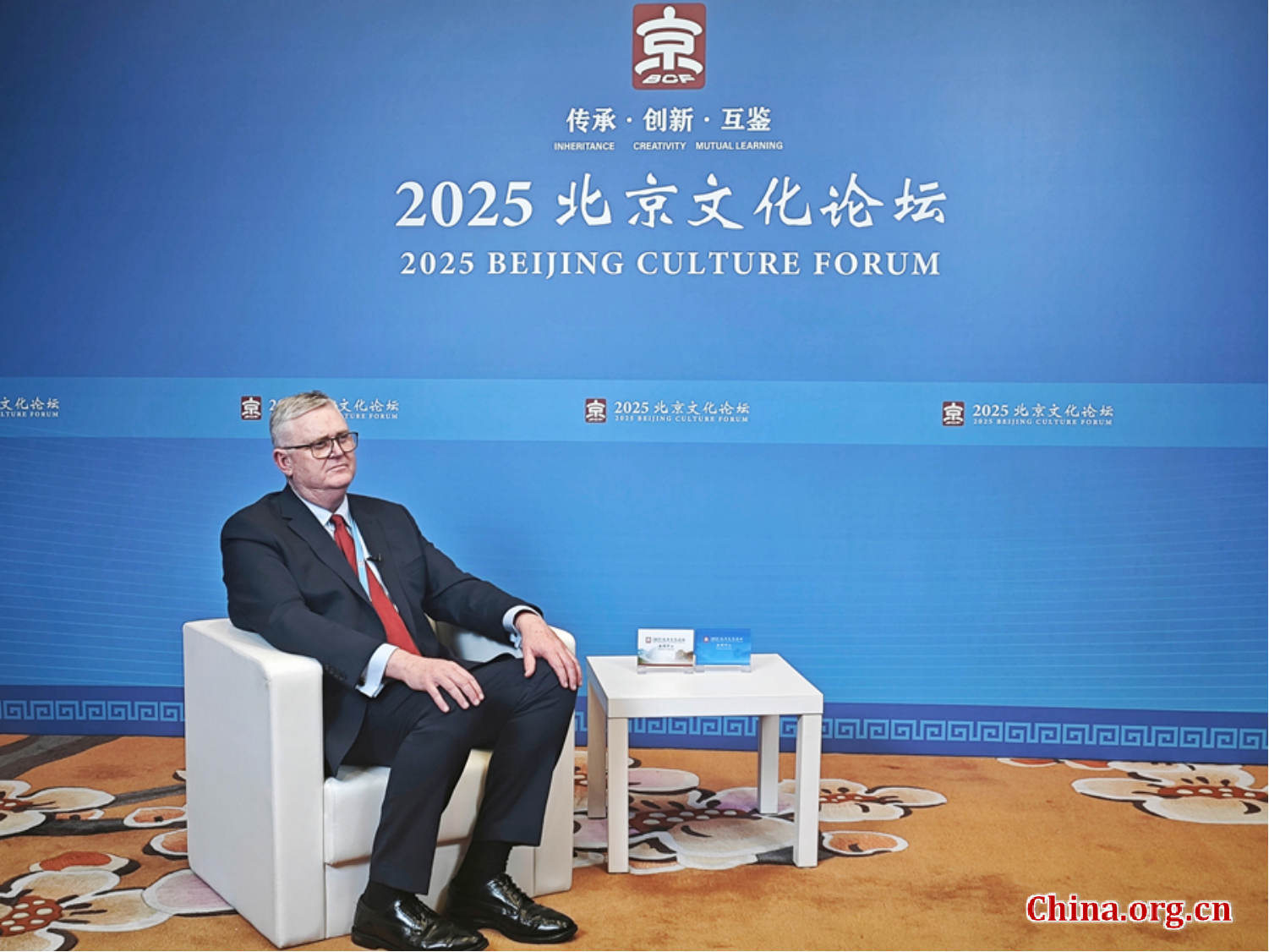
Australian sinologist Harold Weldon speaks during an interview at the 2025 Beijing Culture Forum in Beijing, Sept. 23, 2025. [Photo by Wang Yiming/China.org.cn]
According to Harold Weldon, director of Weldon China Business Advisory, short-form web dramas are transforming the way young people engage with culture, providing China with a fresh platform to share its stories globally.
"I've been watching the China webisodes, the short dramas, the mini dramas on TikTok," Weldon said in an interview at the 2025 Beijing Culture Forum on Sept. 23. "You only have a 30-second episode and then you get another one and another one and another one. I think that's very interesting because it's actually captivating the attention, especially of young people and indirectly of Chinese drama and culture."
Weldon, who has worked on China-related projects for four decades, believes that new formats are changing global media habits, and that China has an opportunity to reach broader audiences through them.
"China has thousands of stories that deserve to be told, and told better than 'Kung Fu Panda,'" he said.
The animated blockbuster, Weldon noted, was a case study in how Chinese cultural elements can resonate globally. "Inside that story, 'Kung Fu Panda,' there was a lot of Chinese philosophy," he said. "For the children, of course, it is very comical with the panda and a great story of triumph over evil. But there's also lots of Chinese philosophy, lots of wushu in there, lots of meditation and belief. Now, this is of huge interest in the West."
Such stories strike a chord because they respond to modern anxieties, he said. "The world is very stressful, and everyone is trying to look for some inner peace, some way to breathe, to handle their modern life. That film really touched on a lot of Chinese philosophies. It just so happened it was made in Hollywood."
Weldon also praised China's emerging creative industries, citing the video game "Black Myth: Wukong" as an example. China, he said, is at the start of a "new Long March of creative ideas to teach the world more of the 'Hehe' culture," referring to harmony and convergence.
He sees immersive technologies as powerful tools for cultural transmission. "The new digital tools, the new AR tools, they may work more on spirit and feeling," he said. "It's like when you see a Chinese artwork or some beautiful building, you just have an emotion about it. And I think maybe these AR tools, they take you to a parallel reality, to another place where you are immersed."
For him, cross-cultural collaboration is essential for effective storytelling. "The key to the success of my projects has been working hand in hand with the Chinese partners," Weldon said. "That's not because you need help. It's just to help smooth the message for Western ears and Western eyes."
"The biggest problem, I think maybe for East and West, is to prejudge something before you see it or immerse yourself in it," he added. "So you have to put the judgment aside and go in and just be amazed at Chinese culture. This is my hope."

