Xinhua | September 1, 2026


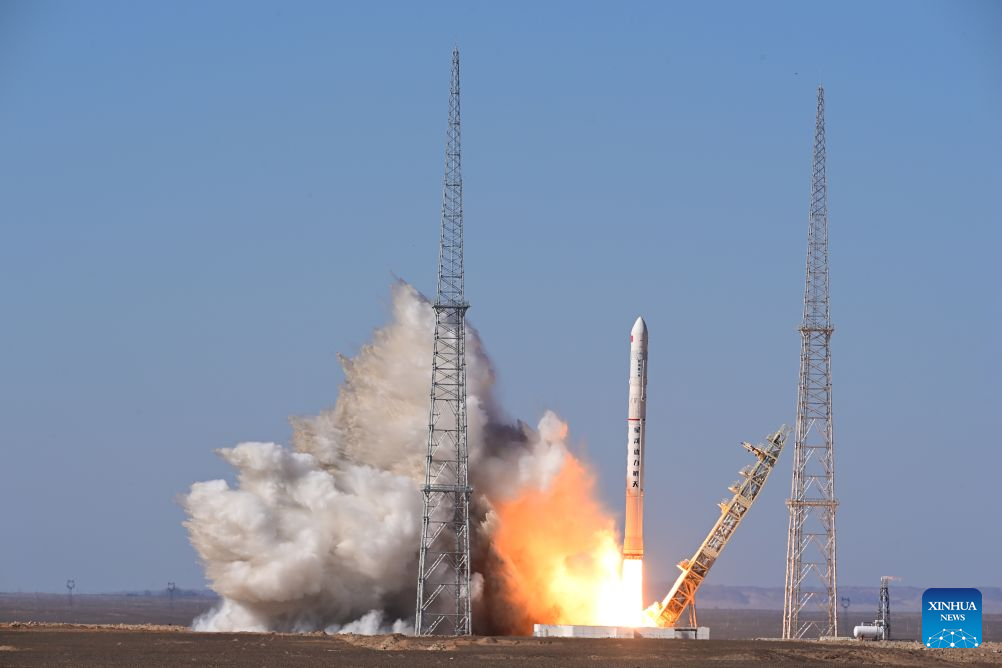
The PALLAS-1 Y1 carrier rocket blasts off from the Dongfeng commercial space innovation pilot zone in northwest China, Sept. 1, 2026. The rocket blasted off at 10:00 a.m. (Beijing Time) and performed normally throughout the flight. All test objectives were met, and the mission was a complete success. The mission marked the maiden flight of PALLAS-1. (Photo by Wang Jiangbo/Xinhua)
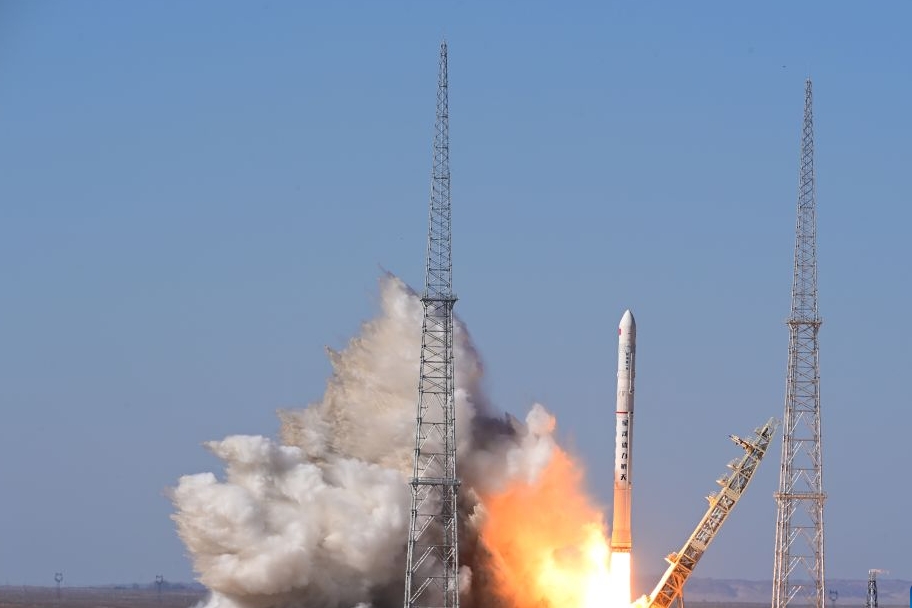
China on Tuesday successfully launched the PALLAS-1 Y1 carrier rocket into space from the Dongfeng commercial space innovation pilot zone in northwest China.
The rocket blasted off at 10:00 a.m. (Beijing Time) and performed normally throughout the flight, sending its payload into the designated orbit. All test objectives were met, and the mission was a complete success.
The mission marked the maiden flight of PALLAS-1, a medium-sized, two-stage liquid carrier rocket independently developed by Galactic Energy.
The rocket is 52 meters long and has a core-stage diameter of 3.35 meters, a liftoff mass of about 283 tonnes and a liftoff thrust of 350 tonnes. It can carry 5 to 7 tonnes to low Earth orbit.
"The rocket is designed to provide commercial satellite customers with an efficient, cost-friendly 'space express,'" a Galactic Energy executive said.
The rocket's main propulsion system uses the company's self-developed CQ-50 liquid oxygen-kerosene engines, with seven arranged in parallel on the first stage. The configuration is designed to meet recovery and reuse requirements while providing fault redundancy. Tests showed that the engines can throttle from 32 percent to 105 percent of rated thrust.
The company said the rocket also features an integrated structural and propulsion design, a bipropellant auxiliary propulsion system and multidimensional aerodynamic load-alleviation technology. It can also be fitted with an EROS-2 upper stage for greater mission flexibility.