Xinhua | August 27, 2026


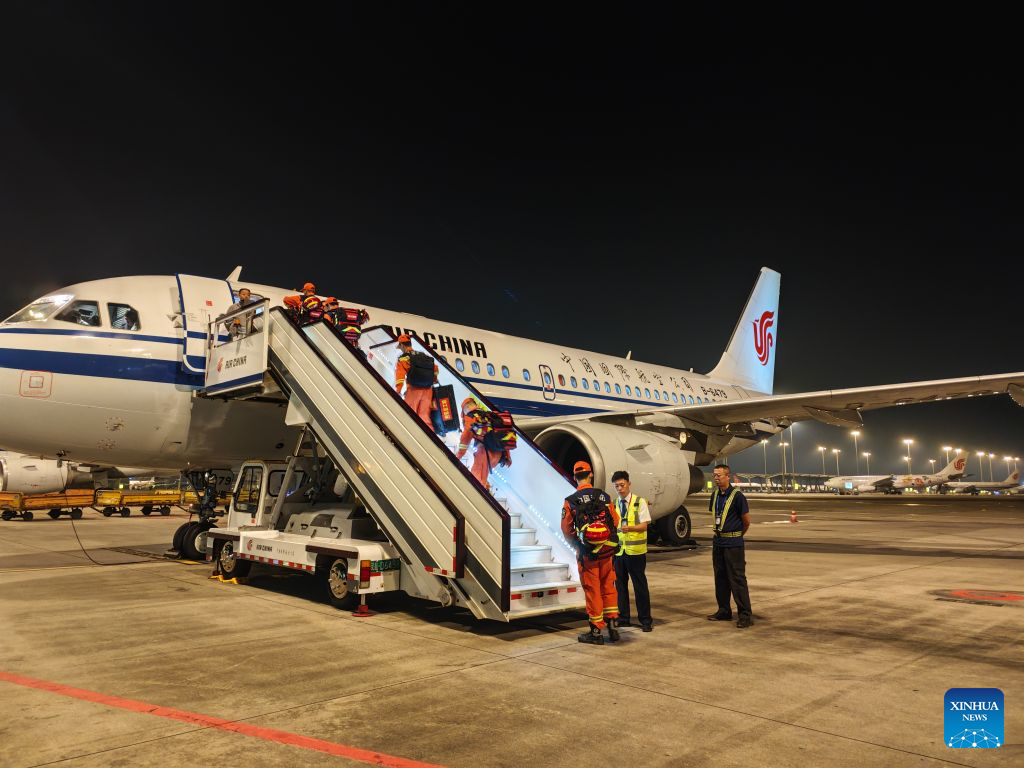
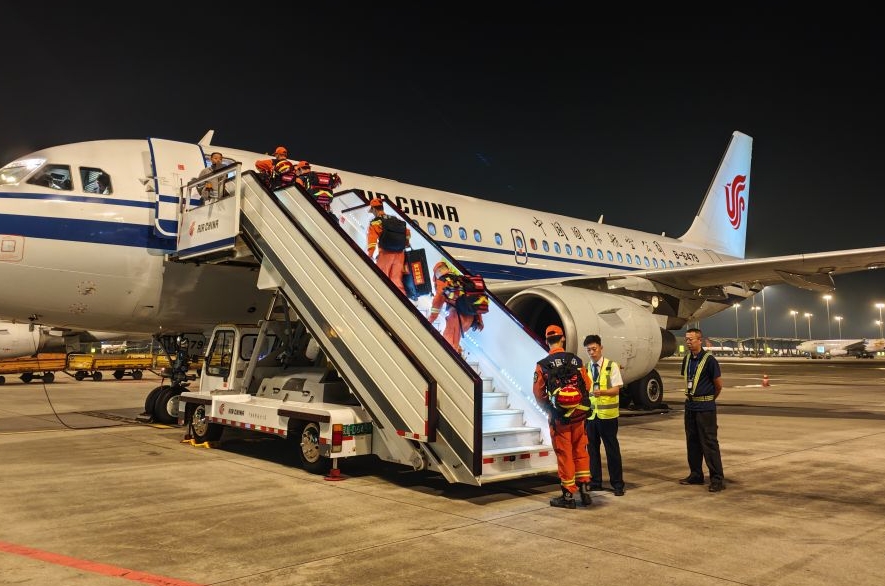
Rescuers with rescue and relief supplies board a plane at the Chengdu Shuangliu International Airport in Chengdu, southwest China's Sichuan Province, Aug. 27, 2026. The first team of 141 rescuers has arrived at the mudslide-stricken border port of Gyirong in southwest China's Xizang Autonomous Region Thursday morning after the disaster caused significant casualties along the China-Nepal border, according to China's Ministry of Emergency Management. The mudslide struck Gyirong Port in Gyirong County, Xizang, on Wednesday morning. As of 8 a.m. on Thursday, three people had been killed, 558 others remained missing, while two local villagers had been rescued, local authorities said. (Photo by Liu Bing/Xinhua)
The first team of 141 rescuers has arrived at the mudslide-stricken border port of Gyirong in southwest China's Xizang Autonomous Region Thursday morning after the disaster caused significant casualties along the China-Nepal border, according to China's Ministry of Emergency Management.
A high-altitude helicopter has also arrived at the disaster-hit area, the ministry said.
The mudslide struck Gyirong Port in Gyirong County, Xizang, on Wednesday morning. As of 8 a.m. on Thursday, three people had been killed, 558 others remained missing, while two local villagers had been rescued, local authorities said.
Another batch of 111 rescuers from the China Search and Rescue team has arrived at Gyirong County as of 2:28 p.m. Thursday, and will head to Gyirong Port to carry out rescue operations.
An eight-member advance team from China Anneng, a state-owned engineering and rescue enterprise, arrived in Gyirong County early Thursday with communications and detection equipment to collect key data and support efforts to address an upstream blockage, which is a top priority.
Only after the risk posed by the blockage is addressed can the debris accumulated about 3 km upstream of the port be safely cleared, according to rescue personnel at the site.
Hundreds more rescuers, carrying equipment and supplies for detection, rescue, communications and logistical support, are rushing to the site.