Xinhua | August 19, 2026


Ask anyone in Turpan, a city in northwest China's Xinjiang Uygur Autonomous Region, to name the best doctors around, and you will likely hear an answer: "Dr. Mao."
The "doctor" is admired not only for tackling difficult medical cases but also for helping train local healthcare workers.
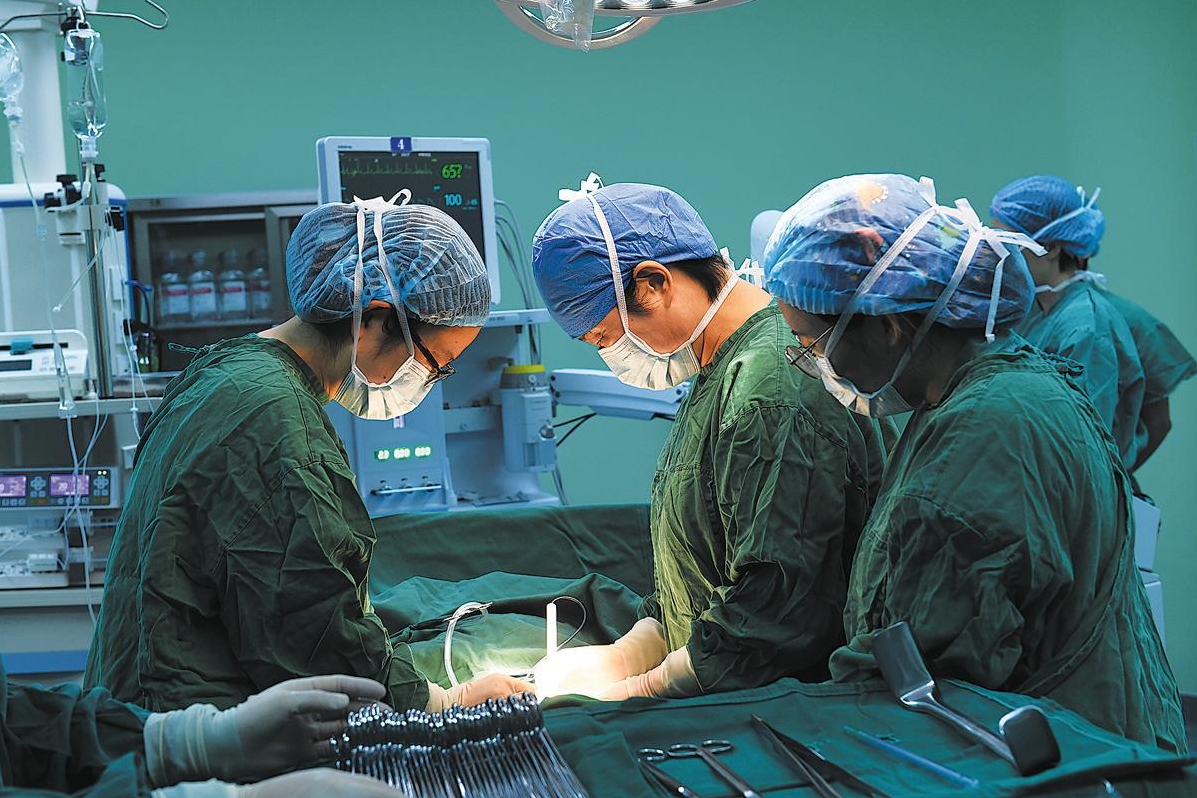
But "Dr. Mao" is not a single doctor with the surname "Mao." It is the name given to a group of medical professionals from central China's Hunan Province, who have traveled thousands of kilometers to work here under a national "pairing assistance" program.
The name dates back to 2022, when a 94-year-old local patient, Patamhan Nur, underwent a complex heart surgery. When she woke up and asked for the surgeons' names so she could express her gratitude, she was told the surgeons were from Hunan.
"Since you are from Chairman Mao's hometown, I would like to call you Dr. Mao," she said.
Since then, "Dr. Mao" has become a symbol of the Hunan medical assistance team, carrying warmth, skills and a sense of mission to this multi-ethnic city.
The medical assistance program in Turpan began in 1998 as part of a national "pairing assistance" initiative that links more developed regions in eastern and central China with Xinjiang, the country's vast northwestern frontier, to create jobs, upgrade skills and promote unity across the region.
Turpan's medical infrastructure lags behind that of economically developed cities in eastern and central China. Local grassroots hospitals lack experienced specialists, so patients must travel long distances to larger cities for treatment.
Heart disease, high blood pressure, high blood sugar and high cholesterol are common ailments among local people, whose diets are heavy on sugar and oil. Besides, the region's intense sunlight also contributes to a high incidence of eye problems.
Zhang Yu, from the People's Hospital of Hunan Province, is one such "Dr. Mao" specializing in heart diseases. He joined Turpan People's Hospital in February 2025 and had treated over 500 patients within six months. He recalled a centenarian patient who called him "yakexi," which means "great" in the Uygur language, after an emergency rescue.
"At that moment, I felt every effort was worth it," Zhang Yu said.
Zhang Xi, a children's respiratory specialist from Changsha, the capital of Hunan, arrived in Turpan this May as part of the latest batch of the medical assistance program. She noted that a high proportion of her daily patients come from ethnic minority groups. To communicate more effectively, she has learned a few simple Uygur greetings.
In July, she admitted a 6-year-old Uygur boy who had nearly drowned and developed a severe lung infection. Previously, such critical cases could only be transferred to hospitals hundreds of kilometers away, often missing the crucial treatment window. Zhang Xi decided to perform the surgery locally and led the local team in completing Turpan's first lavage procedure for a child's infected lungs. The operation went smoothly, and the child recovered quickly, without needing a long-distance transfer.
"Enabling children in remote Xinjiang to receive healthcare of the same quality as in Changsha has been the most meaningful achievement of my experience here," the woman doctor said.
Since Hunan began providing assistance in 1998, more than 500 "Dr. Mao"-like doctors have been dispatched to Turpan.
But reaching patients is not easy in Turpan, where the vast landscape keeps farming and pastoral residents far from urban hospitals. Besides, the region's scorching heat and frequent sandstorms make the journey even harder. Despite the harsh weather, the Hunan medics regularly deliver clinic services to locals' doorsteps.
Beyond treatment, the "Dr. Mao" team also devotes time to health education, as low health awareness was a major challenge among locals. For example, in the early years, many local women gave birth at home, lacking scientific knowledge about prenatal and postnatal care, endangering both mothers and babies. Through years of health awareness campaigns and facility improvement led by the Hunan medical team, the hospital delivery rate now approaches 100 percent.
Many doctors told Xinhua that "Dr. Mao's" mission is not merely to deliver medical aid but to build sustainable local healthcare capacity. They have brought advanced diagnostic and therapeutic technologies, improved hospital management systems, established a cross-regional telemedicine network, and devoted efforts to training local medical professionals.
"What I have gained goes far beyond clinical skills," said Kang Xingling, a Turpan doctor who has trained under the Hunan medical team for years. "I have come to truly understand the sense of duty and mission of being a doctor."
As Aug. 19 marks the annual Chinese Doctors' Day, the story of "Dr. Mao" is getting renewed attention.
"'Dr. Mao' is far more than a brand," said Li Yong, a Hunan medic who had just completed his stint in Turpan. "It is the sincerest recognition from Turpan people, and a constant reminder for us to stay committed to serving patients."