China SCIO | April 16, 2026


Shanghai Hongqiao International Central Business District (CBD), a gateway for the Yangtze River Delta's opening-up endeavors, is gearing up to attract more multinational corporations during the 15th Five-Year Plan period (2026-2030), said Kong Fu'an, executive deputy director of the CBD's administrative committee.
Located to the west of downtown Shanghai, the district covers a total area of 151.4 square kilometers. Five years after its establishment, the district's GDP has surpassed 200 billion yuan (US$29.26 billion) in 2025.
Now home to the regional headquarters of 283 companies, the CBD will leverage its advantages to attract and nurture more China-based multinational corporations during the 15th Five-Year Plan period (2026-2030), amid a broader push by Chinese companies to expand globally, according to Kong.
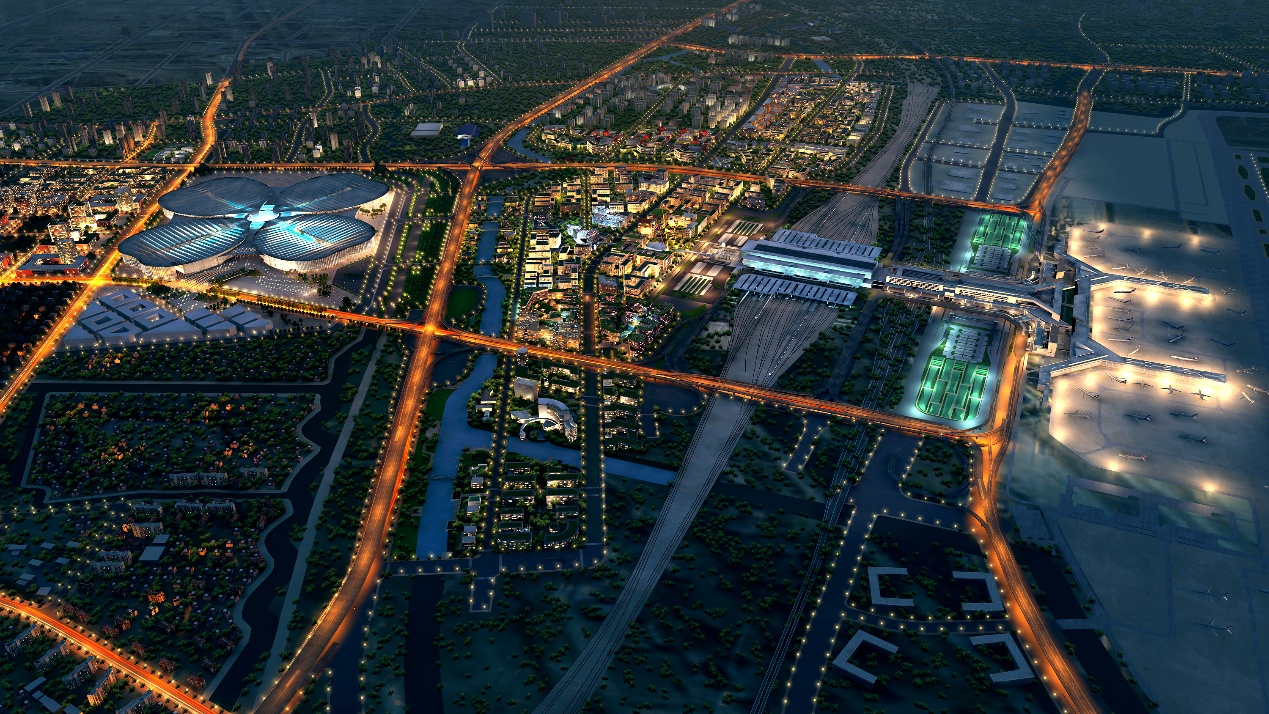
An aerial shot of Shanghai Hongqiao International Central Business District. [Photo provided to China SCIO]
Positioned as a leading hub for services supporting enterprises going global, the CBD concentrates world-class government, public and professional services in its Hongqiao Overseas Development Service Center to facilitate companies' outbound expansion, drawing an increasing number of globally minded firms to establish their international business headquarters in Hongqiao.
During the 14th Five-Year Plan period (2021-2025), the number of professional service institutions in the district doubled. The CBD's Hongqiao International Central Legal Services District has brought together 184 legal service institutions of various types.
KPMG, one of the world's Big Four accounting firms that features professional services, established a new office complex KAMPUS in the district in 2024. The office serves as a strategic hub supporting enterprises in their expansion into overseas markets.
KAMPUS has seen a large number of companies relocate their regional headquarters to the district to get closer to professional service providers, said Frank Huang, regional head of markets, eastern and western region of KPMG China.
Benefiting from a superior business environment underpinned by a concentration of international professional services, the district has built strong global competitiveness on the strength of its talent pool. Home to roughly one-third of Shanghai's expatriates and permanent residency holders, as well as a large number of overseas-educated professionals, the district offers companies a rich reservoir of international talent for recruitment.
The talent advantage is expected to be further strengthened for enterprises seeking innovation-driven transformation and upgrading their R&D capabilities to enhance international competitiveness. R&D talent is also abundant in the region as the manufacturing R&D clusters based in the Yangtze River Delta continue to grow.
Connectivity remains another key advantage of the district. As a comprehensive transportation hub, its aviation and high-speed rail networks connect the area with major cities across the Yangtze River Delta as well as international markets.
When close collaboration with industrial and supply chains across the Yangtze River Delta is required, Hongqiao becomes an ideal location for multinational companies, thanks to its highly convenient high-speed rail, airport, and urban rail transit networks, Kong said.