Xinhua | December 31, 2025




TECHNOLOGY EMPOWERING "NEW FARMERS"
With the improvements in rural infrastructure over recent years, along with factors such as a favorable ecological environment, a slower pace of life and lower living costs, a growing number of more highly educated "new farmers" are returning to the countryside, helping to reshape Chinese agriculture by applying technology and business expertise to fields once dominated by manual labor.
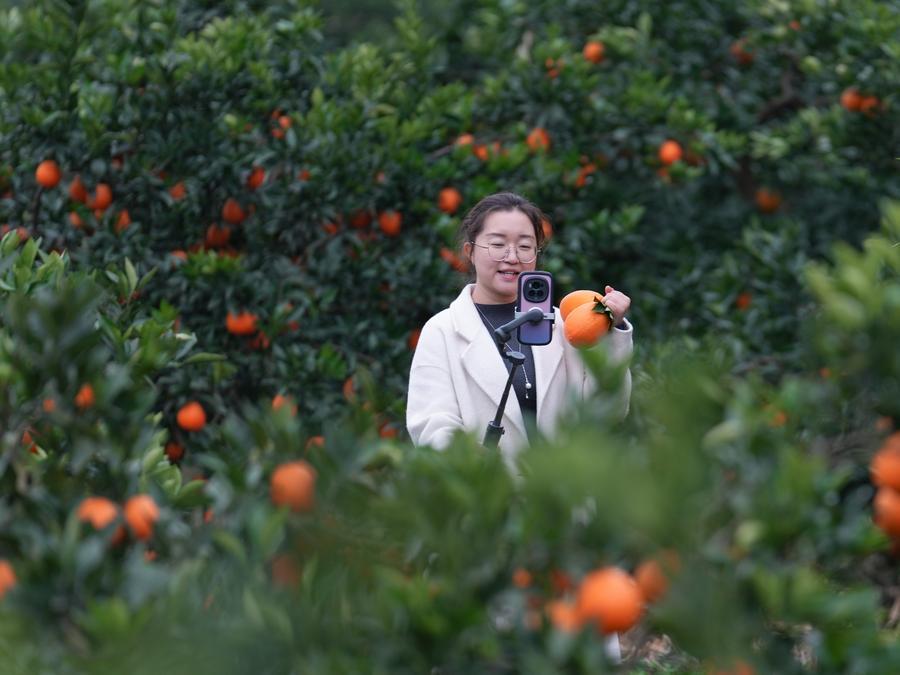
Zhang Guihua, Party secretary of Sunzigou Village, promotes oranges via live-streaming at an orchard in Cangxi County of Guangyuan City, southwest China's Sichuan Province, Dec. 12, 2025. Cangxi County has crafted an innovative model to boost rural development, which incorporates family farming cooperatives, live-streaming platforms as well as online and offline marketing. Remarkably, Party secretaries of villages in the county are spearheading sessions of e-commerce promotion, driving the sales of local specialties across the country to substantially improve local farmers' income. (Xinhua/Zhang Long)

Wu Guangrong (L) introduces camellia oil to a visitor at the ecological park in Longli County, southwest China's Guizhou Province, March 11, 2025. Wu Guangrong, born in Fangxiang Township of Guizhou Province, has been engaged in the landscaping industry for many years since he graduated from a forestry vocational school in 2001. With a special affection for forestry, he contracted a barren mountain of 4,000 mu (about 659 acres) in a village in Longli County in 2013 and gradually developed it into an ecological park mainly planting oil tea camellia, supplemented by greening seedlings, high-quality fruits and forest farming. Recently, Wu's ecological park has become a pillar industry for local rural revitalization, not only transforming barren mountains green, but also providing jobs for local villagers. (Xinhua)
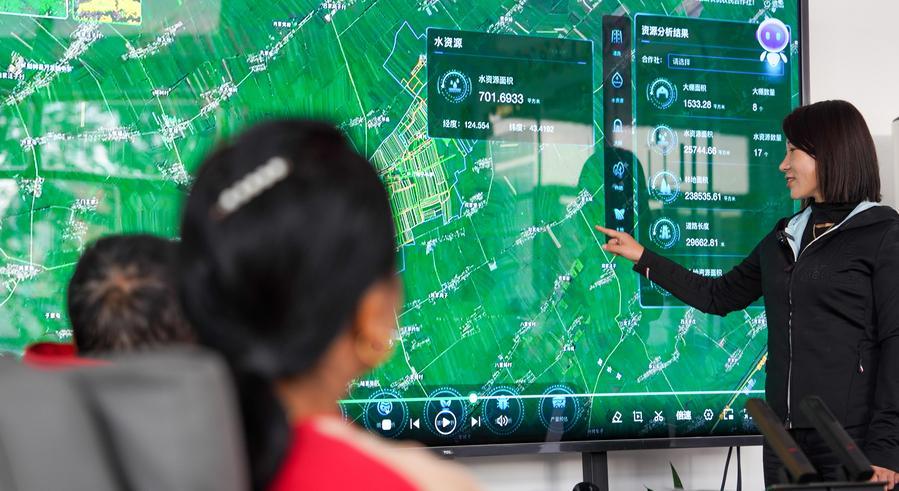
Han Fengxiang explains the smart agriculture system to farmers at her cooperative in Lishu County, northeast China's Jilin Province, Oct. 9, 2025. Han Fengxiang, 43, returned to her hometown in Jilin's Lishu County to run a cooperative in 2010. Instead of relying on traditional farming methods, Han carried out mechanized farming leveraging large-scale agricultural machinery to enhance the grain output. She also led the cooperative to actively explore new management models. Through live streaming and other means, they have developed a model of "planting, breeding, processing and sales", injecting new vitality into rural revitalization. (Xinhua/Yan Linyun)
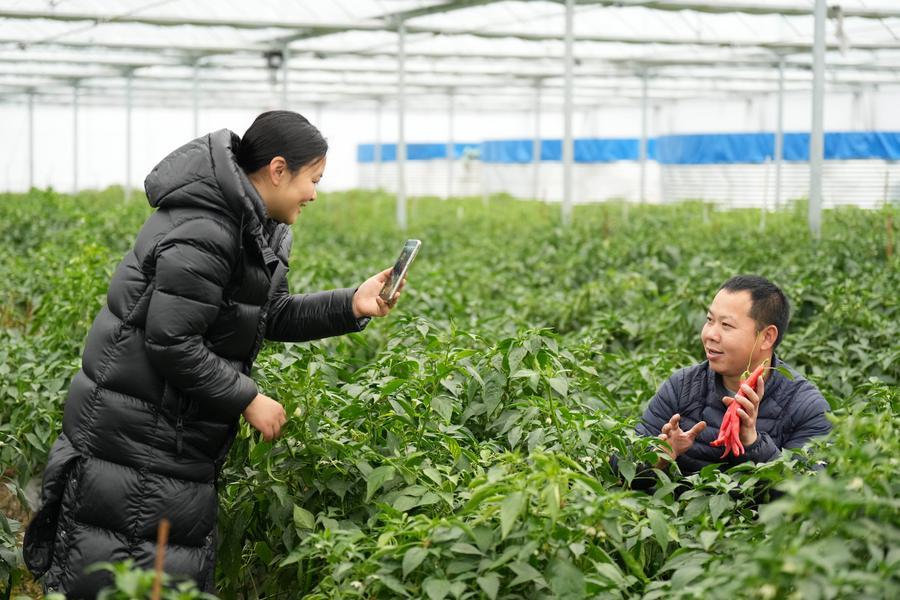
He Xiaozhen (L) shoots a video of her husband Xiao Shenglan picking peppers at Xiao's farm in Ningxiang City, central China's Hunan Province, Feb. 6, 2025. Xiao Shenglan and his wife He Xiaozhen are committed to pioneering the cultivation of the overwintering pepper plants in Hunan. In terms of breeding, they cooperated with research institutes and agricultural experts to sort breeds, cultivate plants and explore disease resistance methods. Through their unswerving efforts, the overwintering pepper cultivation has been developed and widely applied. To boast sales, Xiao Shenglan also tried turning to social media platforms and promoted the pepper with short video. Inspired by their successful attempt, more than 200 people were brought along to the industry. (Xinhua/Xue Yuge)
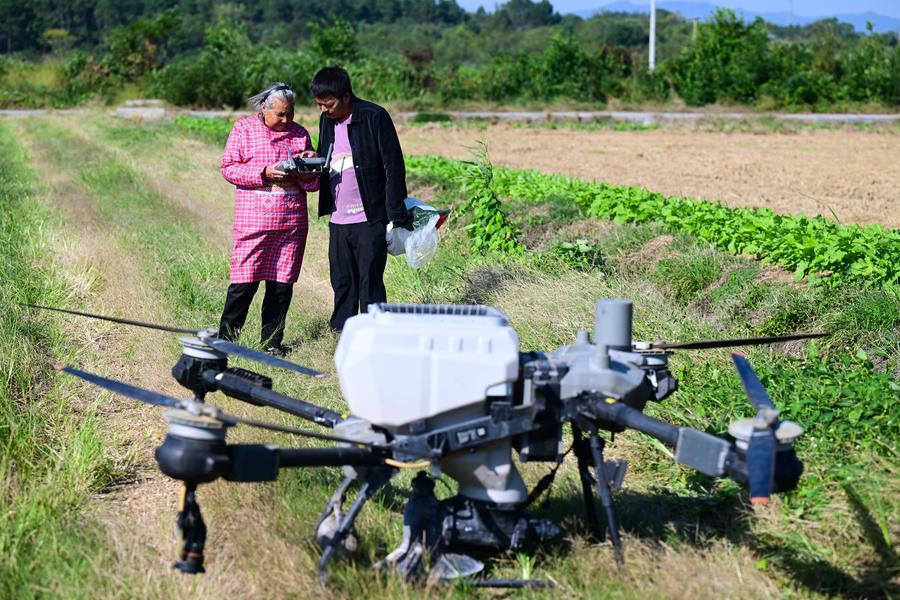
Dai Shuying (L) operates a plant protection drone under the guidance of her grandson Wang Tiantian in Laomei Village of Xindu Town, Tongcheng City, east China's Anhui Province, Oct. 23, 2025. 82-year-old Dai Shuying lives with her eldest son and grandson in Laomei Village. Although she doesn't do much farm work now, she occasionally uses a drone to help to spray pesticides and fertilizers for the corps under the guidance of her grandson Wang Tiantian. Accompanied by Wang, she also promotes and sells agricultural products such as rice and oil through live streaming, and enjoys shooting videos with him. (Xinhua/Zhou Mu)
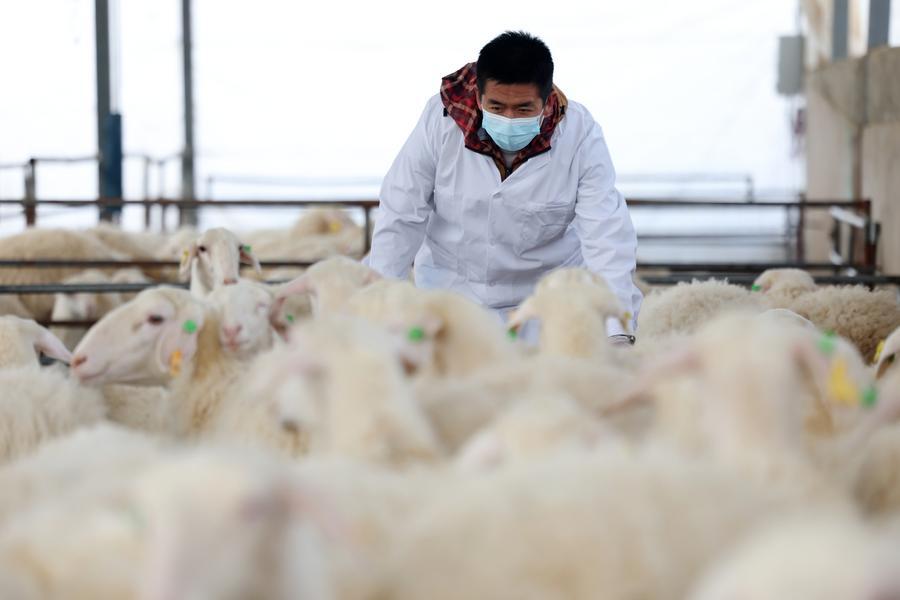
Zhang Zhongshan checks the growth of sheep at the breeding farm of his cooperative in Dongxiang Autonomous County of Linxia Hui Autonomous Prefecture, northwest China's Gansu Province, Feb. 25, 2025. Zhang Zhongshan is the head of a planting and breeding cooperative in Dongxiang Autonomous County. After graduating from a vocational school in 2013, Zhang left his hometown for work, where he gained experience and knowledge in e-commerce. In 2018, encouraged by government policies, Zhang returned to Dongxiang and founded the cooperative, focusing on the breeding, sales, and promotion of local agricultural products, including Dongxiang sheep. With modernized sheep farming, Zhang's cooperative has helped boost the incomes of more than 500 local households. (Xinhua/Chen Bin)
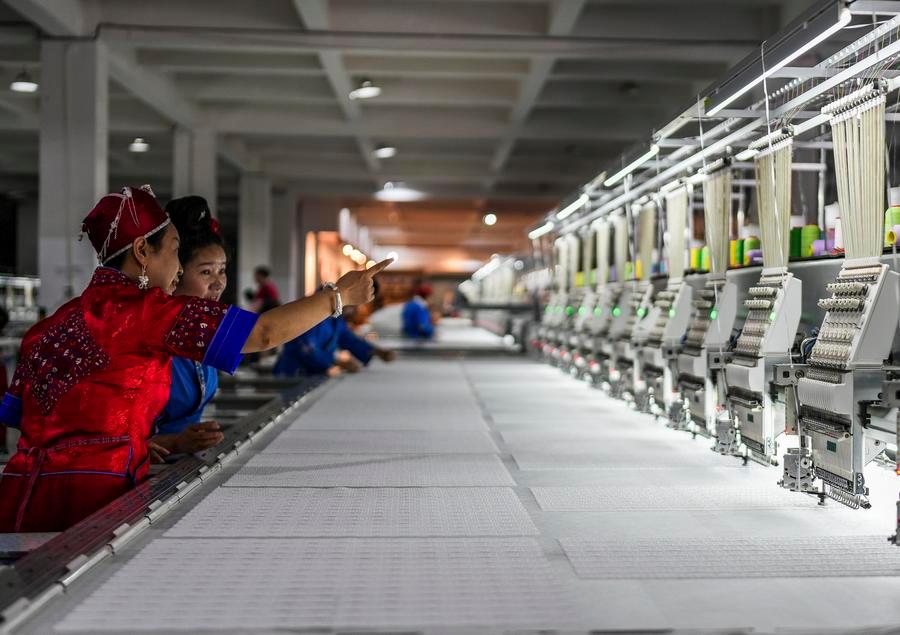
Long Luying (L) guides workers on how to operate the equipment at an intelligent embroidery workshop in Shibing County of Qiandongnan Miao and Dong Autonomous Prefecture, southwest China's Guizhou Province, Oct. 10, 2025. Long Luying is a provincial-level inheritor of Miao embroidery, having learned the craft from her mother during her childhood. In 2006, she left her job at an embroidery workshop in Shenzhen and returned to her hometown in Shibing County where she launched her own business focused on handmade Miao embroidery. Over the years, Long Luying has provided free training in embroidery techniques to local women, creating job opportunities for more than 1,200 rural women in the village. (Xinhua/Tao Liang)
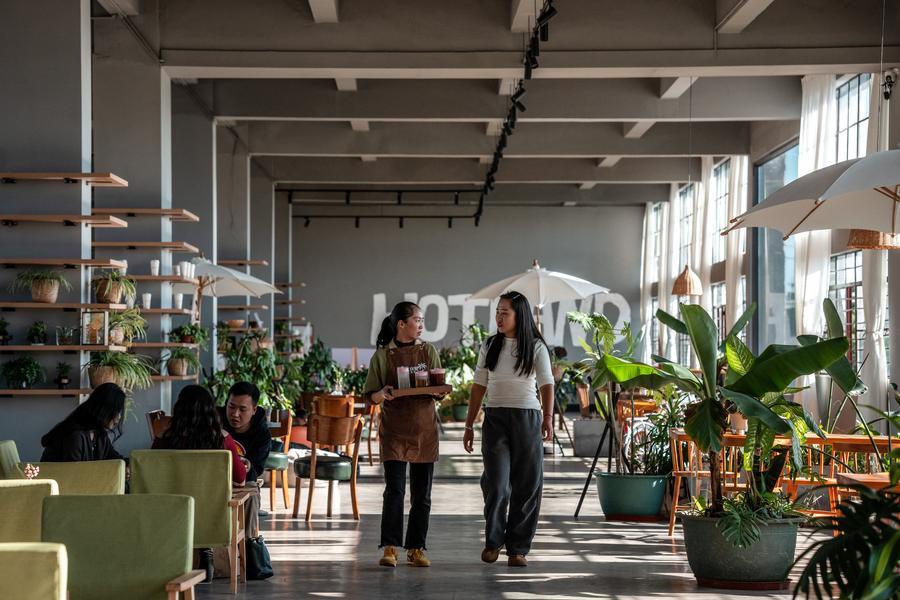
Wei Chun (1st R) talks with a staff member at the Hotland studio in Dadugang Township in Xishuangbanna Dai Autonomous Prefecture, southwest China's Yunnan Province, Dec. 20, 2025. Wei Chun, a returnee appointed in June 2024 as the "Village CEO," also known as an agricultural manager, of a collective economy company in Dadugang Township, has effectively Leveraged the local tea industry foundation to revitalize idle resources. Under her leadership, an integrated tea-cultural-tourism space has been established, accompanied by systematic skills training programs. By 2025, she has helped over 100 villagers acquire new skills, attracted nine talents to return home and start businesses, and enabled all six village committees in the township to achieve collective economic incomes exceeding 100,000 yuan (about 14,303.1 US dollars) each. (Xinhua/Hu Chao)

