Xinhua | December 17, 2025


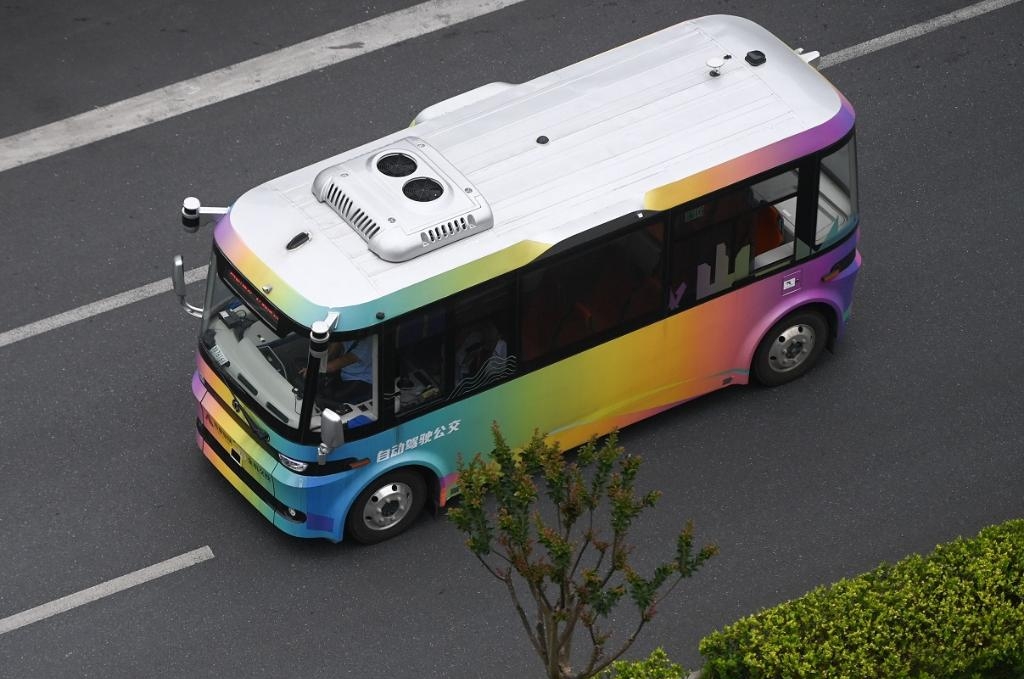

China's industry regulator has taken a milestone step by conditionally approving two electric models equipped with Level-3 autonomous driving capabilities for public road operations, meaning advanced driving technologies are now being applied beyond testing under a regulated framework.
The Ministry of Industry and Information Technology (MIIT) on Monday granted permits to two electric sedans -- one from Changan Automobile and the other from BAIC Motor's Arcfox -- to offer Level-3 self-driving functions on select roads in Chongqing and Beijing, respectively.
It is the first time that vehicles with Level-3 automation have been allowed on public roads, drawing widespread attention. Experts say the move marks a leap from limited testing authorization to formal road access, and aligns with China's broader push to leverage cutting-edge technologies for economic growth.
The step from Level 2 to Level 3 is a critical transition from assisted driving to automated driving. Level 3, "conditionally automated driving," allows vehicles to perform dynamic automated driving tasks while requiring a human driver to remain available to take control when requested.
In practical terms, experts say that Level-3 vehicles allow drivers to take their hands off the wheel on designated road sections when the system is activated, as these cars can perform functions such as following, obstacle avoidance and other maneuvers while continuously sensing their surroundings and responding to risks.
Fu Bingfeng, executive vice president and secretary-general of the China Association of Automobile Manufacturers, said the permits validate technological maturity and respond to public expectations for smarter mobility.
Such expectations are increasingly being met through policy-backed industrial upgrading, which also aligns with China's policy drive to develop new quality productive forces.
The tone-setting Central Economic Work Conference held earlier this month underscored the need to develop these forces by promoting the deep integration of sci-tech innovation and industrial innovation.
In November 2023, MIIT and three other departments began piloting road operations for intelligent connected vehicles under a safety-first principle. In September this year, MIIT and seven other departments called for these pilot operations to be advanced, conditionally approving access for Level-3 models, and improving laws and regulations on road safety and insurance.
Bringing automated driving to public roads still involves multiple challenges, but this latest approval shows China is steadily advancing its autonomous driving sector, with long-term policy support and large-scale pilot testing laying a solid foundation for real-world application, said Ji Xuehong, director of the automobile industry innovation research center at the North China University of Technology.
Crucially, safety remains the top priority. Autonomous driving functions can only be engaged in defined, low-risk scenarios. For example, the Changan vehicle is approved for single-lane autonomous driving at speeds of up to 50 kilometers per hour during periods of traffic congestion, and the Arcfox vehicle is permitted to operate autonomously at speeds of up to 80 kilometers per hour on designated highway and urban expressway sections in Beijing.
MIIT official Liu Fawang described the permits as an important move to advance management innovation while ensuring safety. "While it will take time for automated driving to fully integrate into daily life, the step has already made it clear that autonomous driving is accelerating toward broader use."
In recent years, autonomous driving technologies developed by Chinese companies have been gaining a global footprint. Earlier this month, online ride-hailing service provider Caocao Mobility announced that it plans to expand its Robotaxi services to 100 cities globally. And Apollo Go, Baidu's autonomous driving mobility platform, has reached 22 cities around the world, with a cumulative autonomous driving mileage exceeding 240 million kilometers.
Building on this momentum, the latest Level-3 permits are widely seen as a milestone that moves China's autonomous driving sector closer to mass-production application. Now, the two approved models will be operated by designated entities in Chongqing and Beijing in on-road pilot programs.
MIIT has said it will work with other authorities to strengthen the monitoring of vehicle operations and safety measures, summarize related experience, and continue improving the access management system, standards and regulations for intelligent connected vehicles.
Qu Guochun, another MIIT official, said the pilot programs will strengthen automakers' safety assurance capabilities and technological maturity, while also testing the executability and scalability of the regulatory framework, laying a firmer foundation for the safe application of advanced technologies.
Advancing access and pilot road operations provides a "two-way boost" for innovation, said Sun Hang, a researcher at an automotive standardization research institute. It injects strong momentum into technological innovation and upgrading, and also offers valuable practical experience for the development of standards.

