China SCIO | September 22, 2025




Lingwu, a city in northwestern China's Ningxia Hui autonomous region, sits on the eastern bank of the Yellow River and the edge of the Mu Us Desert, one of the country's largest deserts. Decades ago, shifting sands crept toward the river, threatening farmland and villages along its banks. By the 1950s, the desert had advanced to within five kilometers of the river. Sand carried through canals poured into the river, raising its bed and putting both agriculture and livelihoods at serious risk.
It was against this backdrop that the Lingwu Baijitan Forest Farm, the precursor to today's Baijitan National Nature Reserve, was established in 1953. This marked the beginning of a seven-decade endeavor of desert control that spanned three generations.
Today, the reserve stands not just as a bastion against the dunes but also a testament to China's victory over desertification.
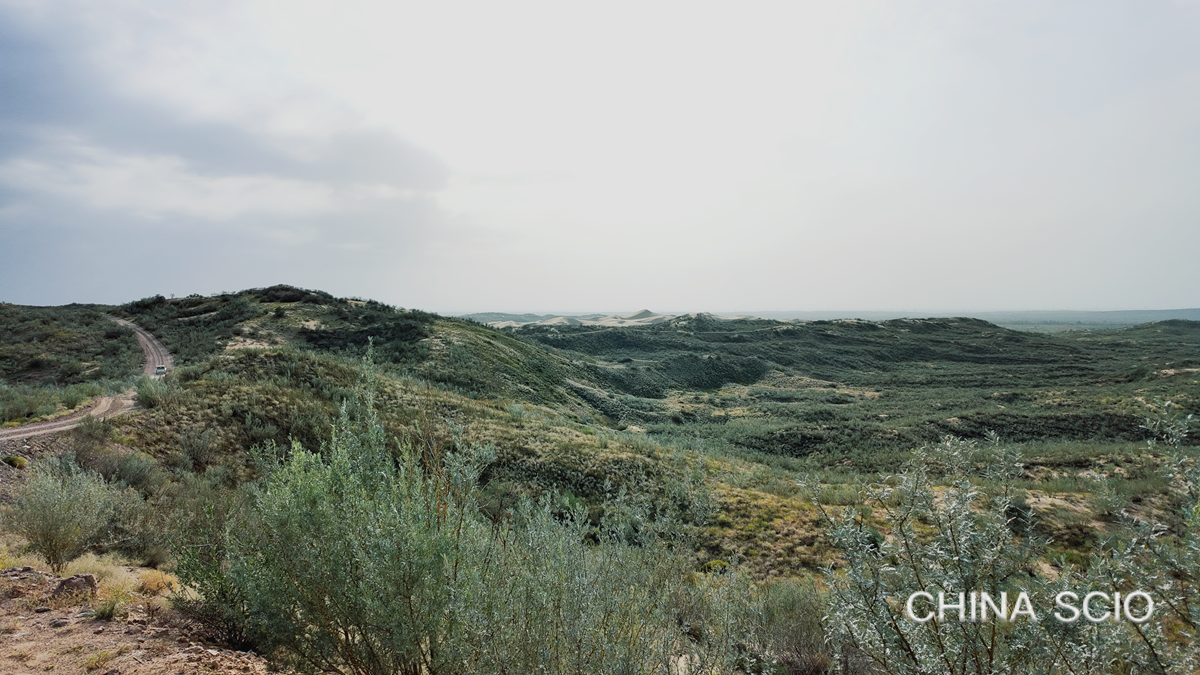
A scene at the Baijitan National Nature Reserve in Lingwu, Ningxia Hui autonomous region, Sept. 15, 2025. [Photo by Wang Xingguang/China SCIO]
Speaking of the contributions made by each generation in the ongoing fight against desertification, Wang Xiaolin, director of Ningxia Lingwu Baijitan National Nature Reserve Management Bureau, said that the first generation of pioneers focused on identifying and cultivating plant species capable of surviving in arid conditions, such as drought-resistant shrubs.
The second generation developed the technique of using grid-like straw checkerboards to fix sand dunes, thus allowing soil to form. Each checkerboard is composed of numerous straw squares about one square meter in size — large enough to hold the sand in place while minimizing straw use, with half of each straw square buried beneath the sand.
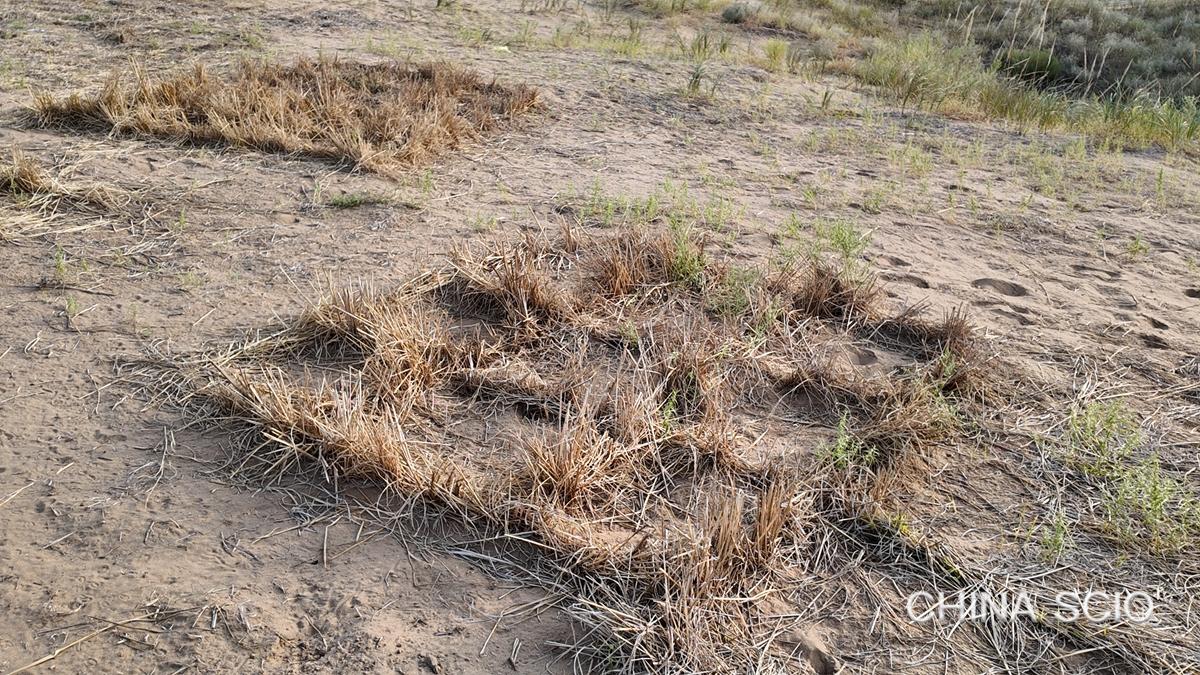
A straw checkerboard at the Baijitan National Nature Reserve in Lingwu, Ningxia Hui autonomous region, Sept. 15, 2025. [Photo by Wang Xingguang/China SCIO]
As this sand-fixation technology created a more stable environment, it significantly improved the survival rate of the vegetation that had been previously planted, Wang said.
The straw checkerboard method is supplemented by four additional techniques: sowing grass seeds during the rainy season, hole-sowing shrub seeds, afforesting with nutrient-bag seedlings, and planting seedlings in spring and autumn. Together, these methods form what is known as the "1+4" targeted desert control system.
With the maturation of the desert control system, large-scale efforts commenced around the year 2000, when the Lingwu Baijitan Forest Farm was designated as the Baijitan National Nature Reserve. The third generation of pioneers then took up the mantle of their predecessors, demonstrating unwavering long-term commitment.
The Baijitan National Nature Reserve stands as a key component of China's Three-North Shelter Forest Program, the country's flagship initiative to combat desertification. Launched in 1978, the program spans 13 provinces across the north, northwest, and northeast, covering 45% of China's land area. These regions contain 84% of the country's desertified land. Within this framework, the Baijitan Reserve has yielded remarkable results.
Over the past seven decades, more than 700,000 mu (46,667 hectares) of desert land has been reclaimed through afforestation, pushing the desert boundary back by over 20 kilometers, according to Wang. When the reserve was first established, nearly 90% of the area was desert. Today, only about 20,000 mu of desertified land remains.
Baijitan's approaches have inspired international exchanges. Over the past five years, multiple training sessions on desertification control technologies and practices have been held, bringing together participants from over 40 countries and regions including Libya and Zimbabwe to share what has come to be known as the "Ningxia experience" in combating desertification.
The focus now shifts to consolidating these achievements and ensuring ongoing vegetation conservation measures, Wang said. He described the fight against desertification as a "continuous war," noting that while deserts are an inherent part of the Earth's ecosystem and cannot be eradicated, the goal must be to minimize their threat to human communities.

